Wrexham Vs Chelsea Becomes FA Cup Epic Before Garnacho Ends The Dream

Wrexham vs Chelsea turned into exactly the kind of FA Cup night the competition still sells best: noisy, improbable, emotional, and cruel right at the end. Chelsea beat Wrexham 4-2 after extra time on Saturday in the fifth round, but the score only tells part of it. Wrexham led twice, pushed a Premier League side to the edge, lost George Dobson to a red card in stoppage time, and then watched Alejandro Garnacho and João Pedro finally drag Chelsea into the quarter-finals.
For anyone searching Wrexham vs Chelsea, Chelsea vs Wrexham, or where to watch Wrexham A.F.C. vs Chelsea F.C., the immediate result is simple: Chelsea survived a major cup scare at STōK Cae Ras after extra time. The match was level at 2-2 after 90 minutes before Garnacho put Chelsea ahead in the 97th minute and João Pedro sealed it deep into extra time.
Wrexham Lead Twice
Wrexham did not play this like a lower-division side hoping to hang around. They played it like a team that believed the tie belonged to them if they could keep forcing Chelsea into discomfort. Sam Smith gave the home side the lead in the 18th minute, and the stadium immediately became the sort of place where a favorite can start hearing the match instead of controlling it.
Chelsea equalized before halftime, but even that carried a strange edge because it came through an own goal charged to Arthur Okonkwo rather than through clean attacking control. Wrexham did not let the setback flatten them. When Callum Doyle restored the lead in the 78th minute, the tie moved from intriguing to dangerous for Chelsea.
That second goal mattered because it turned the pressure fully onto the visitors. From that point, Chelsea were no longer just managing an awkward away tie. They were fighting the possibility of becoming one of the competition’s lasting cautionary tales.
Arthur Okonkwo And George Dobson At The Center
Arthur Okonkwo and George Dobson ended up at the heart of the game for very different reasons. Okonkwo had the misfortune of seeing Chelsea’s first equalizer go down as an own goal, the kind of moment that can distort a goalkeeper’s night even when his broader performance is strong. Yet Wrexham still stayed alive because the team in front of him kept refusing the script Chelsea wanted.
Dobson’s moment was harsher. In stoppage time, with the match still level and Wrexham trying to reach extra time on even terms, he was sent off after a challenge on Garnacho was upgraded to a red card. That changed the entire shape of the finish. Wrexham had already given everything physically. Going into extra time with 10 men against Chelsea was not just a disadvantage. It was the point where effort finally had to collide with depth.
That is often how these ties break. The underdog can match the emotion, the running, even the moments. But the final stretch starts asking for one more resource than it has left.
Garnacho Changes The Night
Garnacho was the player who finally made that gap visible. His extra-time volley gave Chelsea the lead for the first time and flipped the atmosphere from possibility to damage control for Wrexham. It was not only a goal. It was the moment the tie stopped feeling open and started feeling like Chelsea had finally imposed the level difference it had spent most of the night struggling to show.
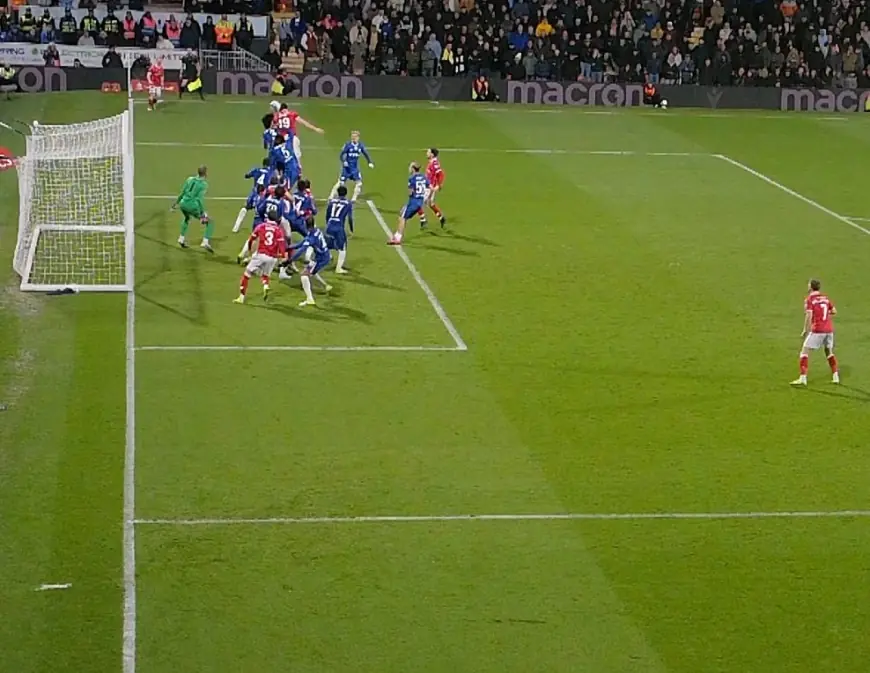
There was still one last sting. Wrexham thought they had found another equalizer through Lewis Brunt, only for the goal to be ruled out for offside. That was the point where the fairytale feel of the evening gave way to the colder part of modern cup football. Not injustice, necessarily, but the kind of technical ending that leaves a stadium feeling hollow because belief had briefly returned before being taken away again.
João Pedro’s late goal finished the game, but Garnacho’s was the decisive break. Chelsea needed a player who could end the uncertainty, and he did.
What The Match Really Said
This was a win for Chelsea, but not the kind that removes questions. Chelsea got through, and in cup terms that is the first duty. Yet needing extra time, twice coming from behind, and relying on the red-card swing to tilt the night says something about how unstable the performance was. A stronger side might call that resilience. A more skeptical reading would call it escape.
For Wrexham, the loss still carried something valuable. The club did not look like a novelty act. It looked like a serious side capable of making a high-level opponent uncomfortable over a long, emotionally charged night. That matters more than romance. Cup upsets are remembered, but competitive legitimacy lasts longer.
So the cleanest truth from Wrexham vs Chelsea is this: Chelsea advanced, Garnacho delivered, and the favorite survived. But Wrexham made the match mean far more than a routine result, which is exactly why the FA Cup still knows how to hold a room.