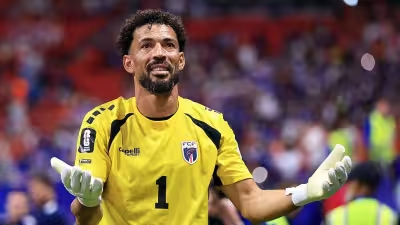
Iran’s men’s team was ordered to leave the United States immediately after its 2-2 World Cup opener against New Zealand on Monday night, abandoning a planned overnight stay in Los Angeles and flying back to its training base in Tijuana.
Coach Amir Ghalenoei said the team was told to leave only a few hours after the match. "After the game today, they said to us, ‘You have to leave immediately,’" he said, adding that "They didn’t even give us time to recover," and that "We don’t know why they are returning us, to be honest."

The immediate change forced Iran onto a roughly 140-mile trip to Tijuana instead of the scheduled overnight in California designed to maximize recovery. Forward Mehdi Taremi said the squad endured five hours of travel and security checks on Sunday, and striker Taremi added bluntly: "I think FIFA have to help us more than this.... Everything is like a disaster, actually, for us." The match itself finished 2-2 at SoFi Stadium in Inglewood.
Those numbers matter: a 140-mile transfer and several hours of extra travel cut into the short window between Iran’s opener and its next Group G fixture, a match against Belgium in Inglewood on Sunday, followed by a game against Egypt in Seattle next week. Ghalenoei warned the disruption is "very important for us to have time for recovery," and called being forced to return "really troubled by that."
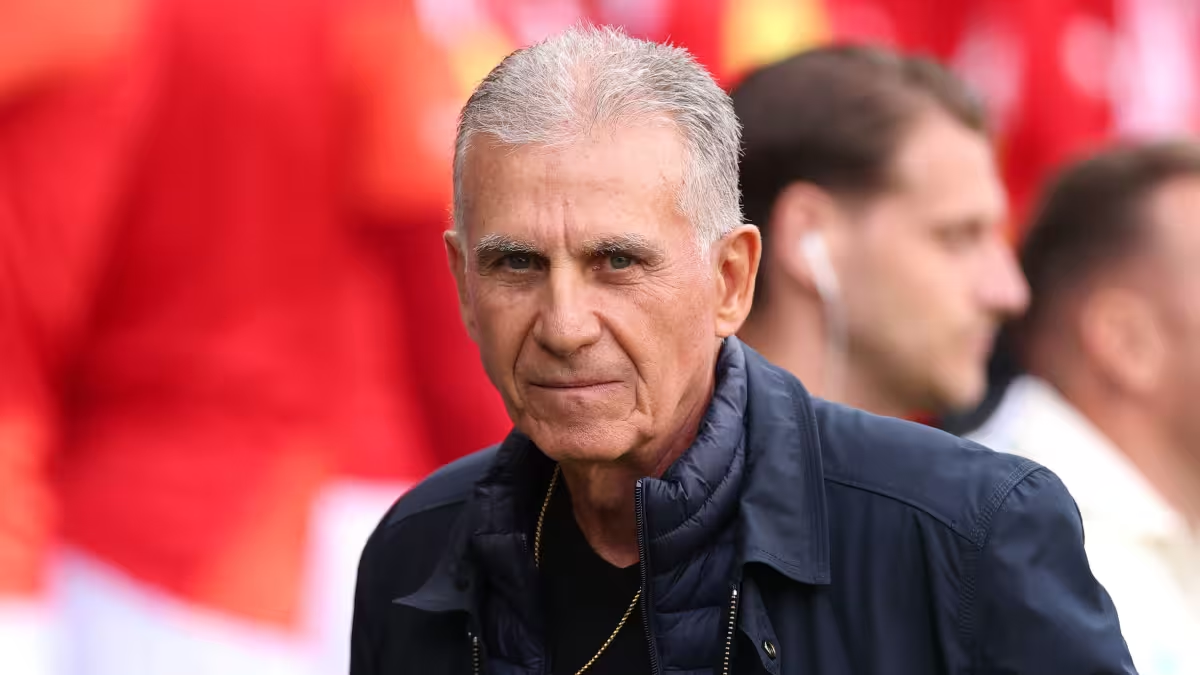


Context: the team had been training in Tijuana before and around the U.S. fixtures and had planned to stay in Los Angeles the night after the opener — a normal precaution to aid player recovery and preparation. Instead delegates told the squad to get on a plane and return to camp, a decision Ghalenoei said felt like it had been made "elsewhere": "I think it’s very strange. It seems like others are doing the planning for us. The decision-making for us is being made elsewhere."
The match was also marked by visible protests in the stands. Several hundred Iranian Americans gathered outside the stadium, many fans jeered and turned their backs during the national anthem, and dozens of Lion and Sun emblems were displayed among the crowd — scenes that accompanied the immediate postgame scramble to leave the country.
The friction is plain: the team expected to stay in California overnight to recover, but was told to depart immediately. Ghalenoei framed the move as damaging to preparation and said, "We were supposed to come two nights before the game, and we were supposed to stay tonight to recover and return tomorrow at lunchtime. We have no idea why." He added, "I think our team is perhaps the most oppressed in the World Cup."
The central unanswered question now is procedural and practical: who ordered the premature departure? No public explanation has clarified which authority — sporting, diplomatic or security — required Iran to leave the United States so quickly. That gap matters for the upcoming schedule because whether Iran can re-establish a stable base in the U.S. before facing Belgium will shape not only travel and recovery plans but also how the team prepares tactically for the next two group games.
What comes next is immediate: Iran must regroup for the Belgium match in Inglewood on Sunday, with the team already displaced and short on the normal postgame recovery the coaching staff had planned. The identity of the decision-maker who sent them back to Tijuana will be the focal question in the hours before kickoff.