



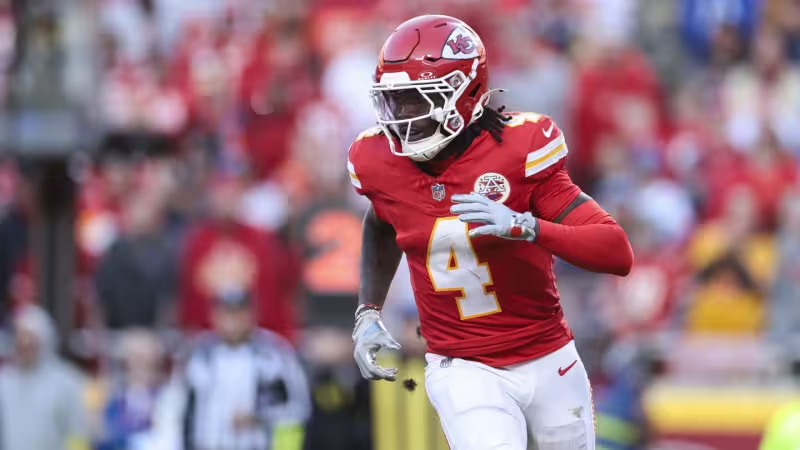
Rashee Rice was released from Dallas County Jail on the morning of Tuesday, June 16, after serving 30 days for violating his parole or probation.
The Kansas City Chiefs wide receiver had pleaded guilty on July 17, 2025, to two third‑degree felony charges tied to a March 30, 2024, Dallas‑area highway incident — collision involving serious bodily injury and racing on a highway causing bodily injury — and was sentenced to 30 days in prison and five years’ probation.

The 30‑day incarceration that ended Tuesday began after Rice tested positive for THC last month, a result listed in court records that the jail term says amounted to a violation of his probation. He missed the Chiefs’ organized team activities and mandatory minicamp while the matter unfolded.
Rice’s time behind bars included two procedural moves that his lawyer requested and the court granted. A May 28 order allowed him to leave the facility to rehab a knee on which he had surgery shortly before his incarceration, and his attorney also asked that he be moved from an isolated cell to the jail’s general population; officials carried out that request during his stay.

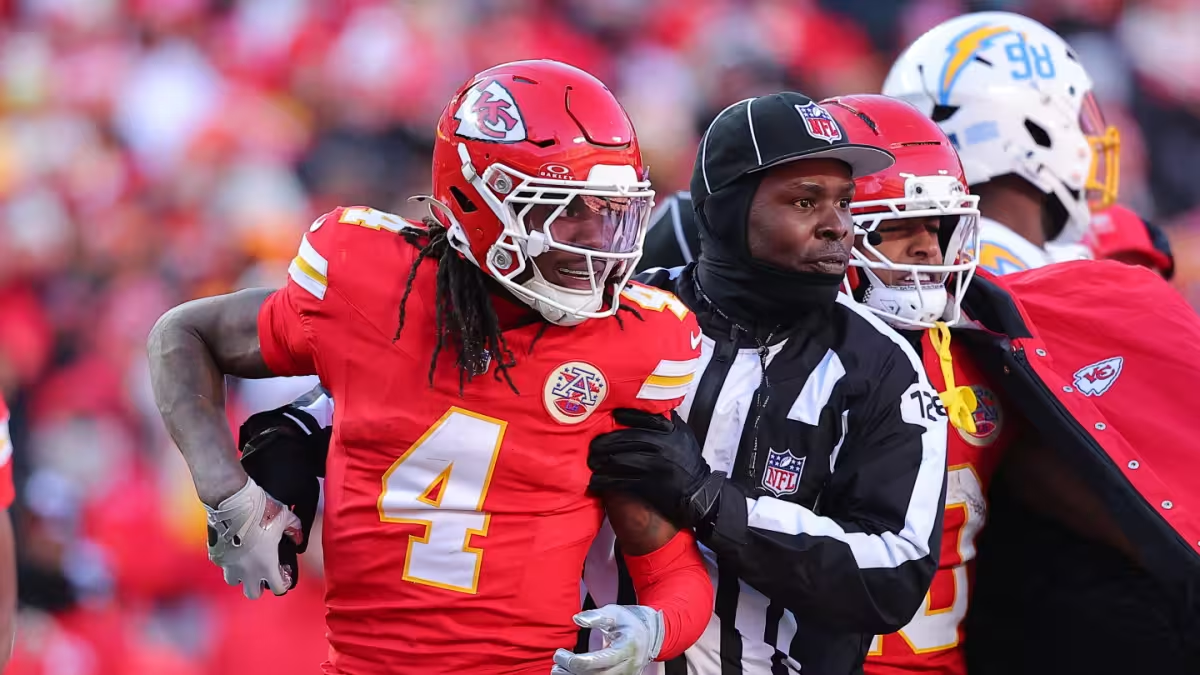
The legal sequence is straightforward on paper: Rice resolved the felony case by pleading guilty, took the sentence that included probation, then ran afoul of that probation when the positive THC test surfaced last month and prompted a 30‑day jail term that concluded June 16.
There is friction between the criminal outcome and the league’s treatment of the case. The NFL suspended Rice for the first six games of the 2025 season under its personal conduct policy, yet league officials have shown no inclination to impose further discipline tied to the probation violation. That absence of additional penalty leaves the Chiefs and fans with uncertainty about how Rice’s availability will be handled once he returns to football activity.
Rice’s absence has already reshaped Kansas City’s offseason work, and it has surfaced as a factor in roster planning. The team’s offseason decisions — and broader discussions about receiver depth and possible moves — have been tracked alongside his legal status; a recent internal piece on team strategy referenced the situation while reporting that the Kansas City Chiefs weigh A.J. Brown trade options:
What happens next remains unsettled. Sources do not confirm any additional league discipline or new legal steps after his release, and there is no publicly announced court date or probation modification pending that would clarify Rice’s immediate legal obligations. The single most consequential unanswered question now is whether the NFL will alter its stance and impose further punishment for the probation violation, or whether prosecutors will seek additional legal action — neither of which has been confirmed following his release.



