Dana White said Monday the Ultimate Fighting Championship should not stage another White House fight night after UFC Freedom 250, the seven-card South Lawn card where Justin Gaethje battered Ilia Topuria to win the lightweight title.
White, who described the evening as “It was an amazing, experience, this was a one-of-one,” said the promotion had “surpassed its goals in every metric” and reported strong merchandise sales and streaming-service subscription gains tied to the event. The card rewarded Gaethje not only with the title but with $825,000 in bonuses for Performance of the Night and Fight of the Night, a figure that reinforced the commercial upside of the unusual setting.

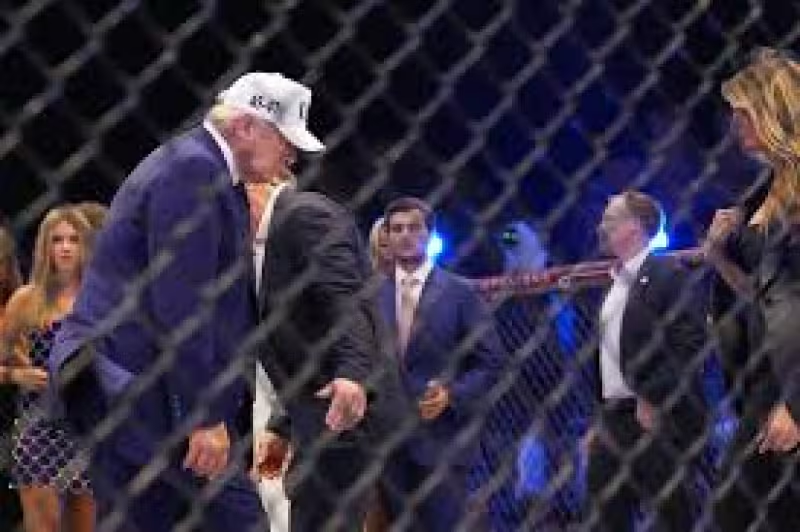
The card blended spectacle and pageantry. The show was held Monday, June 15, 2026, on the South Lawn of the White House and featured patriotism from the Marine Band and tributes to first responders and active military. Donald Trump, who was marking his 80th birthday alongside the country’s 250th anniversary of the Declaration of Independence, stayed until the end of the seven-card show, put on a white USA baseball cap and posted one-word praise — “PERFECT!” — on Truth Social.
Fighters toured the West Wing before the fights, moving through the Oval Office, the Roosevelt Room and the Cabinet Room; Gaethje said he looked at the original Declaration of Independence there before walking to the cage. “Usually, I kind of blank out when it comes to getting ready to walk to the cage,” he said. “It was pretty crazy, looking at the Declaration of Independence. The original one. Their language was different. I’m not smart enough to read that.”
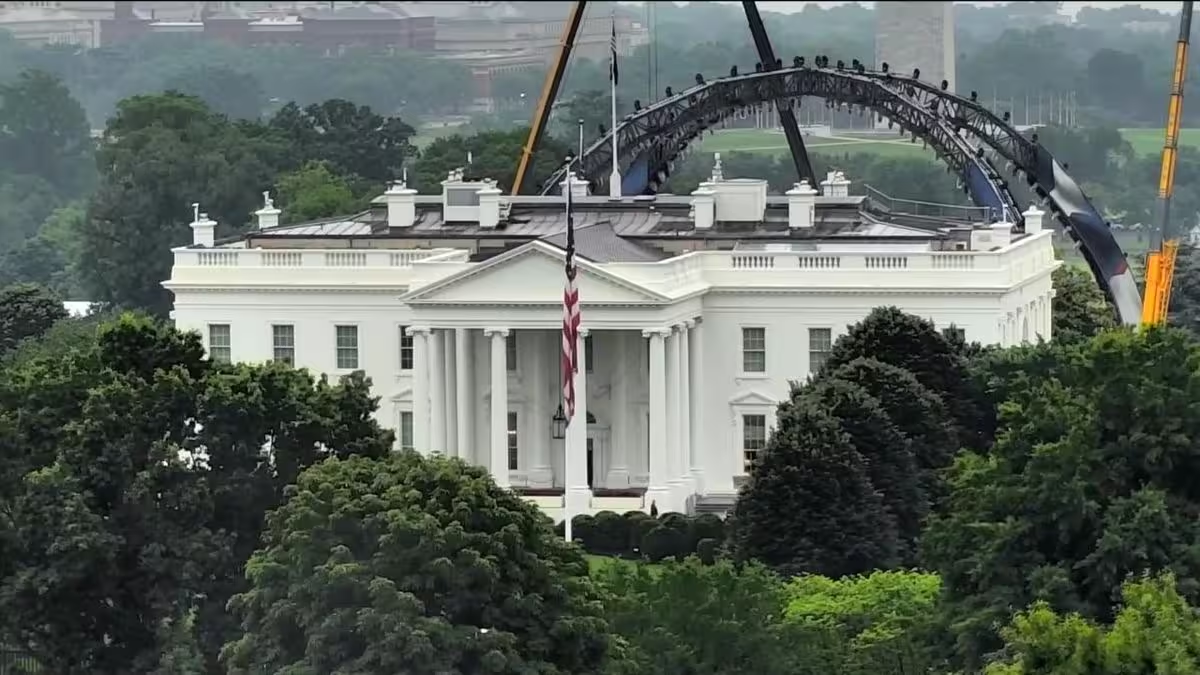
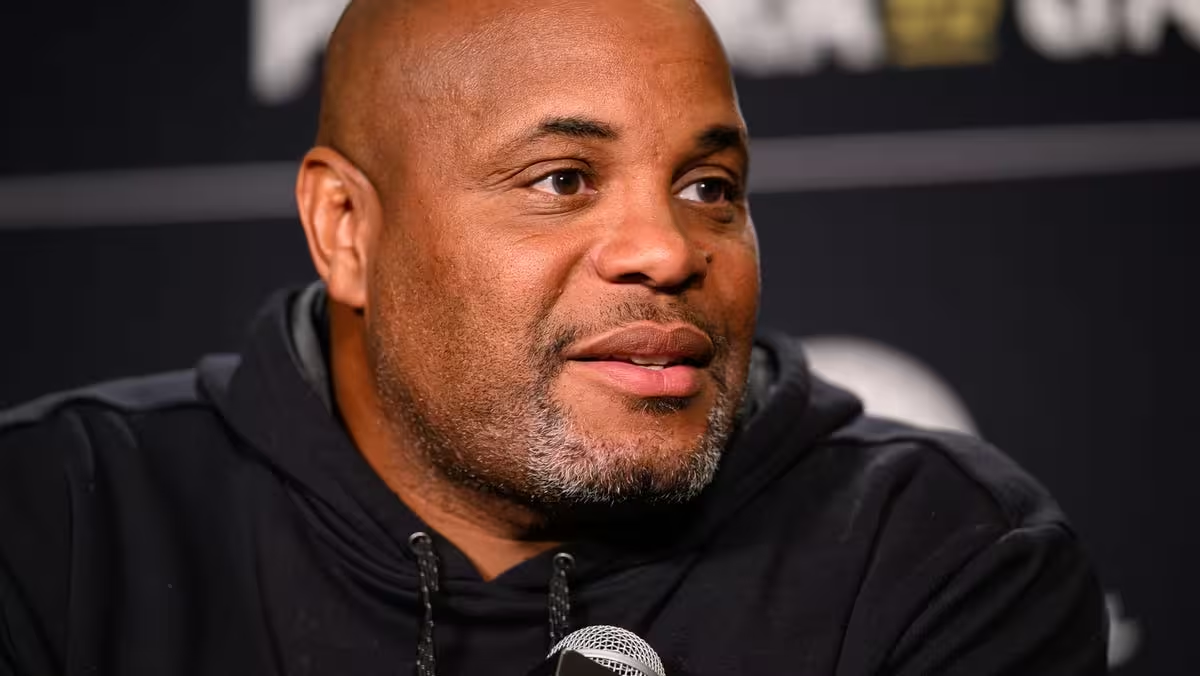
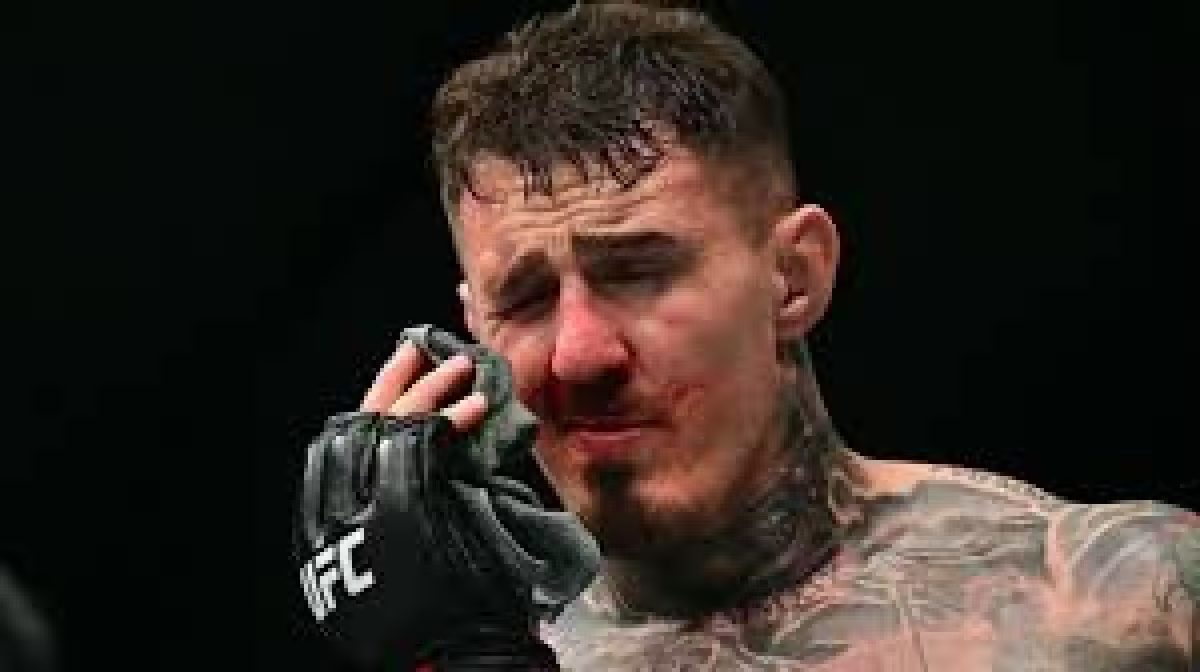
Even as White framed Freedom 250 as a clear commercial and promotional success, he also stressed its uniqueness and indicated he did not want a repeat on the White House grounds. That split — declaring the event both a triumph and a one-time-only experiment — is the defining friction from the night: a deliberately staged, highly profitable presidential event that the company’s CEO says should not recur.
The card’s political overlay produced other frictions. At a public Ellipse watch party, fighter Sean Strickland was escorted out by police officers. Another participant, Josh Hokit, made an extraordinary and unfounded attack grounded in a right-wing conspiracy theory about Michelle Obama, an incident that highlighted how a fight card inside a seat of government can carry volatile domestic political implications as well as brand upside.
White’s immediate assessment — celebratory on metrics, cautionary on precedent — reshapes what Freedom 250 will mean for the sport. The combination of presidential access, large streaming lifts and merchandise momentum proved the promotion can convert spectacle into revenue and visibility. But those same elements are what White implicitly cited when he said the White House staging should remain singular: the optics, the security calculus and the political baggage that came with the night complicate any simple plan to repeat it.
The most consequential unanswered question is now plain: will the Ultimate Fighting Championship try to replicate the political cachet of Freedom 250 at another government or high-profile public venue, or will White’s “one-of-one” verdict close the door on future shows that involve a sitting president’s official residence? White’s public refusal to signal a repeat makes another White House card unlikely; whether UFC pursues comparable events elsewhere is the open decision that will determine whether Freedom 250 is a singular spectacle or the prototype for a new kind of major-event strategy.