



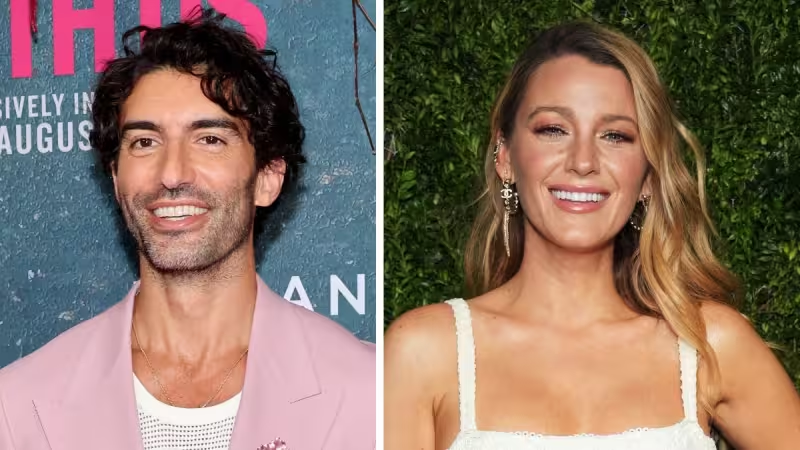
A federal judge on Friday ordered Justin Baldoni to pay Blake Lively’s legal fees but rejected her request for compensatory or punitive damages in the long-running It Ends With Us lawsuit.
U.S. District Judge Lewis J. Liman found that Lively was entitled to recover defense costs under the Protecting Survivors From Weaponized Defamation Lawsuits Act — codified as Section 47.1 in California law — but that the statute’s narrow remedy does not reach damages claims. Liman wrote that the law "does not create an end run around the entire set of carefully crafted federal procedural rules designed to protect the rights of the parties." He added: "It instead establishes a narrow exception to the usual litigation process for a specific and limited kind of relief" and that "Compensatory and punitive damages do not fall within that exception."

The dispute traces to 2024, when Lively accused Baldoni and production company Wayfarer of marshaling a plan to undermine her reputation in retaliation for speaking up about alleged misconduct on the set of It Ends With Us. The core sexual-harassment allegation was dismissed earlier in the litigation, and Baldoni’s separate $400 million lawsuit against Lively was formally dismissed last year.
The parties reached a settlement one month before the court’s resolution, but the question of attorney’s fees under Section 47.1 remained. Judge Liman’s Friday order resolves the legal rule question in Lively’s favor while drawing a clear line around monetary damages — leaving only the amount of fees for Liman to determine.


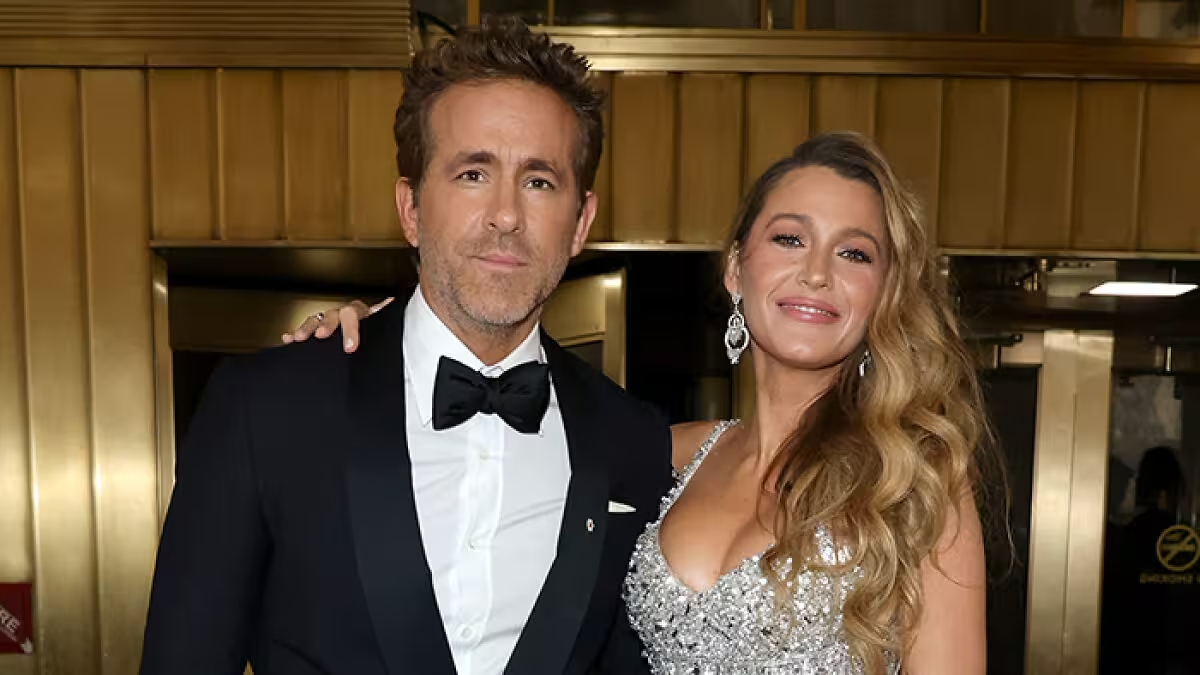
Lively’s legal team framed the fee issue as central to the deal. Michael Gottlieb said preserving the claim was a "core issue" after the parties reached their settlement, signaling that recovery of defense costs was a primary objective for her side even as broader claims were dropped or dismissed.
Baldoni’s camp, by contrast, emphasized that the litigation was effectively over. On Monday, Bryan Freedman — who has spoken for Baldoni — said on The Megyn Kelly Show, "I think it’s finally over." Freedman also criticized aspects of the settlement coverage, asking, "If it was so good, why do you settle a case exchanging no money? It doesn’t make any sense. It doesn’t pass the smell test." He described the settlement terms as "pretty standard," and added, "Hopefully people will wish the best for each other and come to that place that says, you know what, enough is enough."
The judge’s ruling narrows the practical outcome for Lively: she wins reimbursement for the costs of defending against what the California law treats as weaponized defamation, but she will not receive the kind of damages that come with a full-blown tort victory. That distinction matters because Section 47.1 was written to allow certain survivors to recoup legal bills when they are targeted with retaliatory litigation, not to provide a substitute pathway to compensatory relief.
The order also incorporated settlement terms: as part of the earlier deal, Baldoni waived his right to appeal his own $400 million lawsuit against Lively. That suit had been dismissed last year, and Freedman said he was publishing the full settlement so the ruling could not be resurrected in the future.
What remains unresolved is numerical and consequential: Judge Liman must now calculate how much Baldoni will pay Lively for her attorneys’ fees under Section 47.1. That single measurement will determine whether Lively’s legal victory on fees carries a significant financial remedy or a more modest reimbursement, and the judge’s decision on amount is the next, and likely final, chapter of the It Ends With Us lawsuit.



