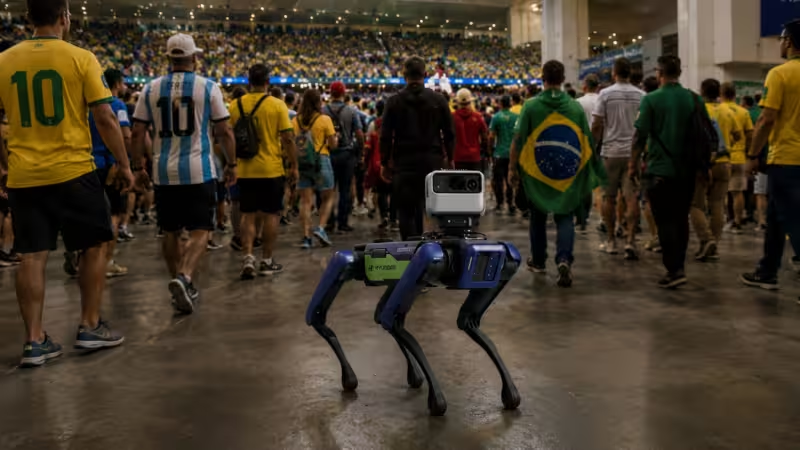
Robot dogs have been incorporated into the security operation in Monterrey for the Suecia - Túnez match and will patrol the immediate surroundings of the stadium, a local report published June 14 said.
The machines are fitted with cameras and night‑vision equipment, the report states, and are now part of the set of measures deployed around the venue during the competition. Their presence marks a new, mobile layer of surveillance focused on the approaches, plazas and access routes that channel fans toward the stadium.

For spectators and people near the arena the change is practical and immediate: patrols that can move along perimeter routes rather than remaining fixed at one location, and sensors that can operate after dark. Those technical capabilities expand the hours and angles from which activity around the stadium can be monitored.
The deployment took place in Monterrey, Nuevo León, during the scheduled Suecia - Túnez encounter and is explicitly targeted at the stadium’s environs during the competition. The robots join other security measures already focused on keeping routes into and out of the site under observation while matches are under way.
The available account also leaves important operational questions open. It does not say how the units are supervised while operating among crowds, whether a human operator is in direct control at all times, or what protocols apply if a machine malfunctions or requires human judgment. Equally, the report does not disclose how many robot dogs are in service or which authority is responsible for commanding and maintaining them.
Those gaps matter because mobile systems in public settings depend on defined chains of command and fail‑safe procedures to manage risk. Cameras and night vision increase what can be seen; they do not by themselves answer who reviews footage, how long it is retained, or who intervenes if a situation requires a human decision. Without public detail on oversight, attendees have visibility of the devices but not of the rules governing their use.
The machines will continue patrolling the stadium perimeter through the duration of the competition, remaining an active element of the local security posture for Suecia - Túnez. The most consequential unanswered question is straightforward: who is in charge of those robot dogs, and what real‑time supervision and accountability arrangements have been put in place while they operate among spectators?