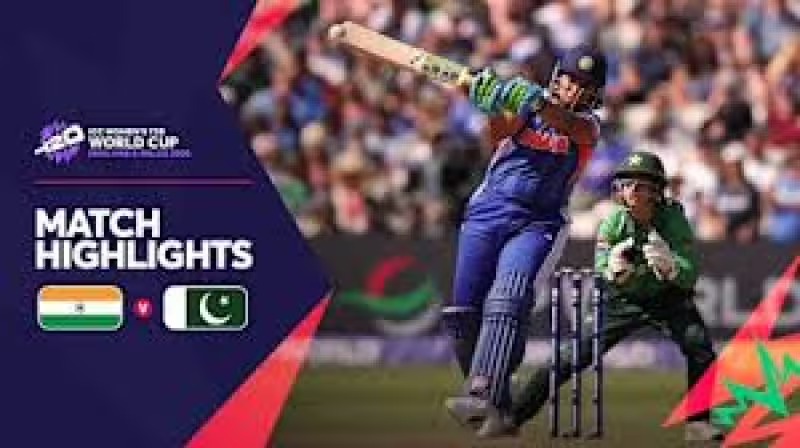
India defeated Pakistan in their Women's T20 World Cup Group 1 match at Edgbaston after posting 170-6, a total that proved beyond Pakistan's reach in front of a record group-stage crowd of 18,814.
The scoreboard told the story: India produced 105 runs in the last 10 overs to finish 170-6, with Richa Ghosh accelerating late, finishing 34 off 17 balls. Pakistan crumbled in reply, losing their last seven wickets for 31 runs as they wilted under the finishers' assault.

The attendance — 18,814 — set a new mark for a Women's T20 World Cup group-stage match and framed the result as more than a routine group fixture. India’s late flurry turned what might have been a chaseable total into a test of depth; the surge in the final half of the innings, and Ghosh’s cameo at the death, left Pakistan with too much to do.
India captain Harmanpreet Kaur welcomed the support and underlined the team’s recovery after a shaky start. She thanked the fans who turned out and said the partnership with Smriti restored control after early pressure in the powerplay, adding that her batters Smriti and Deepti have been the side’s reliable finishers. Harmanpreet also noted that the team is conscious of net run-rate as the group stage progresses and praised how the late batting roles were executed.
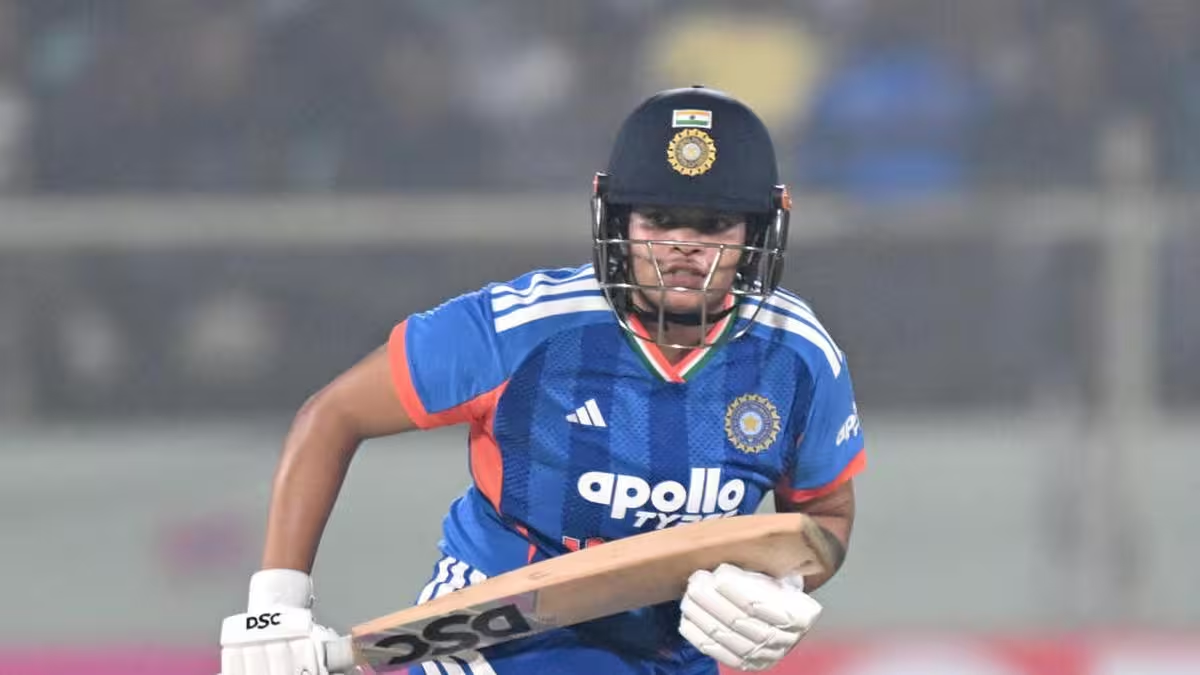


For Pakistan the match exposed two clear, related problems. Their batting collapsed when it mattered most — the final seven wickets fell for 31 runs — and the fielding lapses compounded that slide. Captain Fatima Sana said the side were very disappointed with their batting, blamed a string of dropped catches by senior players and admitted those errors cost the match. She also said Pakistan had been comfortable in the powerplay but that the collapses followed afterwards, and urged quick improvement because there is still a long way to go in the tournament.
The margin and mechanics of the result crystallize why the game was won and lost where it was. India’s 105 runs in the final 10 overs turned a defendable total into a commanding one; Pakistan’s inability to convert promising starts, coupled with fielding failures, converted a contest into a collapse. That duality — late batting power versus middle-innings fragility — is the practical narrative from Edgbaston.
The friction between Pakistan’s assessment and the scoreboard is stark: the captain pinpointed senior players dropping catches as decisive, and the numbers back up the damage those missed opportunities did. Losing seven wickets for 31 runs gave India the breathing room to press without panic; had Pakistan held onto half a dozen chances or steadied through the middle overs, the chase would have looked very different under the stadium lights.
This result leaves India with a strong opening in the group and a boost from both the scoreboard and an unusually large crowd. For Pakistan it raises an urgent question that the team itself has acknowledged — can they fix the catching and the middle-order resilience fast enough to salvage their campaign? The captain’s call for immediate improvement stands as the clearest next step; the tournament schedule pauses for a day, with coverage resuming for New Zealand v Sri Lanka and later England v Ireland, but Pakistan have to address those weaknesses before their next outing if they are to climb back into contention.