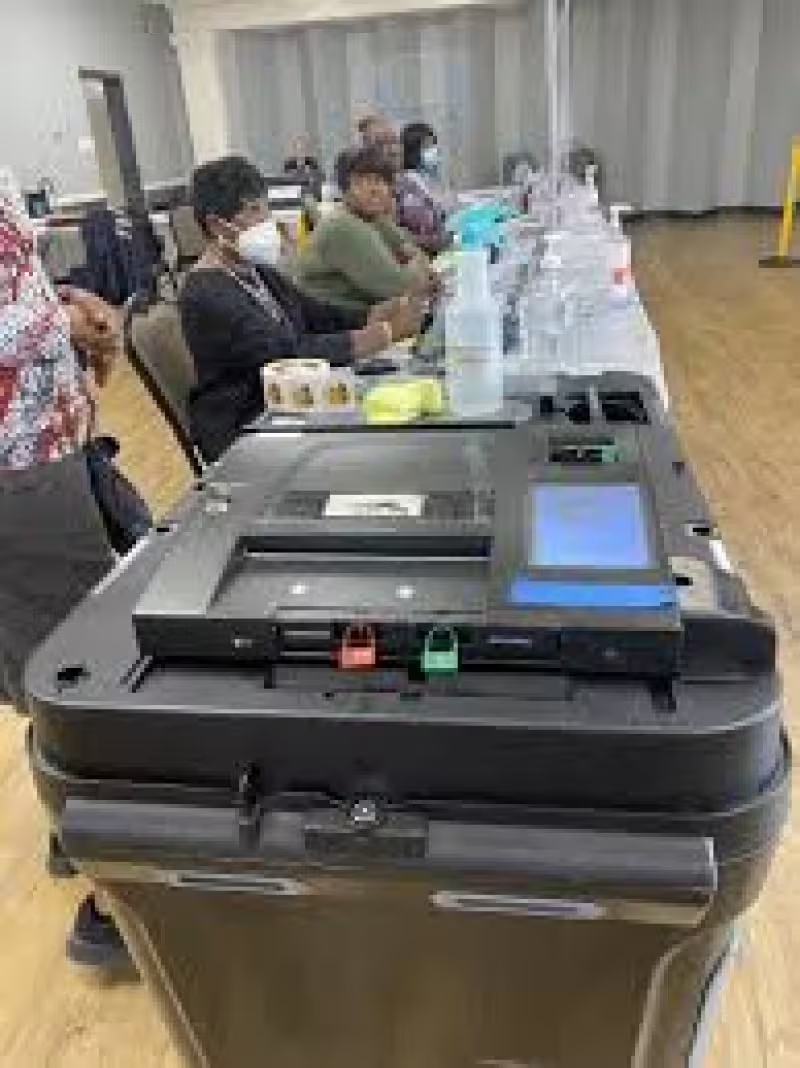
Georgia lawmakers are heading into a special session next week with a deadline hanging over the state’s ballot-counting system: by July 1, QR codes on printed ballots can no longer be used to tabulate votes. The General Assembly will have to decide whether to keep the current setup, replace it, or move to another method before the cutoff arrives.
The immediate pressure is not abstract. More than 2 million ballots were counted in the recent primary, and Secretary of State Brad Raffensperger said more than 99.99% showed no discrepancies. He said 159 errors were identified in election reviews and audits, with 143 of them tied to hand-marked paper ballots, a result he pointed to as evidence that voting machines perform better in post-election checks.


That dispute is now landing in lawmakers’ laps. The special session is set to cover both redistricting and voting legislation, but the QR-code deadline gives election policy an urgent edge. Activist groups have argued that hand-marked paper ballots could be the answer if Georgia wants to move away from machine-read codes, while Raffensperger has argued that voter intent can be harder to read on those ballots because marks can be incomplete and humans have to interpret them.
The issue goes to the core of how Georgia counts votes. QR codes on printed ballots are designed to be read by machines, and the coming deadline means that method cannot stay in place without action from the legislature. Hand-marked paper ballots would change the process, but supporters and critics disagree over whether they improve transparency or introduce more room for interpretation in audits.
What lawmakers choose next week will determine how Georgia’s ballots are tabulated after July 1, and the opening is still there for a fight over which system best protects accuracy. The session may produce a fix, but it will also reveal whether the state is willing to trade one method for another before the deadline closes in.