Simon Fida stood with Dean Massignani on a chilly Mother's Day at Willoughby Stadium, the two lifelong fans tracing three decades of Whitecaps memories as a second-division Canadian Championships game played out beneath the plastic lights. "We have a World Cup, and our team might leave," Fida said, the line cutting across the crowd’s small talk and the day’s routine.
Fida and Massignani have followed the Whitecaps in all their iterations since the late 1970s; their presence at the 6,500-seat venue 23 miles from Lynden felt like a postcard from a different era — except for the reason they were afraid. Whitecaps executives have told the club’s supporters and local officials that they cannot compete financially with the 29 other MLS clubs because of an unfavorable lease at BC Place and are actively trying to find new local owners to avoid relocation to a U.S. city.

Axel Schuster, speaking in January, framed the contradiction plainly: "We have been the second-best team in North America, and we have been, again, the last team in revenues in the MLS," he said, then added, "That doesn’t fit together." The line has become the bluntest explanation the club has offered for why on-field success — eight playoff appearances in 11 seasons, a run to the MLS Cup final in 2025 and four straight Canadian championships — has not translated into the financial clout of peer teams.
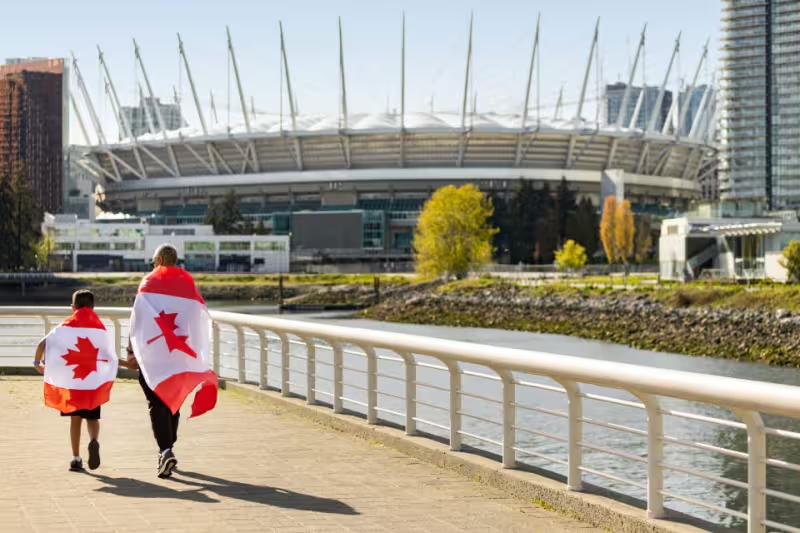
The gap is the friction at the heart of the debate. Vancouver’s home gates have swelled above 20,000 a game in recent years, yet executives say the BC Place lease — at a provincially owned stadium described by critics as an uninspiring retractable-roof bowl — leaves the club structurally behind. Mayor Ken Sims said at the FIFA World Congress in April, "At the end of the day, economics has to work for whoever the future order is," and added, "We have a deep love for the Whitecaps. It’s part of our heritage. We know the market can support the team. It’s just they have a stadium deal right now that doesn’t work."
Supporters made that point visibly. Members of the Caps’ Southsiders staged a rally at the FIFA World Congress as the World Cup preparations — BC Place is scheduled to host seven FIFA World Cup games — put Vancouver under a global spotlight even as the club’s future here feels insecure.
Club officials and civic leaders are not arguing about whether the market can carry top-tier soccer; they are arguing over the financial architecture that turns fans and attendance into operating revenue. Major League Soccer teams rely on ticket sales, luxury suites, concessions, parking, merchandise and player transfers, plus local and league-wide sponsorships, stadium naming rights and broadcast deals. Executives say the Whitecaps’ lease limits their ability to capture the streams their rivals rely on to grow revenues.
Voices in the conversation have grown sharper. "It’s almost like they have horse blinders on," Josh Smith said, and added, "It is a bit shortsighted," lines that underscore a growing impatience among local stakeholders and some supporters who believe political or contractual fixes have not matched the urgency on the field.
The prospect of a franchise moving south is no academic warning. Club leaders have made clear the team could relocate to a U.S. city without new local ownership, and Vancouver FC of the Canadian Premier League is already described in local conversations as the highest-profile soccer alternative should that happen. For fans such as Fida and Massignani — who have kept season tickets through the club’s long transformations — the idea that the Whitecaps might leave during a year when BC Place hosts World Cup matches adds a bitter, almost surreal note to the season.
The immediate next step is unresolved. Ownership is seeking buyers, and civic officials are pressing the point that the market supports a top-tier club; neither camp has provided a public deadline. The most consequential question now is whether a new local ownership group can be found and fast enough to rewrite a stadium arrangement that executives say leaves one of MLS’s most successful teams, on paper and in the stands, last in league revenues.