



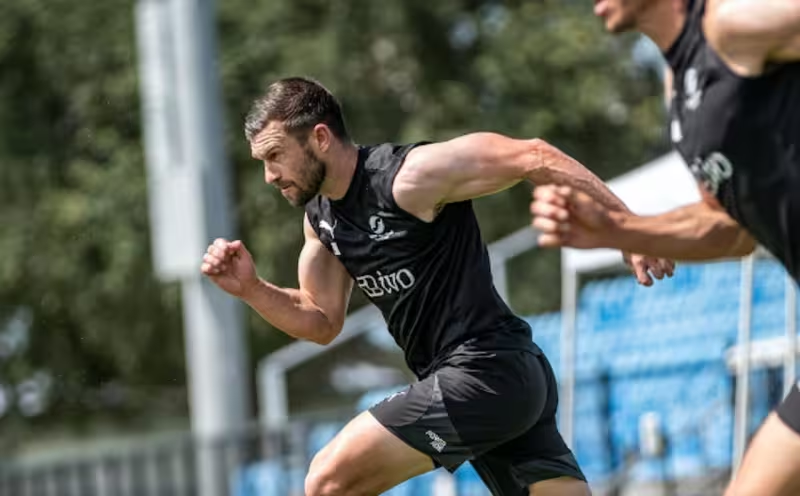
In a short video posted by the A-League from New Zealand's Florida training camp, Tim Payne thanked the Argentinian creator who turned him into a global social-media phenomenon — a gesture that came after his Instagram account ballooned from a few thousand followers to more than five million in the space of days.
Two weeks before the surge Payne had roughly 4,700 Instagram followers and had posted just twice all year. On 28 May 2026, Valen Scarsini, the content creator who trades as El Scarso, picked Payne while scanning every registered player at the 2026 World Cup as the least-known player on the tournament list. Scarsini urged his audience to flood Payne's posts, mention him everywhere and build a social-media legend from scratch; inside 24 hours Payne had crossed one million followers, and by the time the two met at the camp last week his account had passed five million.

The scale is striking. One Payne post drew about 50,000 comments. His following now outnumbers the All Whites, is roughly double that of the All Blacks, and is nine times the follower count of Air New Zealand. Even large commercial accounts sit far below Payne’s new total — Heinz’s global account has roughly 256,000 followers, for comparison.
Payne, a 32‑year‑old defender who signed with Wellington Phoenix in 2019 and who has roughly 50‑odd caps for New Zealand, has publicly framed the moment as gratitude. In the video posted by the A‑League he thanked Scarsini and said he appreciated the global support for his role representing his country. The thanks was straight and unvarnished; he did not try to explain the mechanics of how virality arrived on his doorstep.
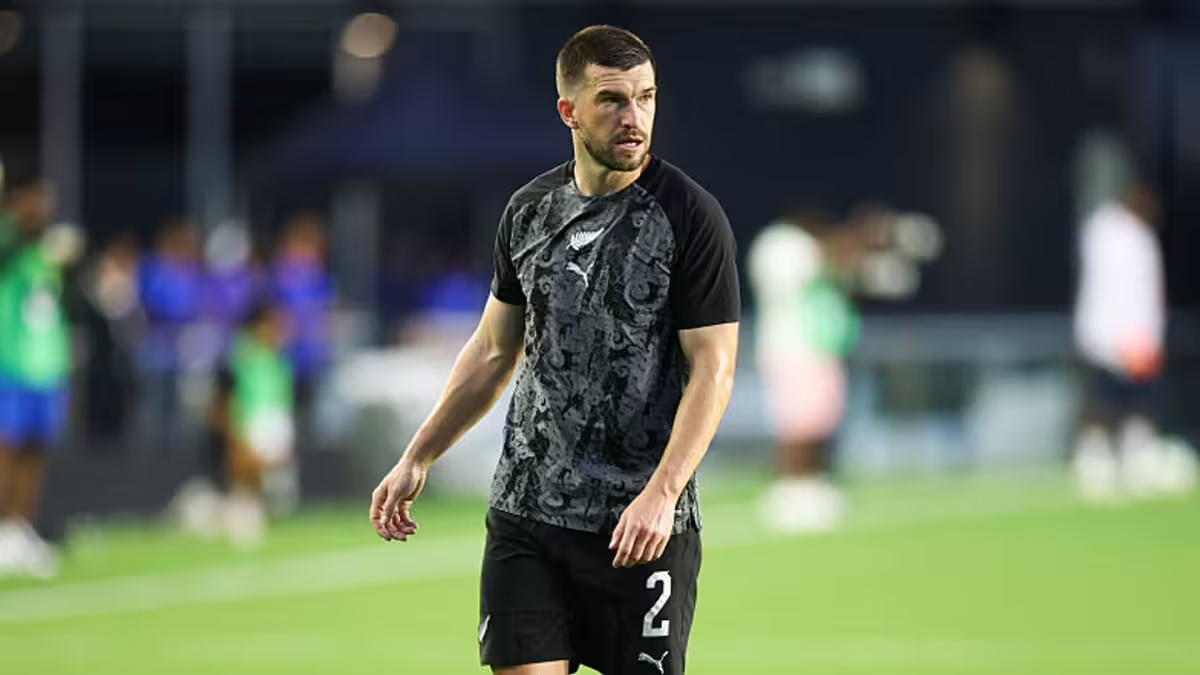
That mechanics matter. Scarsini had reviewed all 1,248 registered players at the tournament and deliberately selected Payne as an experiment in manufactured fame. The campaign was not a chance discovery; it was a directed effort to drive attention to a chosen target. The result — a small‑profile international player vaulted past national teams and major brands in follower count within days — highlights how quickly an online creator can rewrite a public profile.
The friction is obvious: Payne’s surge reads as both personal and engineered. He was a little-known professional who had barely posted on the platform; the following that now dwarfs established teams and corporate accounts came as a direct call to action from a single creator. That raises immediate questions about what counts as organic celebrity in the lead-up to a major sporting event and how online campaigns can distort perceptions of popularity and market value.
For Payne and for New Zealand football the moment has practical consequences even if the long‑term effects remain unclear. The attention brings commercial visibility and an audience beyond the usual football fans, and it reshapes the way sponsors and broadcasters might measure reach around the World Cup. It also puts Payne under an intensified public microscope as the tournament begins: a defender with 50‑odd international appearances is suddenly a social-media megastar, whether or not his on‑field profile changes.
The single pressing question now is how durable this audience will be after the World Cup buzz fades. The campaign that created Payne’s current profile is deliberate and dateable; whether those five million followers remain engaged once the tournament moves on — and whether the surge converts into lasting recognition, endorsements or broader interest in New Zealand football — is the open outcome that will determine whether this moment was a viral stunt or a career‑changing lift.



