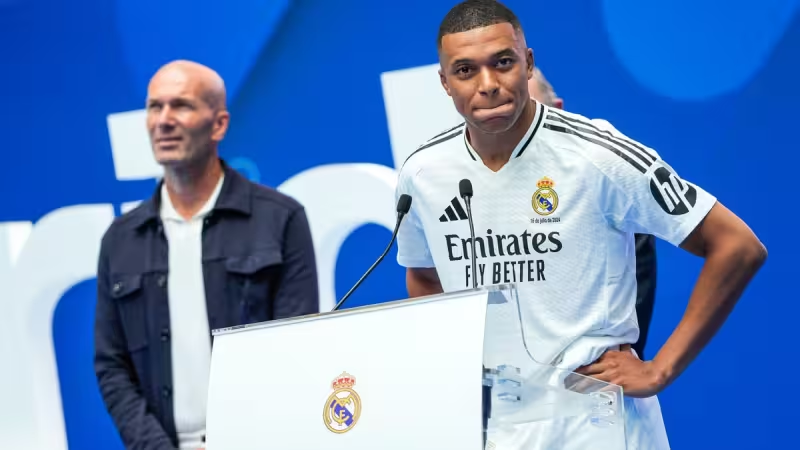
Vincent Candela, a member of France’s 1998 World Cup‑winning side, put a brake on the popular Zidane–Mbappé conversation as the 2026 World Cup opens: Zinédine Zidane, he said, remains one of the five greatest players ever, and “the comparison with Mbappé is not yet possible.” Candela added that Mbappé has already won in 2018, that he hopes the forward will win again in 2026, and that he expects Mbappé to take the team in hand and carry France to the final.
The timing matters. The tournament has begun in the United States and France, widely viewed as a favorite for a third star, will open its campaign on 16 June against Senegal with Kylian Mbappé leading the side. Candela’s intervention lands as critics who have targeted Mbappé in recent months at Real Madrid — and some who say the forward was already thinking about the World Cup — intensify scrutiny on whether he can convert individual talent into sustained national leadership.

Candela’s remarks are weighty because of who he is: a survivor of the 1998 squad that made Zidane’s performances a national touchstone. He deliberately set Zidane’s bar high — one of the five greatest — then refused to fast‑track Mbappé into that frame. His view both honors Zidane’s 1998 legacy and reframes expectations for France’s captain: winning in 2018 is part of Mbappé’s record, Candela said, but the decisive measure now is whether he can steer the team deep into this tournament.
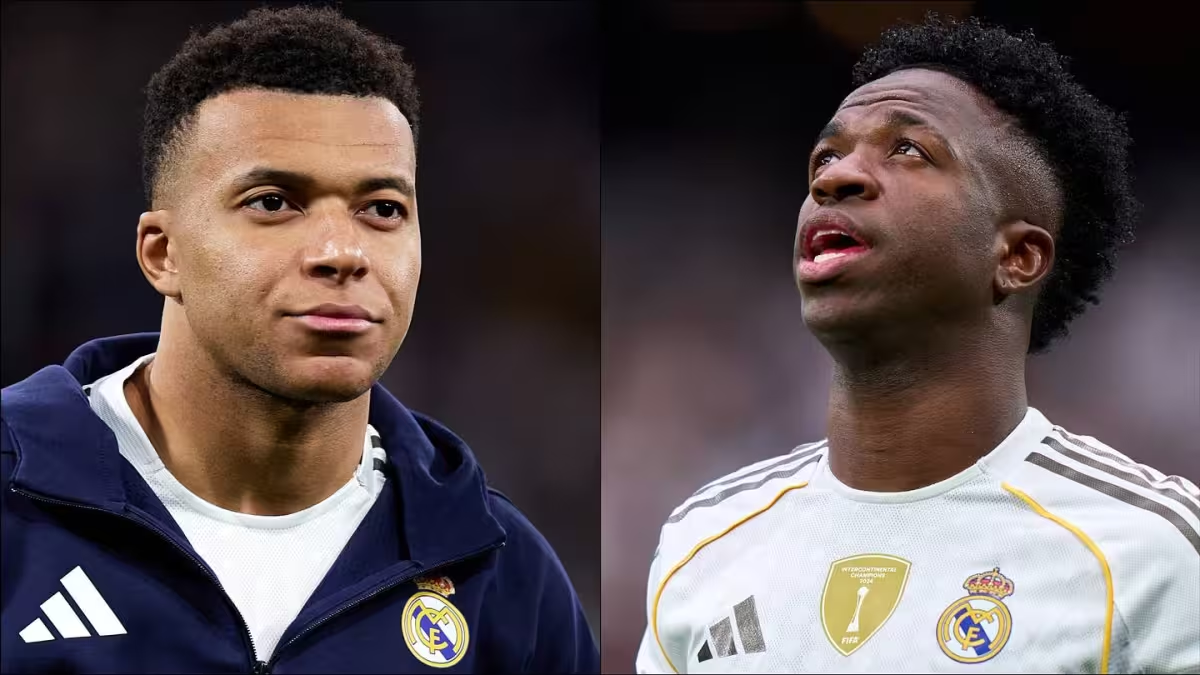
Not everyone sees the situation the same way. Marcel Desailly told reporters separately that Zidane is very likely to arrive and could change the hierarchy in the France team, arguing that four or five players who are undisputed starters under Didier Deschamps would give way to a different philosophy. Desailly praised Zidane’s club work — “Zidane did an excellent job with Real Madrid,” he said — and noted that Zidane has been without a club since leaving Real Madrid in 2021, suggesting the former playmaker would have more latitude with a national side.
That contrast sharpens the story’s friction. On one side is Candela’s caution: Zidane’s achievement with an exceptional 1998 group remains singular and the comparison “is not yet possible.” On the other is a view that Zidane’s presence, were it to materialize, would redraw selection and roles inside the squad. Both positions raise the same practical question: can Mbappé, amid recent criticism at his club and mounting expectations at the national level, become the uncontested leader France needs?
What follows is straightforward and immediate. France’s first match — 16 June against Senegal — will be the first public test of the role Candela describes: not whether Mbappé can score, but whether he will consistently take the team by the hand. If he does, the Zidane comparisons will shift from hypothetical to consequential. If he does not, those comparisons will remain a benchmark beyond reach rather than a template to meet.
Candela’s intervention resets the narrative for the opening days in the United States: Zidane’s shadow endures, but the onus is on Mbappé to carry France forward. The unresolved question now is sharp and simple — not rhetorical: will Kylian Mbappé actually lead France to the 2026 World Cup final?