



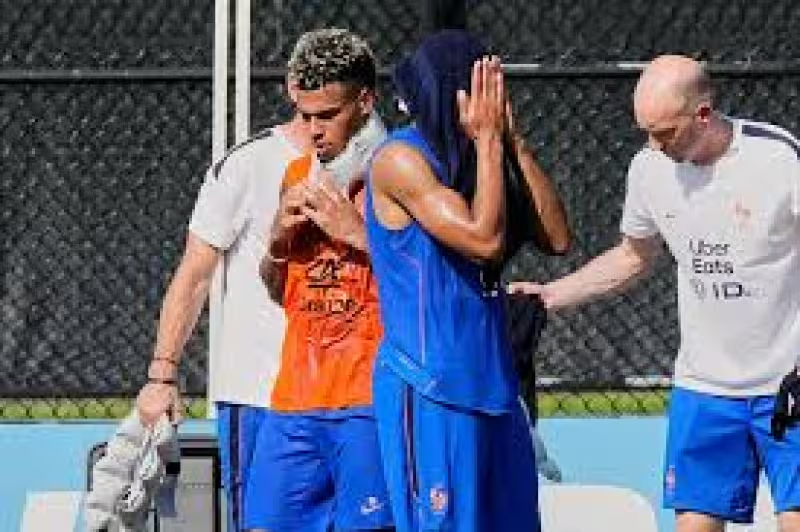
Qatar v Switzerland is scheduled to kick off at 6pm local time at MetLife Stadium in East Rutherford, with forecasts calling for sunny skies and an opening temperature of 88°F (31°C).
That 88°F start arrives with the sun still up: sunset for the MetLife match is 8:28pm, making second-half glare a likely factor for players and officials as the game runs into dusk.

The match is part of a tournament that is expected to be unusually warm; a sizeable chunk of the World Cup’s 104 games are forecast to be played at or above 90°F (32°C), and this edition is likely to be the warmest since 1994 in the United States.
Heat warnings are already in play elsewhere on the schedule. The National Weather Service has issued a Heat Advisory for Levi’s Stadium in Santa Clara from 12pm to 7pm, with temperatures near 80°F (27°C) at noon and rising to about 88°F (31°C) by 2pm; the UV Index there is expected to reach 10, categorized as very high.
For fans and teams at MetLife, the immediate practical picture is clear: a hot, bright kickoff and possible uncomfortable sun exposure that will persist into the second half. The 88°F kickoff is part of a broader pattern of high temperatures across tournament venues rather than an isolated reading.

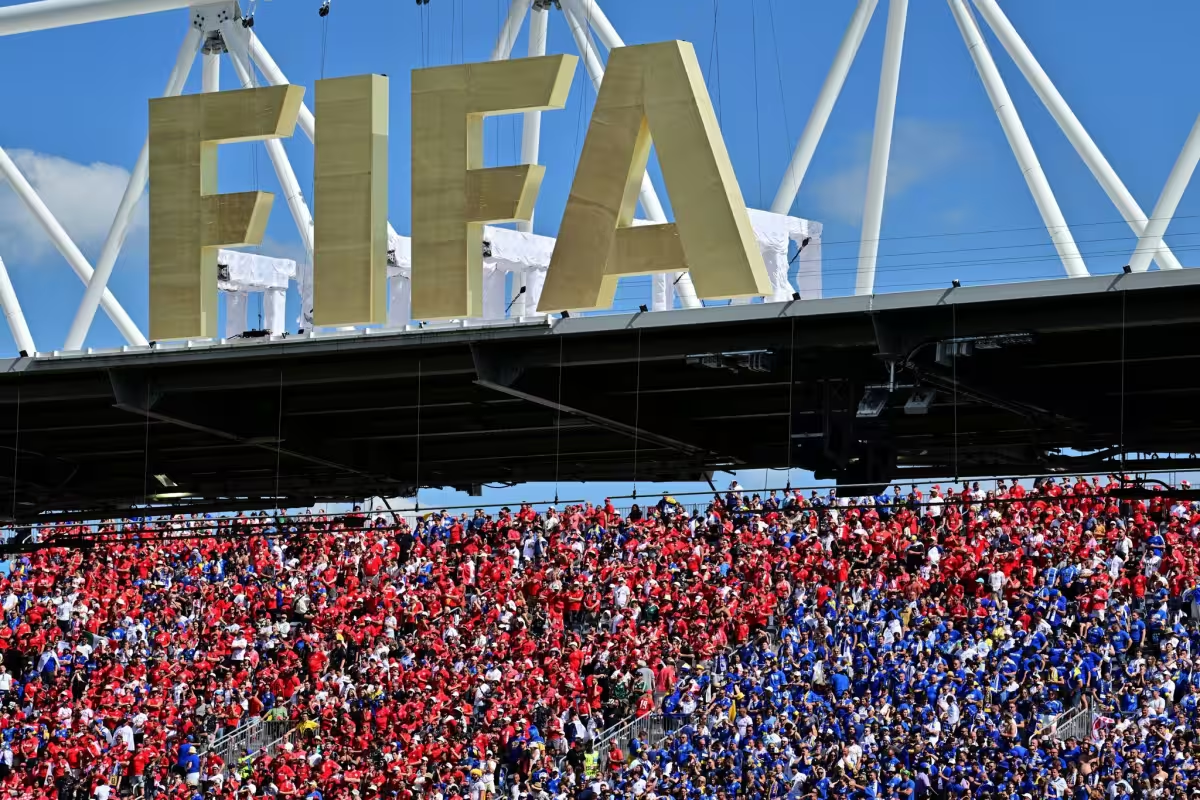

But the greater operational risk comes from storms. U.S. match protocol requires a suspension if lightning or electrical discharge is detected within an eight‑mile radius of the stadium. That thunderstorm procedure triggers a 30‑minute countdown that resets if another strike is detected before the countdown ends.
Those suspension rules have real-world consequences: a club game in the United States last summer — Chelsea’s Club World Cup match against Benfica in Charlotte — took four hours and 38 minutes to finish after repeated lightning delays, showing how quickly a short storm can become a lengthy interruption.
How those two weather threats interact will determine the match experience. If lightning appears within that eight‑mile buffer, officials must pause play and begin the 30‑minute protocol; successive strikes can extend delays in 30‑minute increments. If no lightning is detected, the match should proceed under hot, sunny conditions, with late sun and glare shaping the second half.
Practical details for viewers and attendees are straightforward and time‑specific: the kickoff is fixed at 6pm, the start temperature at MetLife is forecast at 88°F (31°C), and sunset comes at 8:28pm; elsewhere in the tournament, a Heat Advisory runs from 12pm to 7pm at Levi’s Stadium with a UV Index of 10 and midday temperatures climbing toward 88°F.
Aaron Mentkowski will join live coverage to explain what is happening during any storm delays and to track whether lightning triggers the U.S. suspension protocol.
The immediate unresolved question is the presence or absence of lightning within that eight‑mile radius. If lightning appears, the match could be stopped for successive 30‑minute intervals and extend well beyond the scheduled window; if it does not, the defining conditions will be heat, sun and potential second‑half glare as the teams play out the 90 minutes.



