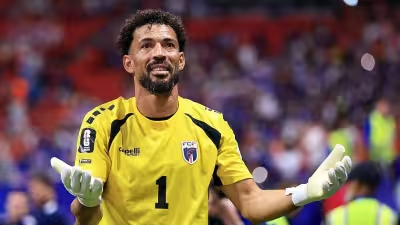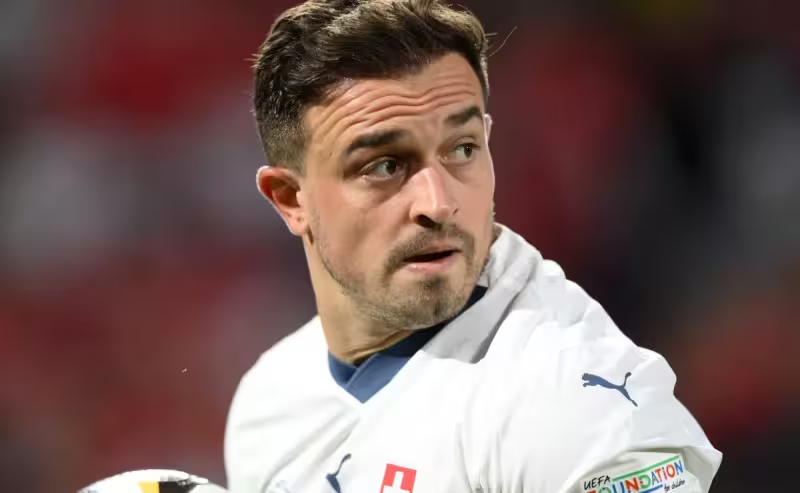
Xherdan Shaqiri is not playing for Switzerland at the 2026 World Cup because he formally retired from international soccer in July 2024. He announced the decision after Switzerland’s penalty-shootout loss to England at Euro 2024 and said he wanted to prioritise the final chapters of his club career, adding that his memories with the national team would remain forever.
The scale of the omission is concrete: Shaqiri leaves international football with 125 appearances and 32 goals, figures that make him Switzerland’s third-most capped player and its fourth-highest scorer. Over 14 years of major-tournament duty he produced moments that defined his place in Swiss soccer — a 2014 World Cup hat-trick against Honduras and a bicycle-kick goal against Poland at Euro 2016 are part of that ledger.

The timing matters because the 2026 World Cup is underway and supporters scanning the Switzerland roster are noticing his absence is deliberate, not accidental. Shaqiri formally stepped away in July 2024 after the Euro 2024 quarterfinal defeat to England. After announcing his international retirement he left Chicago Fire and returned to FC Basel, signalling the shift he described as a focus on club football in the closing stages of his playing days; he was 32 when he made the call.
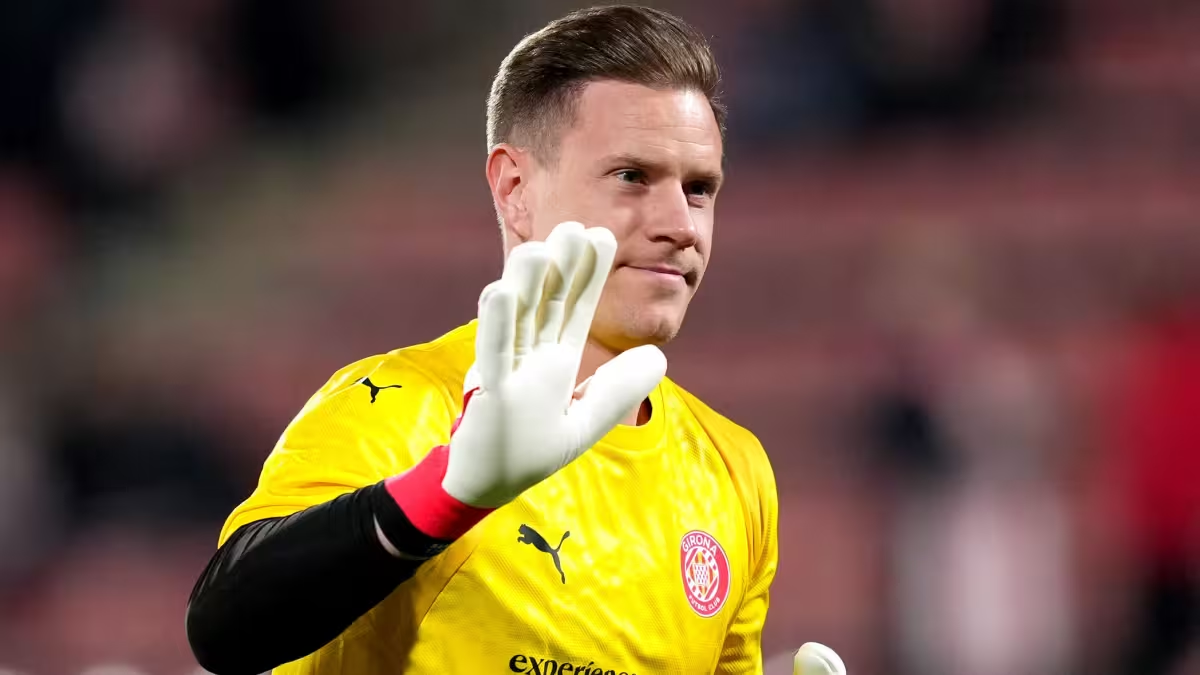
That clarity produces an immediate consequence for Switzerland: the tournament squad is missing one of its most productive and recognisable attackers by choice rather than injury. The team is also without its longtime goalkeeper Yann Sommer, who retired from the national team in August 2024 after Euro 2024. Sommer’s international résumé closed at 94 appearances with 35 clean sheets across two World Cups and three European Championships, and his exit left Gregor Kobel as Switzerland’s starter in goal for 2026.
Fans often assume an absent star is sidelined by injury; the friction here is different. Shaqiri’s non-appearance at the World Cup is not a medical omission but the result of a personal decision to stop representing his country. That shifts the conversation from “who is fit?” to “how will Switzerland replace experience and leadership?” The team must adapt without two senior figures who helped navigate multiple tournament cycles.
On the field, Switzerland will need others to step into the attacking and leadership roles Shaqiri occupied. Off it, the federation and coaching staff no longer have access to a player who combined set-piece threat, late runs into the box and a public profile that helped define Swiss teams for more than a decade. Shaqiri remains active at club level with FC Basel, where his return after leaving Chicago Fire marks the chapter he said he intended to prioritise.
The most consequential unanswered question is whether Shaqiri’s July 2024 retirement is final in every sense. The public record contains no reversal, and the decision was framed as a choice to concentrate on club football; nonetheless supporters and selectors must weigh how his absence reshapes Switzerland’s immediate tournament hopes. For now, the team carries on at the 2026 World Cup without Shaqiri and without Sommer, and the outcome will show how well those absences can be absorbed.