



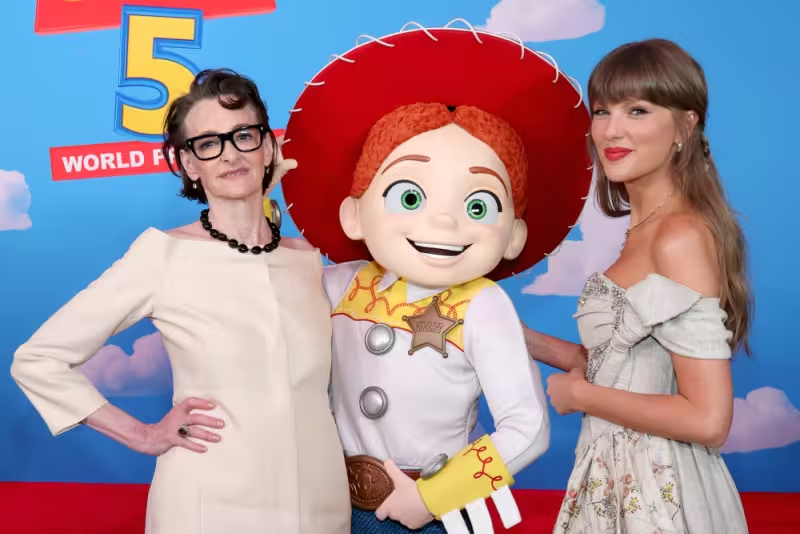
Joan Cusack returned to a Hollywood red carpet Tuesday night at the Dolby Theatre for the Toy Story 5 premiere, saying she’d stepped away from that world for 11 years to raise her children and run a Chicago gift shop. She described being back onstage as a welcome choice after six years away from acting and noted she has operated Judy Maxwell Home in Chicago since 2014, while continuing to voice Jessie across the Toy Story films.
That quiet career recalibration in the family helps frame a sharper story about her brother, John Cusack: the pivot in his public standing most critics and casting observers date to one film — the 2014 crime comedy Drive Hard. Directed by Brian Trenchard-Smith and co-written with Brigitte Jean Allen, Drive Hard cast Cusack as Simon Keller, a criminal who, after robbing a bank, forces a man named Peter Roberts to drive him to safety. The film landed at 8 percent on Rotten Tomatoes and is cited as one of the lowest-rated entries of his career.

The Rotten Tomatoes number is the fact that lands with immediate force. Cusack arrived in the 1980s and 1990s as a steady leading presence — Say Anything and, later, High Fidelity are the headline credits that once defined his profile — and Drive Hard’s critical failure marks a distinct rupture in that arc.
What followed is the arithmetic industry people point to when they map decline: since 2014 Cusack has appeared in only a handful of films that registered a fresh Tomatometer score, with Love and Mercy, Chi-Raq and Never Grow Old repeatedly named as the exceptions. Those titles kept him visible as a working actor, but they did not restore him to the steady starring roles he once occupied.
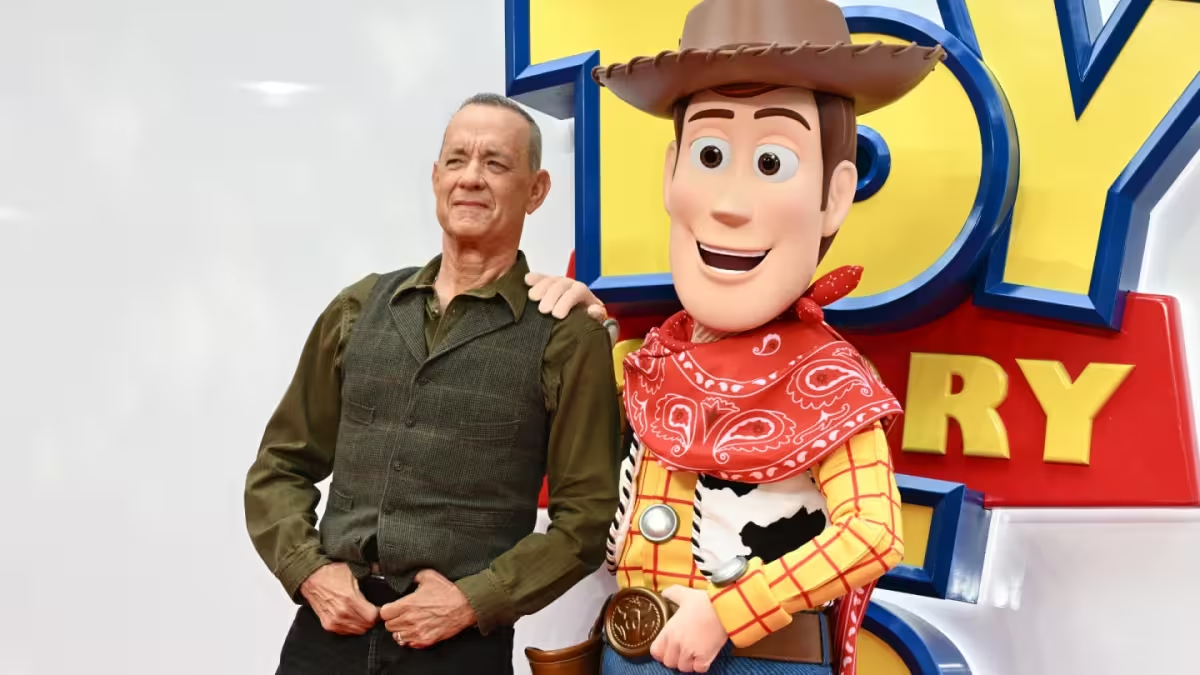
The shape of the work after Drive Hard matters. Cusack has continued to act, but his placements read differently: smaller, peripheral or intermittent rather than front-and-center. A telling example is the Hot Tub Time Machine series — though he was part of the lead quartet in the first film, he appeared only in the unrated cut of Hot Tub Time Machine 2, a detail that illustrates how his screen presence narrowed into footnotes and cameos.
That narrowing creates a real question that the record cannot fully settle: did Drive Hard itself close doors, or did it arrive as one visible consequence of broader choices and marketplace currents? The sequence of a very low-rated title followed by sporadic, occasionally well-reviewed projects points to causation as a plausible reading. Whether producers treated Drive Hard as a singular misstep or as evidence about bankability, the practical effect was fewer opportunities for marquee leads.
Critics’ percentages and casting patterns are not the whole story of a career, and Cusack remains a working actor. But the contrast between Joan’s deliberate stepping back and public return — highlighted by her Toy Story 5 premiere appearances in late May in London and Tuesday night in Hollywood, and the film’s June 19 theatrical release with a Taylor Swift end-credits song — and John’s diminished leading visibility is sharp.
There is no on-record, definitive calculus that ties casting choices after 2014 directly and solely to Drive Hard. Still, until Cusack secures a sizable, well-reviewed starring role that reverses the pattern, the clearest judgment the evidence supports is that Drive Hard stands as the visible inflection point that coincided with, and likely accelerated, his shift away from the leading-man profile that defined his earlier career.



