



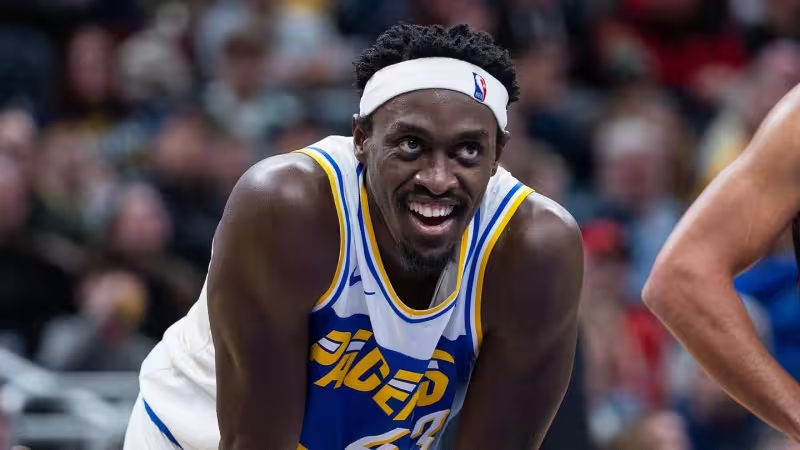
Short answer: yes, the trade return for Pascal Siakam looks light in hindsight — and no, keeping him likely would not have solved Toronto’s problems. A recent mailbag revisited the deal, concluding that while the Raptors received less than fans now wish they had, the club probably could not have made a durable lineup around Siakam and Scottie Barnes without a very specific additional piece.
The mailbag’s blunt framing began with the obvious unease: fans are asking if the franchise has buyer’s remorse. It placed the current question inside Toronto’s offseason calculus, noting the roster has aging commitments and that the NBA Draft is less than three weeks away — a deadline that sharpens any decision the front office might make.

On paper, Siakam remains the more impactful player in this comparison. The assessment in the mailbag ranks him ahead of Brandon Ingram and even values him more than Ingram plus Ja’Kobe Walter when Walter’s rookie-scale deal isn’t factored in. Shooting splits back up part of Siakam’s profile: he converted 38.8 percent from three in his first season and a half with the Pacers while Tyrese Haliburton was healthy, slipping to 35.8 percent in the most recent season when Haliburton was out.

That statistical edge, though, collided with stylistic and timing problems. The piece argued Siakam and Scottie Barnes are offensively similar enough that the pairing required a true lead creator — probably a high-level guard — to avoid redundancy. Age matters here, too: Siakam’s timeline did not align with Barnes’ developmental window, and even handing Siakam a maximum-level extension would have left Toronto in roughly the same structural bind the club faces now.
Here is the sharp contradiction that keeps the debate alive: Siakam is portrayed as clearly better than Ingram and worth more than Ingram plus Walter, yet the mailbag still concluded Toronto probably could not have made Siakam and Barnes work together long-term. That friction is rooted in roster construction and contract realities. Jakob Poeltl remains the oldest core player and is effectively locked in by a nearly unmovable deal. Immanuel Quickley is the oldest player the Raptors have committed to long-term and will be 27 on opening night, on a contract the mailbag judged most teams won’t want. The franchise could nibble at its average age by trading one of those players or RJ Barrett, but that’s incremental, not transformative.
The piece also revisited earlier moves that reshaped the list of options — December 2023 saw OG Anunoby traded — and suggested that moving veterans is one lever the front office can still pull, though it noted doubts about whether enough value exists in the market to justify certain swaps. The mailbag said it would not be against moving Brandon Ingram in principle, but thinks the returns likely won’t move the needle.
Practically, the takeaway for Raptors supporters is twofold: the palette of regret is understandable because the return for Siakam reads light now, but the roster realities that produced the trade were not simple mistakes that a single reversal would have fixed. The unresolved, most consequential question is straightforward — would Toronto have been better off if it had paired Pascal Siakam with a true lead creator instead of moving him? That remains open, and it’s the specific gap the franchise must answer as it weighs roster moves with the draft coming in about three weeks.



