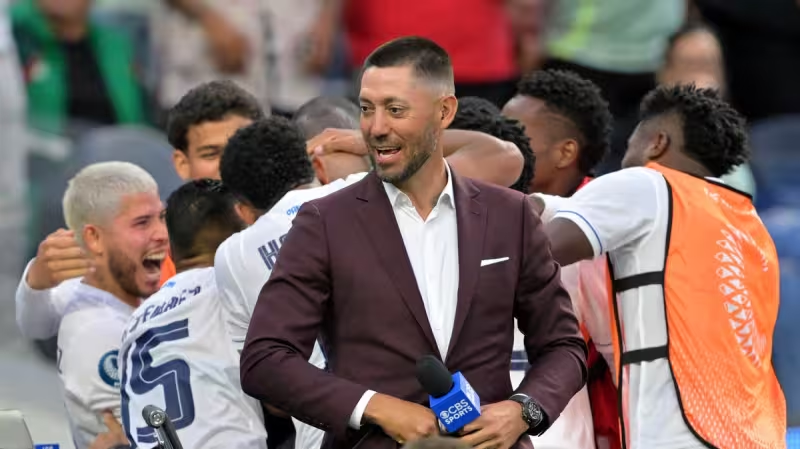
"Failure is not getting out of the group, especially in the way that the format is now," Clint Dempsey said in a recent interview, drawing a hard line about what would count as failure for the U.S. men's national team at the 2026 World Cup.
He did not stop there. "If you're not getting out of the group stage now, that’s definitely a failure, right?" Dempsey added, then pushed the other side of the judgment: "I’m not going to put a ceiling on what they can do." He spelled out his hopes plainly—"I’d like to see them get further, obviously, get into a quarters or a semis."

Those two sentences—an absolute benchmark and an open invitation—set the tone for a veteran who still measures results the way he did as a player. At 43 years old, Dempsey finished his career as the joint top scorer for the U.S. men's national team and remains one of the country's most visible ex-players. He grew up in East Texas, was driven for hours from his hometown of Nacogdoches to Dallas to join the Texans youth system, went to Furman, started his professional career with the New England Revolution and did not move to Europe until his mid-20s before reaching the Premier League with Fulham and Tottenham. During two of the three World Cup cycles he was part of, the Americans reached the Round of 16.
The blunt metric Dempsey set matters now because the 2026 World Cup will arrive with a different tournament architecture, and survival through the group stage carries bigger weight than in previous cycles. For someone who has lived under public scrutiny—"When I was in England and playing with Fulham and Tottenham, you better believe I was being criticized and critiqued and judged"—the margin for error is small and the demand is straightforward: advance or be judged to have failed.
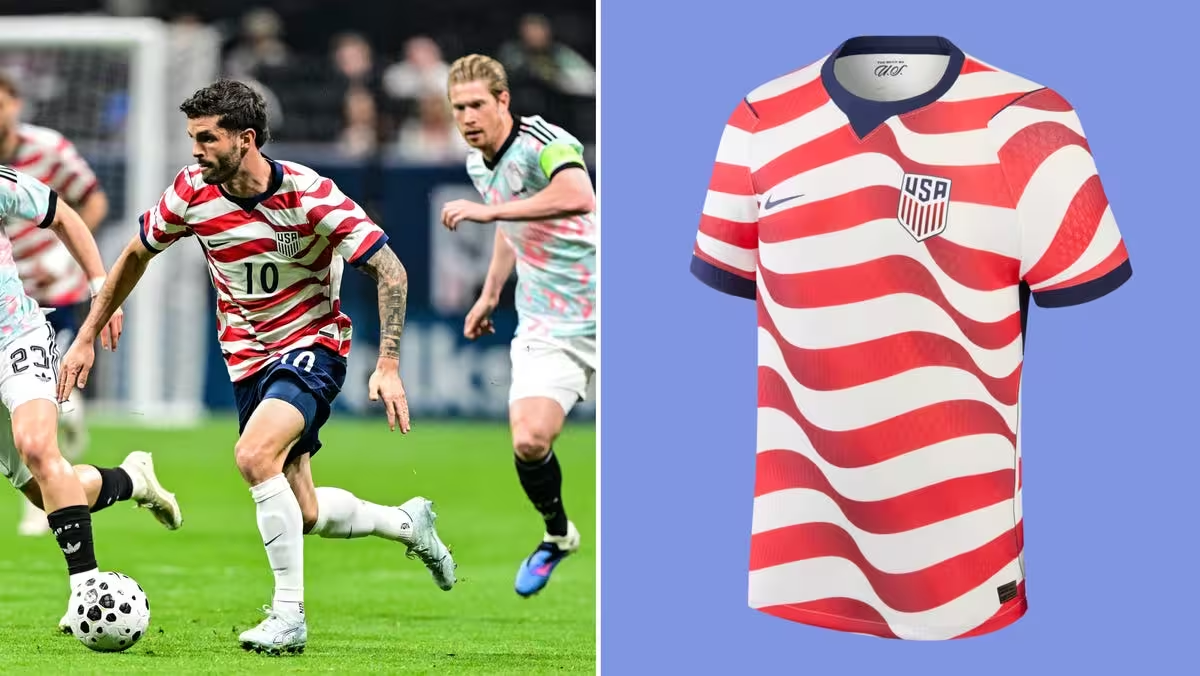
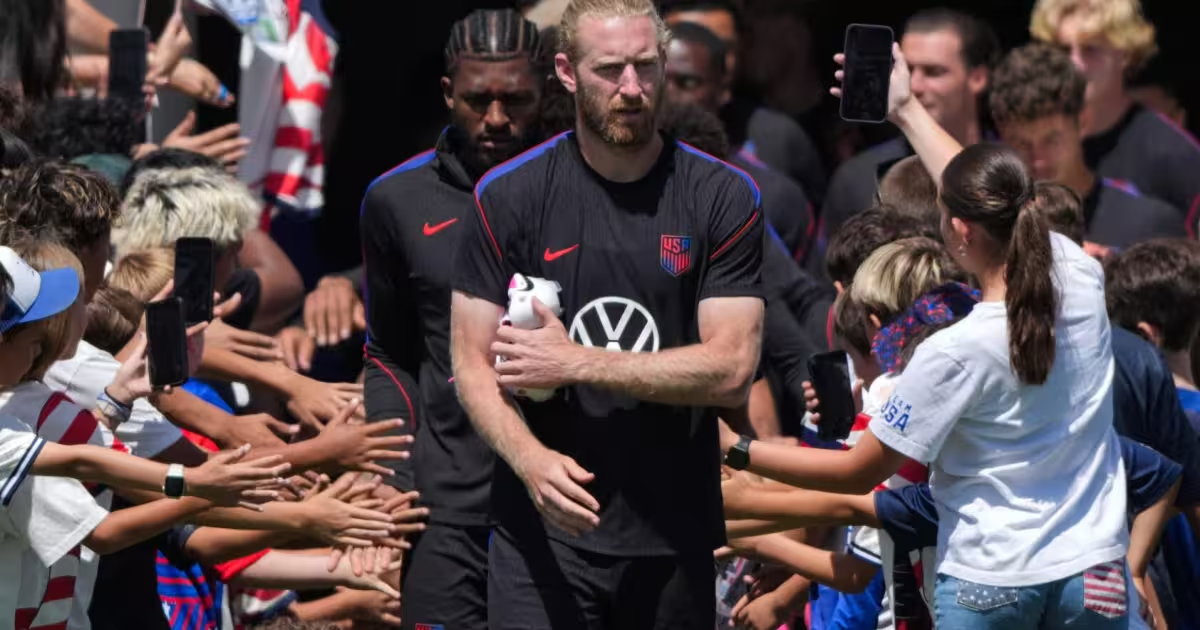
Dempsey has not confined himself to abstract commentary. He said he was critical after the U.S. failed to win its CONCACAF Nations League semifinal against Panama and after the Americans fell to Mexico in the Gold Cup final. "I try to shoot people straight," he said, and repeated the principle when pressed: "But when things are not going well, I got to shoot you straight too, right?" Those remarks explain why his verdict on 2026 carries weight: he sees candid critique as part of the obligation former players have when results disappoint.
Still, his refusal to limit the team's upside complicates a single-minded critique. On one hand he sets a non-negotiable minimal outcome; on the other he declines to cap the team's ceiling. That posture is both challenge and endorsement—challenge because a group-stage exit would, in his view, be a failure; endorsement because he will not write off deeper runs and wants to see the team reach the quarters or semis.
Dempsey also weighed in on the broader ecosystem supporting the national team, arguing that former players should be more involved with U.S. Soccer and MLS setups. His perspective combines personal memory of locker-room life—"I remember what it was like to be in the locker room, but at the same time, I still have what it's like to be a fan and want these guys to accomplish as much as they possibly can"—with a public demand for accountability.
The next major milestone is the 2026 World Cup itself. Dempsey's stark yardstick—escape the group or the campaign is a failure—gives supporters and critics a measurable expectation to follow. Whether the current U.S. team will meet that standard, and whether it can answer the other half of his statement by advancing into the quarterfinals or beyond, remains the open question that will define how his words are judged.