



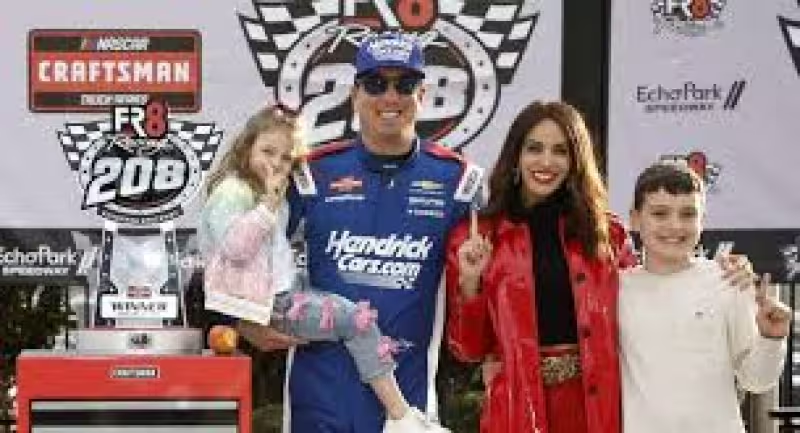
“I promised him that I would do everything I could to help our children pursue their dreams no matter what. For Brexton, that dream is racing,” Samantha Busch wrote this week, describing a bedside pledge she made to Kyle Busch last month as he lay in the hospital.
The promise landed in public view Wednesday night on Instagram shortly after their son, Brexton Busch, finished second in Tuesday’s Summer Shootout at Charlotte — a reminder, Samantha wrote, that the family will keep supporting the boy who “lights up” behind the wheel even as they grieve.

Brexton’s runner-up finish brought the countable proof the family needed: he is racing and improving. It also underscored the specific aim Samantha described when she said she would do “everything” she could to help their children pursue their dreams — a vow made after Kyle collapsed during a simulator session ahead of the Coca-Cola 600, was rushed to the hospital, and died the next day on May 21 after pneumonia turned into sepsis.
The moment mattered because it tied Sprint to strategy. Kyle Busch, a Cup Series regular since 2004 with 762 career starts and 63 Cup wins, had spent years building a life around the track with Samantha and their two children, Brexton and Lennix. Kyle’s record — two Cup championships (2015, 2019) and 234 victories across NASCAR’s three national series, including the all-time marks of 102 wins in the NASCAR O'Reilly Auto Parts Series and 69 in the NASCAR Craftsman Truck Series — is the backdrop to the family’s choice to keep racing in their orbit.
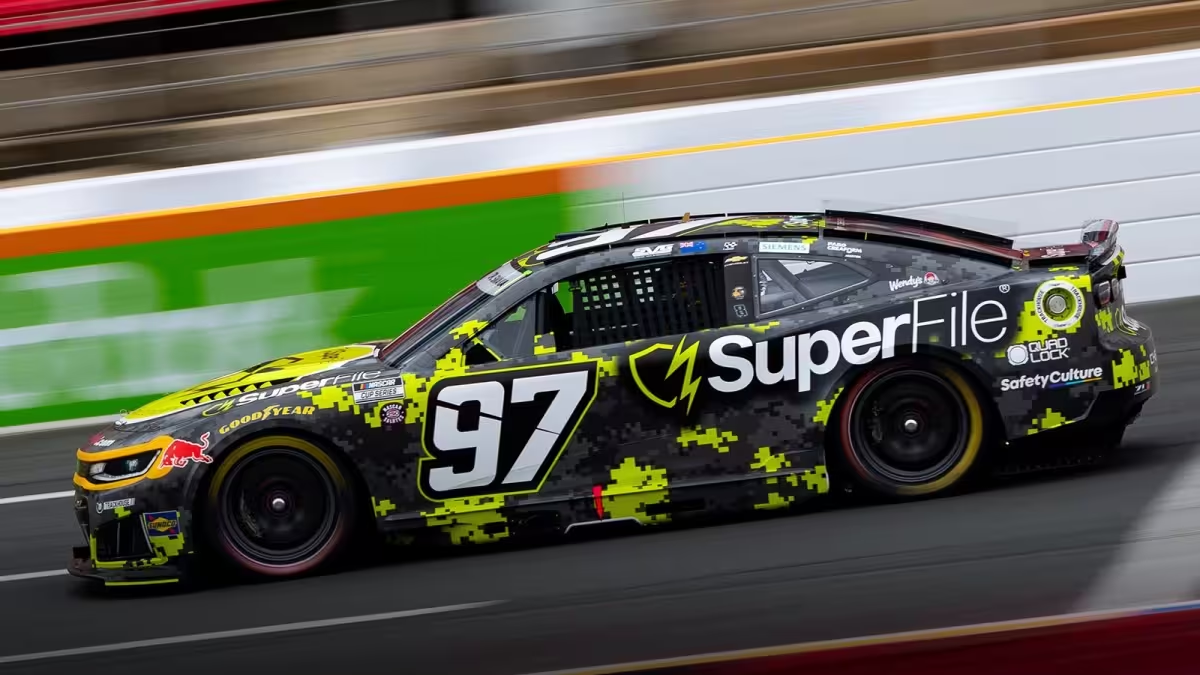
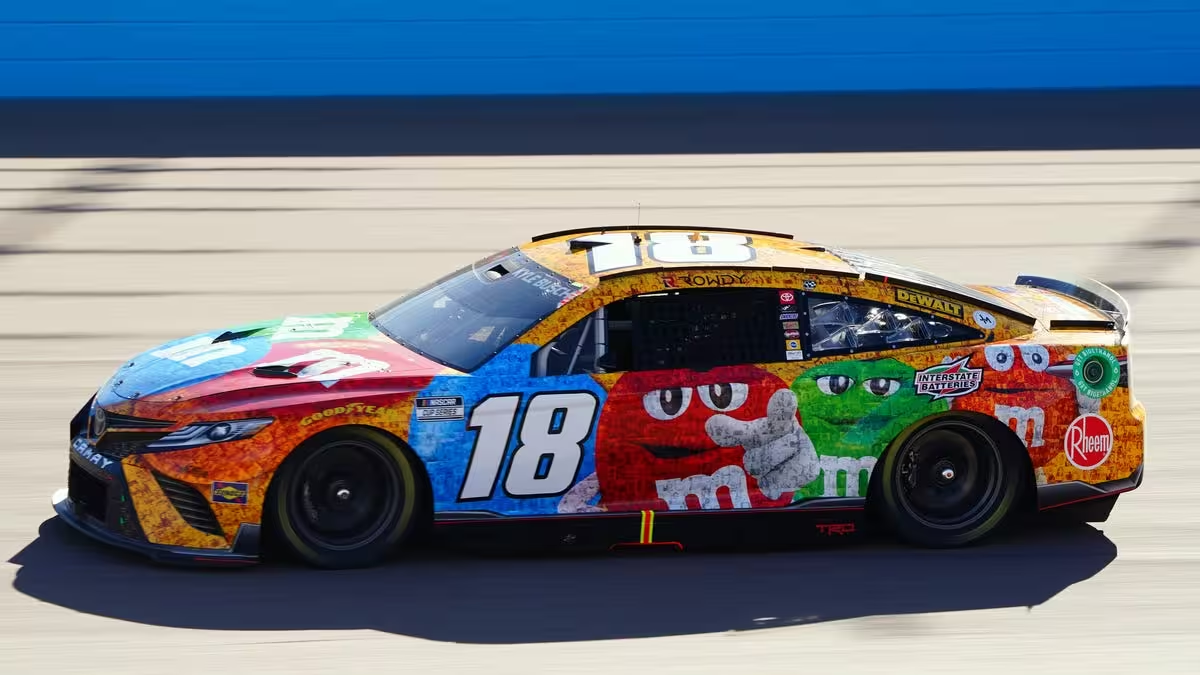
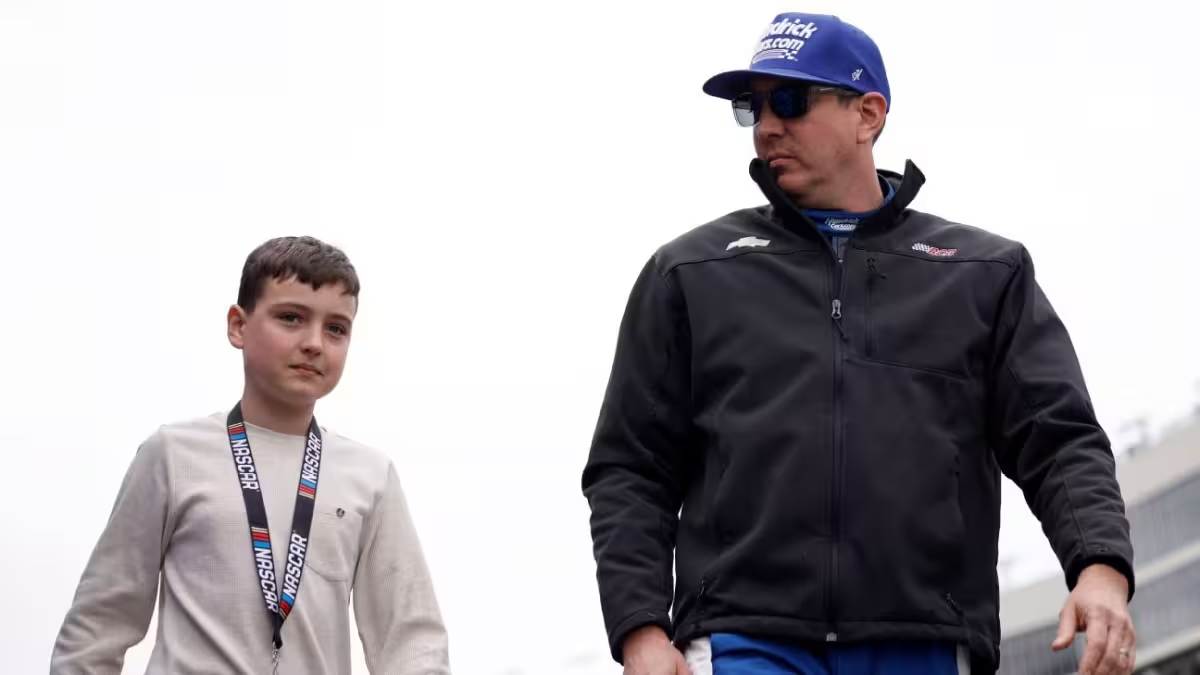
“It wasn’t a dream Kyle chose for him. It was something they shared,” Samantha wrote, describing the bond she said father and son built over “countless hours talking about race cars, working together, dreaming together.” That sentence is the weight of her promise: support for Brexton is not an abstract pledge but an extension of the relationship Kyle and his son already had on and off the track.
There is a different kind of proof at play here, too. Earlier this year, Kyle and Brexton raced against each other for the first time in the Tulsa Shootout; two weeks later Kyle started on the pole in the Daytona 500. Those recent overlaps make Brexton’s presence at Charlotte feel less like an isolated junior outing than the continuation of a shared family practice that now has to survive without one of its architects.
Samantha did not lay out a step-by-step plan. She acknowledged the lack of neat answers in her own words: “Every time we get to the track, we’re reminded that a piece of our team is missing. The person who should be standing beside us isn’t there. That part is heartbreaking.” The line names the friction — the family is trying to keep Brexton’s racing dream moving forward while every trip to the track reminds them that Kyle is missing.
That absence has already produced a visible decision. Richard Childress suspended the use of the No. 8 days after Kyle’s death and tied any return of that number to one condition: it will only come back if and when Brexton wants it. That public restraint shifts the choice away from sponsors, teams, or tradition and toward the child whose dream Samantha vowed to protect.
The next chapter is practical and human: Brexton’s progress on track and the question of the No. 8 will be decided by future races and, crucially, by Brexton himself. Samantha has promised to be “right there beside him, cheering him on every step of the way.” For now, she is keeping the pledge she made to Kyle at his bedside; the way she turns that promise into training schedules, seat time, or promotional choices remains the open decision the family must make together.



