




"To paint a picture: Mitch Johnson is a cool dude," Anthony Goods said, folding a complicated compliment into one sentence that now travels with Johnson to the Spurs' bench. Johnson is in his first season as the San Antonio Spurs' head coach after serving as interim coach last year when Gregg Popovich faced health issues, and the promotion has made his steadiness a practical, not just sentimental, asset.
Goods, who played with Johnson at Stanford and is now an assistant coach at Arkansas State, pointed to a performance that still reads like a coaching résumé: in Stanford’s 2008 second-round NCAA Tournament win over Marquette, Johnson finished with 16 assists and one turnover in a game decided at the buzzer while Brook Lopez scored 30. That night, Goods said, was the clearest example of Johnson doing the small, exact things that win close games.

At Stanford, Johnson organized open gyms and was "everybody's biggest cheerleader," Goods said, the kind of teammate who took extra shots, won most of the sprints, rebounded for others and made the quiet plays that never made highlight reels. Those habits — organization, competitiveness, a willingness to do the work — are precisely the behaviors the Spurs inherit now that he has the full-time job.
Goods used the everyday to sketch Johnson’s temperament. "I don’t mean he has a cool personality. I mean a laidback kind of cool, like how they used the term in the 1970s," he said. "Mitch walks slow. He talks slow. He even drives slow." To underscore the point he offered a concrete image: where one teammate might take a corner at 80 in a 65 zone, Johnson would be going 62. "That’s just Mitch," Goods added. "He knows who he is. And that’s why he’s a great leader."
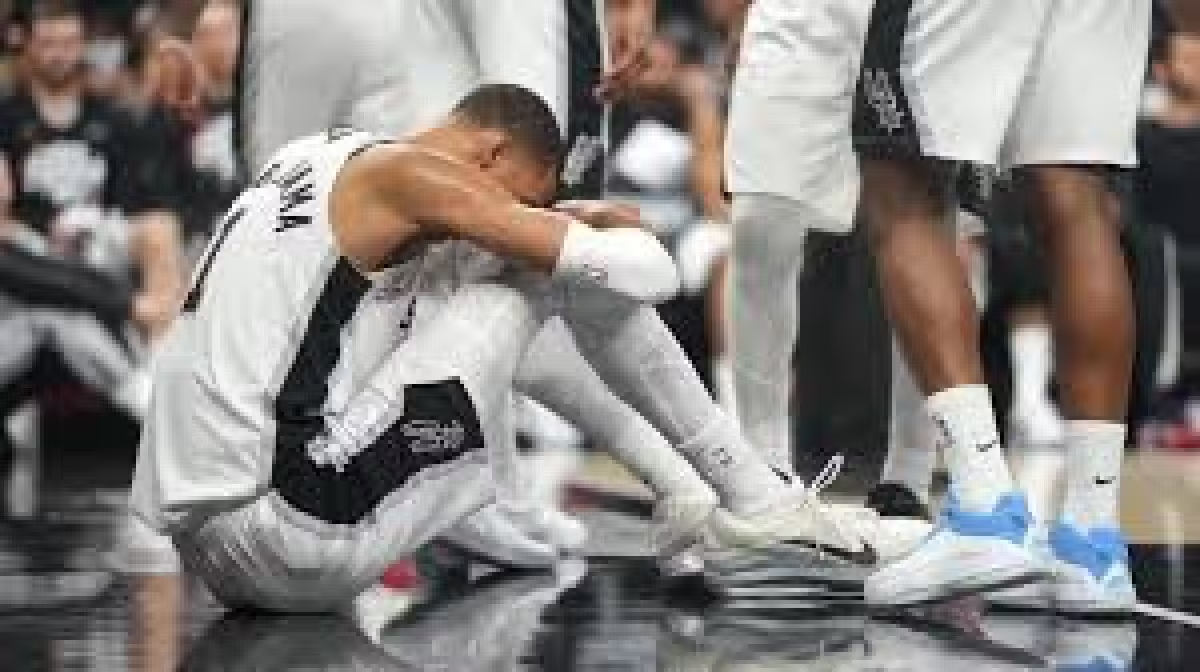
The picture is not all slow-motion Zen. Goods also described Johnson as capable of becoming an emotional force when it mattered: "He’s got a fiery side," Goods said. "Mitch wasn’t no punk. He was tough." The anecdotes are blunt — kicking balls to the ceiling, ripping jerseys — and they sit beside another fact Goods stresses: Johnson controlled his emotions in games because he understood what was at stake. The contradiction matters now, because coaching the Spurs requires both temper and restraint.
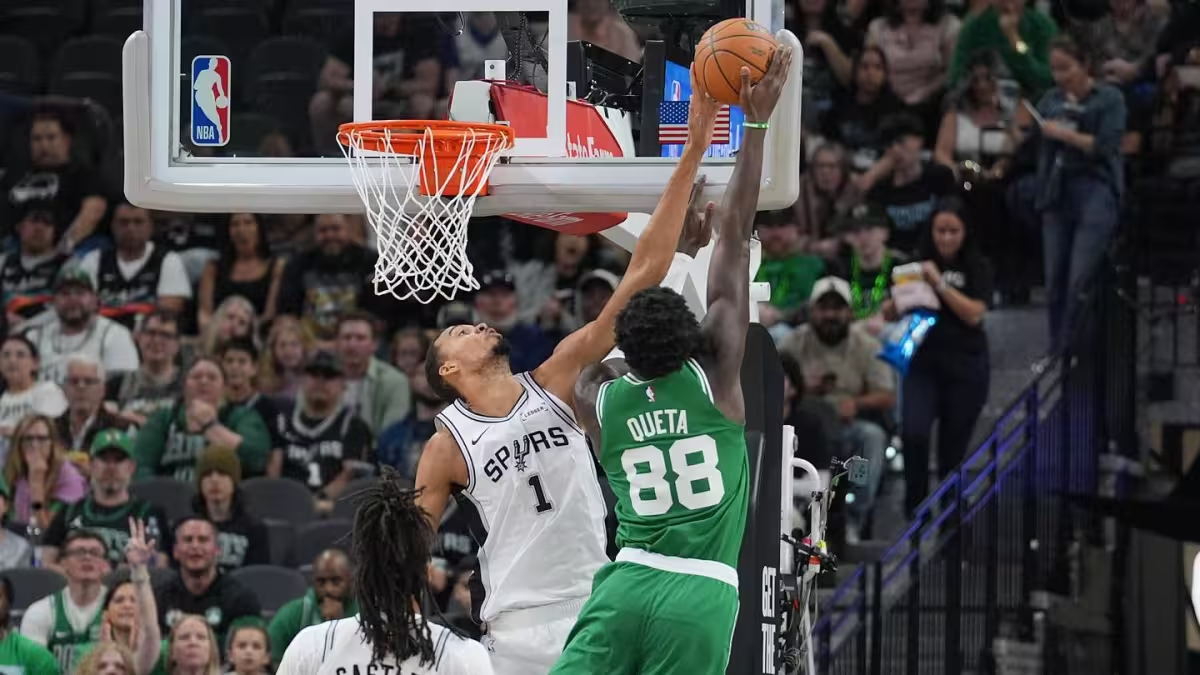
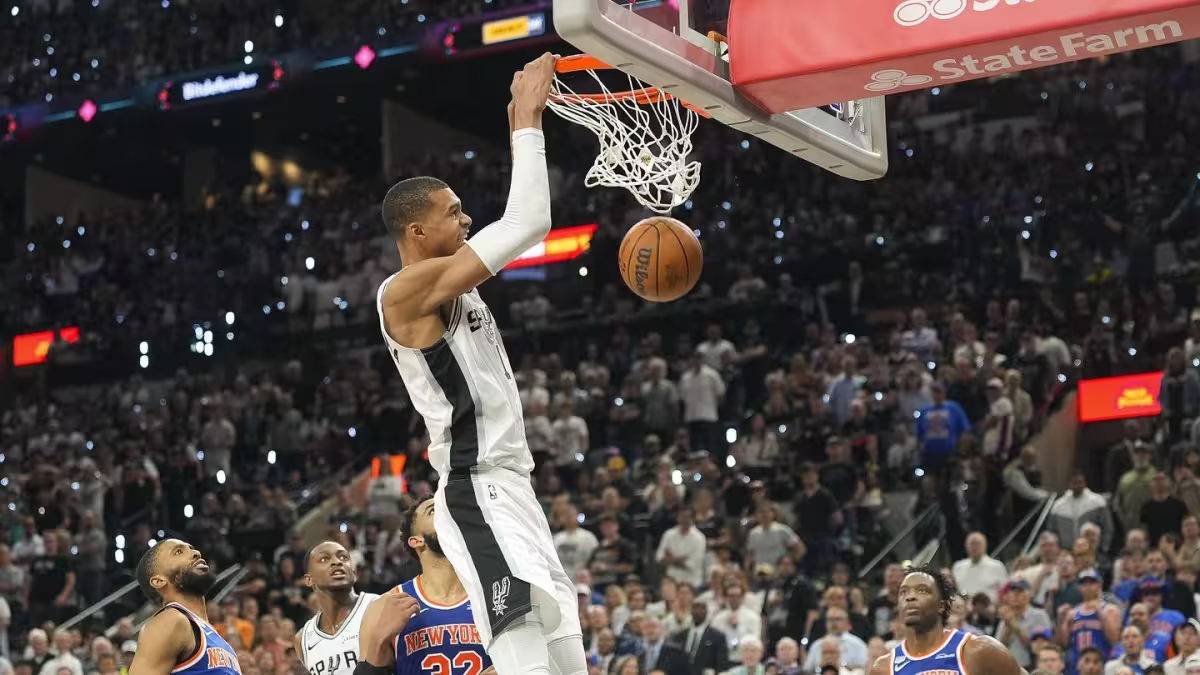
Johnson inherits a roster built around Victor Wembanyama, whose presence brings unusual expectations. That reality turns Johnson’s temperament into a management problem as much as a coaching one: keep a young, transcendent talent comfortable and developing without letting the surrounding hype destabilize a locker room. Johnson’s early season choices, including roster and rotation calls that prompted public questions, have already been defended by the coach in coverage, and observers can see the same measured language Goods described in those moments. His off-court steadiness has also been the subject of internal profiles exploring his family life and how he settled into the job.
What the Stanford stories and the Spurs' opening weeks together create is a single, testable proposition: Johnson’s laidback gait gives him control, and his hidden fire supplies bite when games actually require it. That mix explains why the Spurs gave him the job after his interim run — but it also points to the season’s central uncertainty.
Can Mitch Johnson’s quiet, controlled leadership — the slow walk and the sudden edge — convert into the results expected of a full season with Victor Wembanyama leading the way?



