



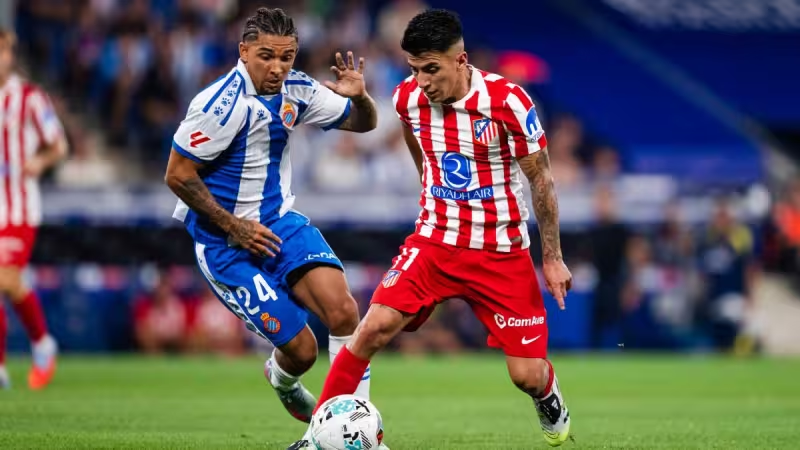
As a boy in Fuerte Apache Thiago Almada kept one simple aim: "Llegar a la Primera de Vélez." At 25, the player who grew up at Vélez Sarsfield has that childhood dream printed across a career that now includes a confirmed place in Argentina's squad for the 2026 World Cup and fresh transfer talk tying him to River Plate.
Almada arrives at the tournament as one of Lionel Scaloni's fixed options for Argentina, a status that follows his debut for the national team in 2022 against Honduras and a call-up to the Qatar World Cup as an injury replacement for Joaquín Correa. The immediate headline is concrete: he has a ticket to the 2026 World Cup, a stage that could reset the market around him.

The figures that shape his club case are straightforward. Now at Atlético de Madrid, Almada played 39 matches last season and scored four goals, but he was used mainly in rotations and as a substitute. That combination — frequent appearances without a regular starting spot — is the reason his club and potential suitors view the World Cup as a valuation moment rather than a closing one.
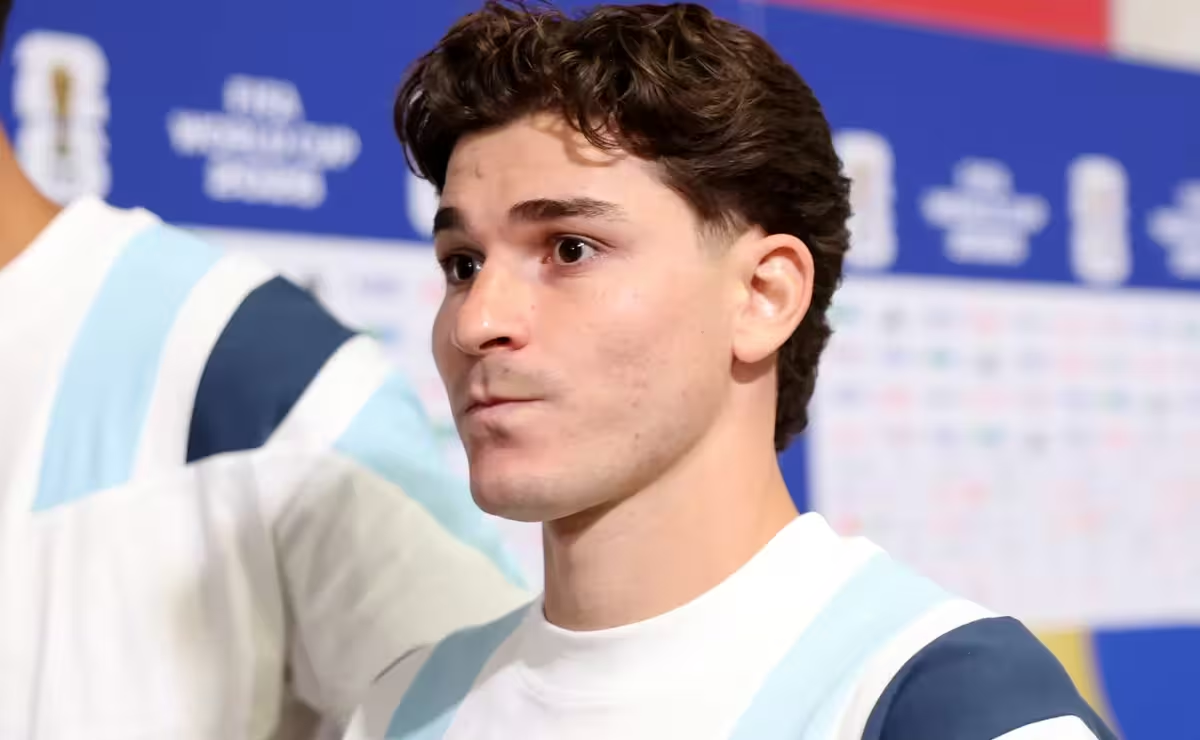
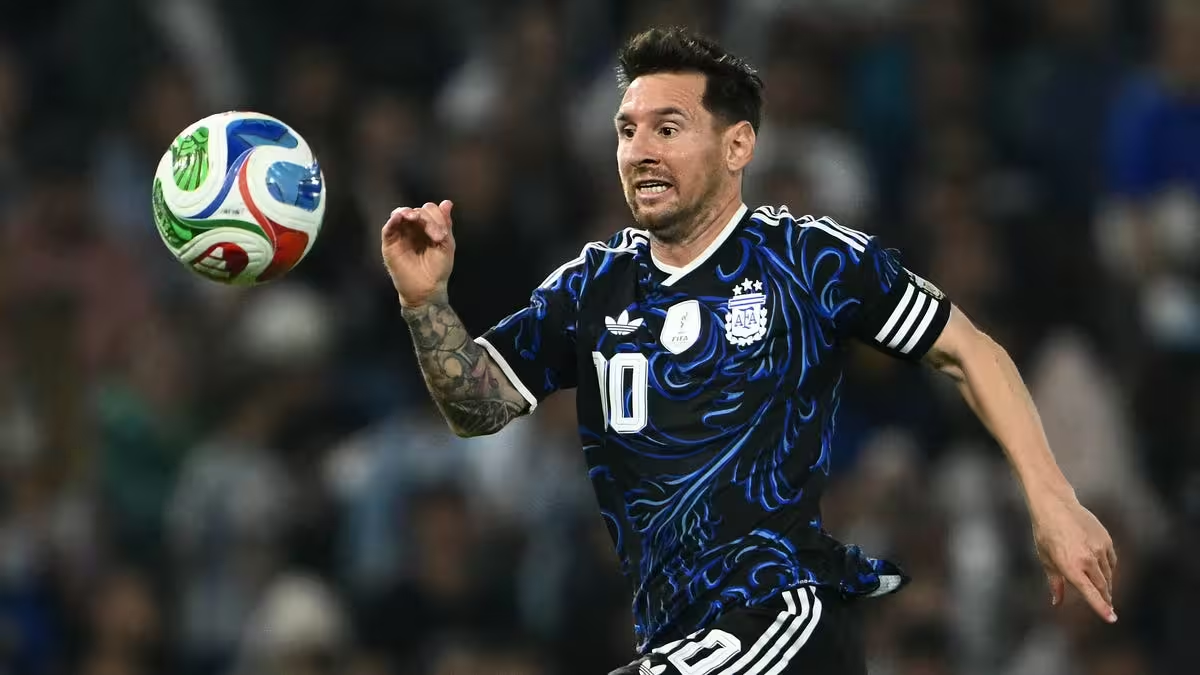
His path to this position is rooted in Vélez. Almada joined the club at 5, rose through its youth system, debuted in the Primera División in 2018 and cut his teeth at the Capilla Santa Clara field in the Barrio Ejército de Los Andes, the Fuerte Apache nursery also associated with other high‑profile names from the neighborhood. After leaving Argentina he had a spell at Olympique de Lyon in France before moving to Atlético de Madrid, a sequence that underlines both his promise and the uneven transitions that have followed.
The transfer noise is already specific. River Plate is mentioned as interested and reports before the tournament cite an offer of around 20 million euros for half of Almada's rights. Atlético, for its part, is understood to prefer that Almada be revalued by a strong World Cup showing rather than being sold now on the basis of club minutes that were often off the bench. That is the friction: the club wants a market uplift from international exposure, while a domestic heavyweight is reportedly ready to negotiate based on current valuations.
Why it matters now is immediate and practical. The 2026 World Cup starts Thursday, June 11, and Argentina will debut on June 16 against Algeria. Almada's minutes, positioning and moments in those early matches will be watched as much by sporting directors and negotiators as by fans. A breakout performance could make a 20 M€ approach look modest; a quiet tournament would strengthen Atlético's hand to demand more or to keep him as a squad option.
The single unanswered question that will determine his summer is simple: will River Plate turn the reported €20 million proposal for half of Almada's rights into an actual bid after assessing his World Cup minutes, or will Argentina and the tournament itself push Atlético to hold out for a higher price? The answer will decide whether Almada's next chapter is a return to Argentina, a new contract negotiation in Madrid, or a different path entirely.



