Simone Biles posted to her Instagram story on June 6 that she had suffered “one of, if not the scariest experience of my life,” adding plainly, “But almost dying wasn’t on my bingo card earlier this week.” She shared a photo of her wrist with hospital bands, later images of herself resting in bed with her dogs, and a screenshot of her heart rate — then thanked friends and family for checking in.
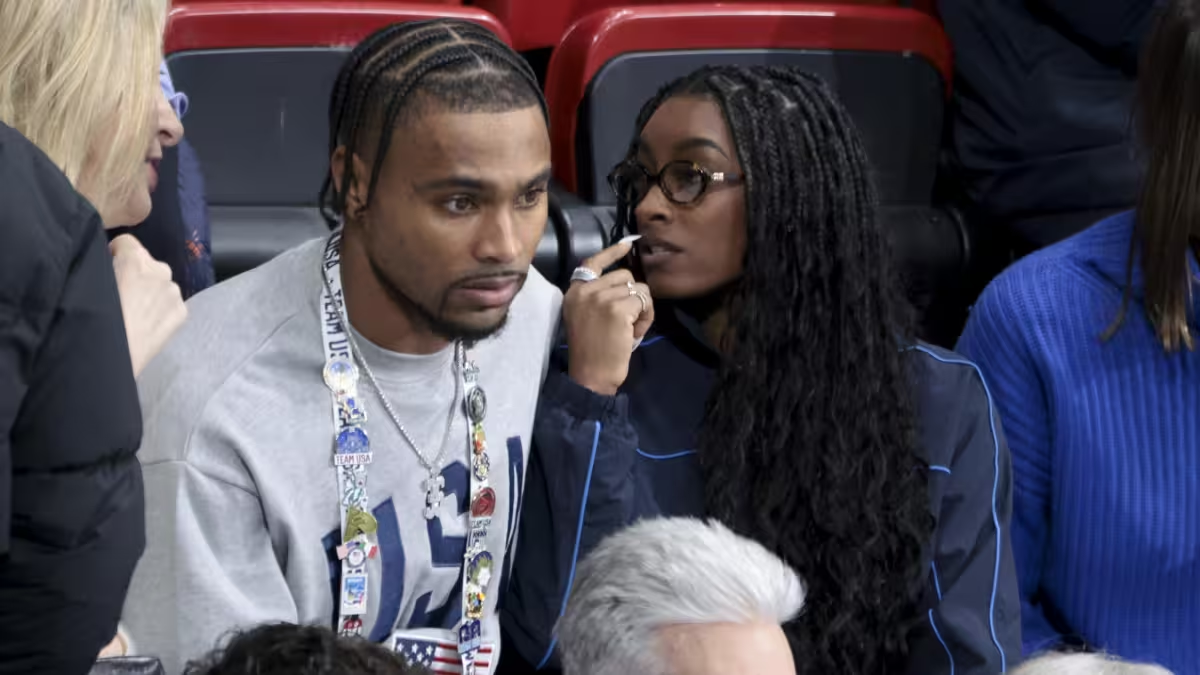
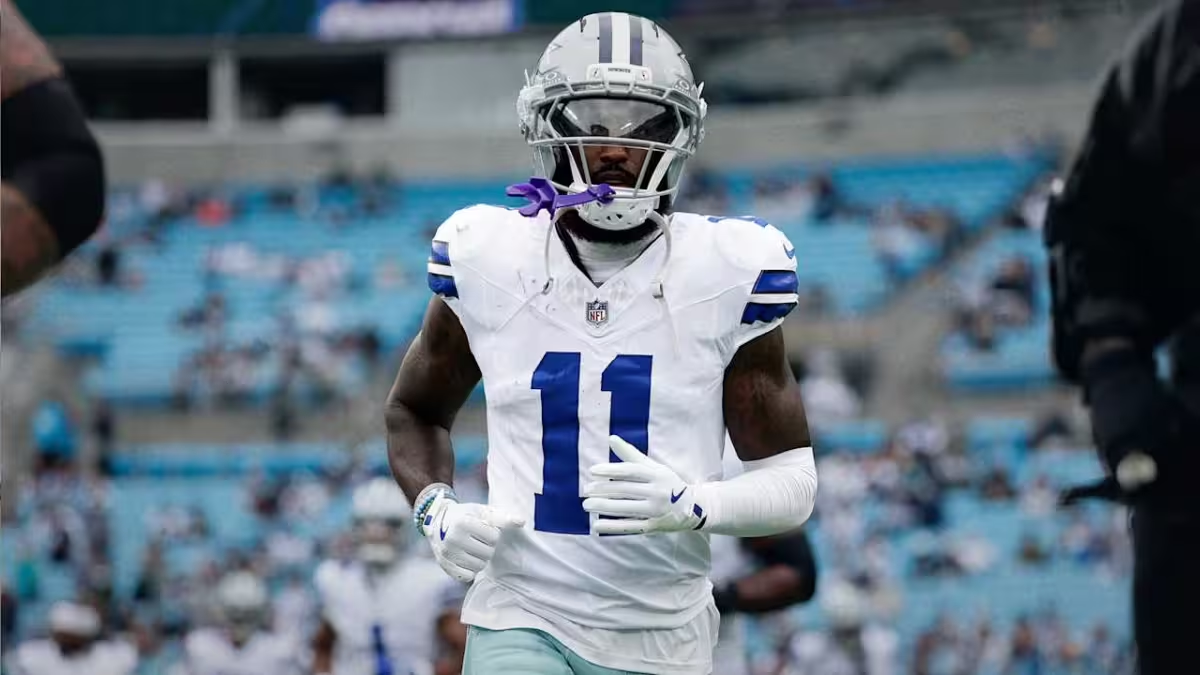
The detail that makes the post immediate is simple and stark: Biles said she came close to dying and did not provide specifics. She wrote, “I’m not one to normally share things like this because I value privacy in today’s age,” and appended, “I’ve been in bed resting this week, I’ll explain sooner or later but s/o to my close circle who reached out, checked in, visited & or sent flowers. Loooovveeee y’all.” Biles also noted that her husband, Jonathan Owens, was not with her during the ordeal, writing, “Especially since Jonathan (Owens) was in Indy for practices.” Owens signed with the Indianapolis Colts in March.

Biles’ June 6 post included images that underline the seriousness: a hospital-banded wrist photo, a picture of her reclining in bed, and an image of a heart rate readout. For people trying to reconcile the timeline, the gymnast had posted a trampoline backflip video on June 3 — an upbeat clip that makes the later alarm nearly jarring.

Context sharpens why readers care. Biles is not a casual figure in sport: she has 11 Olympic medals and won four medals at the 2024 Summer Olympics in Paris. She has also been unusually candid in recent years about the physical and mental toll of elite gymnastics. In 2021 she withdrew from five events at the Tokyo Olympics after suffering from what gymnasts call the “twisties,” a dangerous loss of aerial spatial awareness. Biles has warned before that those kinds of mental blocks can make competition unsafe; she told reporters after the 2024 Games that her body had “literally collapsed” when she returned to the village.
The friction in this story is immediate and human. On June 3 she shared a trampoline backflip; by June 6 she was posting hospital bands and saying she had almost died earlier in the week. She gave no medical diagnosis, no timeline beyond “earlier this week,” and no account of what exactly put her life at risk. That omission matters because Biles chose to name the event in the strongest possible terms — “one of, if not the scariest experience of my life” — while also insisting on privacy and promising a future explanation. Her message both alerts the public and withholds the key fact readers want to know: what happened.
The immediate consequence she made plain is rest. Her images show her in bed, receiving visitors and flowers from a close circle who checked in, and she emphasized recuperation over disclosure. Her promise — “I’ll explain sooner or later” — sets the next beat: further information will come only at her discretion. Until she offers that fuller account, the nature of the medical scare, its causes and its implications for her health and any future public plans remain unresolved.
For now, the clearest facts are that a world-class athlete publicly described a near-fatal event, posted evidence of hospital care and recovery, and asked for space while thanking those close to her. That posture — blunt about danger, guarded about detail — is the story’s ending for today and its hinge for whatever she chooses to reveal next.