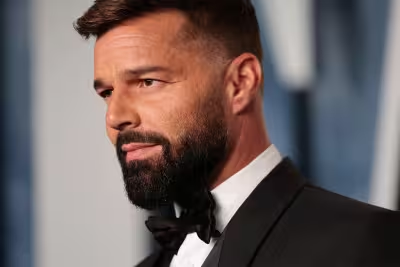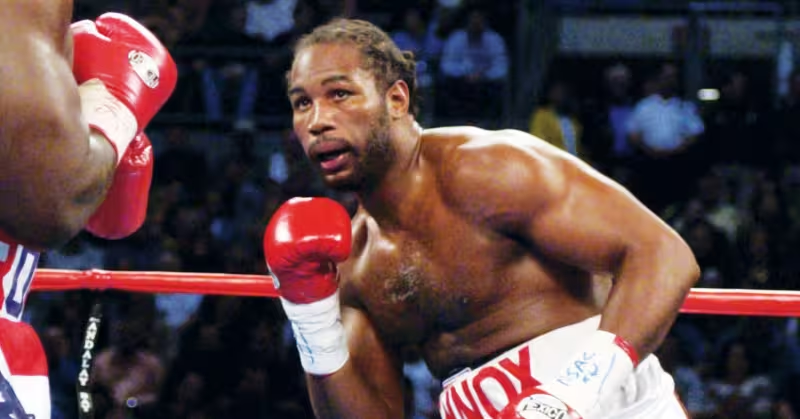
Hasim Rahman announced he is coming out of retirement at 53, telling ABC News he feels stronger, sharper and ready to fight again: "I feel stronger, I feel better. I feel more knowledgeable. My legs are strong, my arms are strong, my endurance is insane right now." Rahman is scheduled to fight next month at the ESL Ballpark in Rochester, New York as the opening act of his planned comeback.
He framed the return not as nostalgia but as a concrete record chase. "For those who don’t believe, don’t act like you believe once I do this," Rahman said, adding plainly, "I will become the oldest world heavyweight champion." That would eclipse George Foreman’s standing mark of 46 years old and make Rahman the oldest man ever to hold a version of the heavyweight crown.

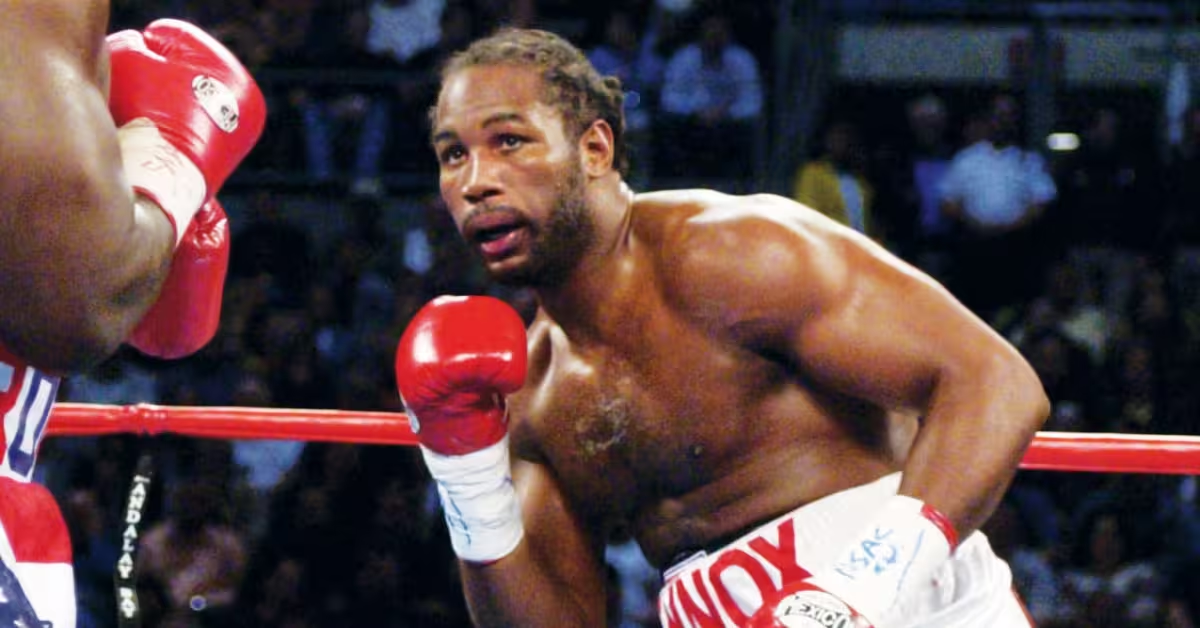
The claim carries weight because of Rahman’s place in recent heavyweight lore. He scored one of the biggest upsets of the era when he defeated Lennox Lewis in June 2001 — a title-changing night that forced Lewis to avenge the loss later that year. Rahman’s present declaration deliberately reaches back to that burst of career prominence as proof he can still alter the sport’s record books.
But the path Rahman wants runs through a divided title picture. The four major belts are split between Oleksandr Usyk and Daniel Dubois, a reality that makes an immediate run at a unified crown implausible. Even victory next month would be only the start of a long climb: the belts sit with two active champions and promotional and sanctioning logistics would have to realign to deliver the kind of shot Rahman proposes.
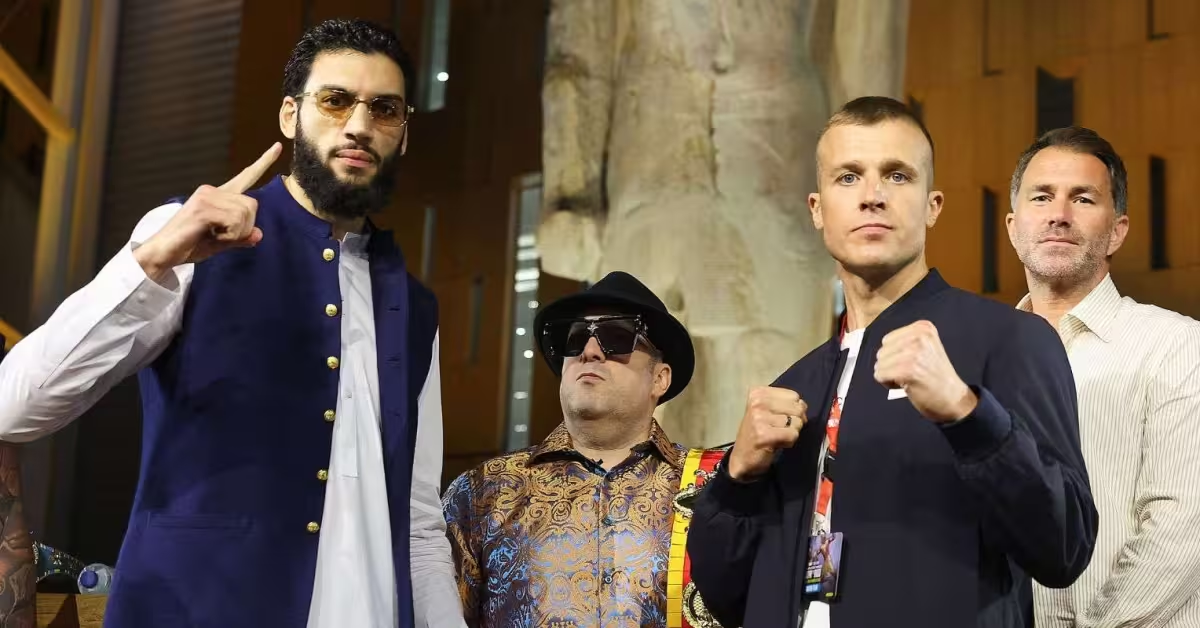

Rahman’s comeback also comes with clear marker points on his recent form. His last professional bout ended in defeat in 2014 against Anthony Nansen, and his most recent recorded victory occurred in June 2011. Those gaps — and the 11 years since his last win — are the practical obstacles he must overcome if he expects to contend with boxers currently occupying the top slots.
Rahman is not talking like a man settling for exhibitions. He repeatedly emphasized physical readiness and experience, framing his age as an advantage in ring IQ rather than a handicap. His announcement leans on memory as much as momentum: his 2001 victory over Lewis remains the headline credential he offers promoters and fans.
Lennox Lewis, part of the same late‑1990s and early‑2000s heavyweight story, has reflected on the fighters and figures who shaped that era. He once remarked, "At that time, Cus D’Amato actually said we would meet one day and it’s coming true. It’s unbelievable that he could have had that kind of foresight," a line that underlines how unexpected turns have always threaded through heavyweight boxing.
Practical questions shadow Rahman’s pronouncements. The sport’s current champions, the mechanics of rankings, and the business of high-profile heavyweight matches all set a high bar for an ambitious return. A defeat next month would likely close the window; a clear win might only buy another step toward relevance, not an immediate title shot. Promoters and sanctioning bodies will decide whether a 53‑year‑old former champion is worth slotting into the crowded top of the division.
Rahman will have his first public answer when he enters the ring at ESL Ballpark in Rochester next month. If the goal is to topple records and reach the belts now held by Usyk and Dubois, he must turn a single comeback bout into a credible, marketable streak — a task that will test the same toughness he has relied on before.