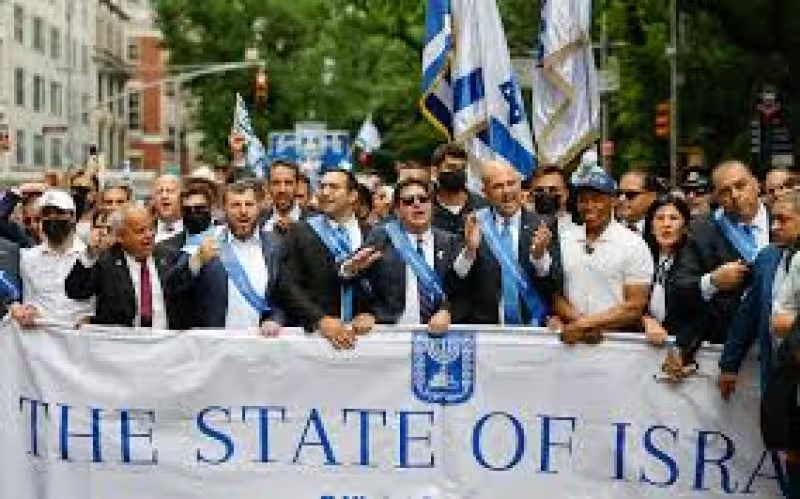
Bezalel Smotrich, Israel’s far-right finance minister and a leading figure in the settler movement, marched in New York’s annual Israel Day parade on Sunday — and several prominent New York Democrats who also walked the route publicly condemned his presence the next day.
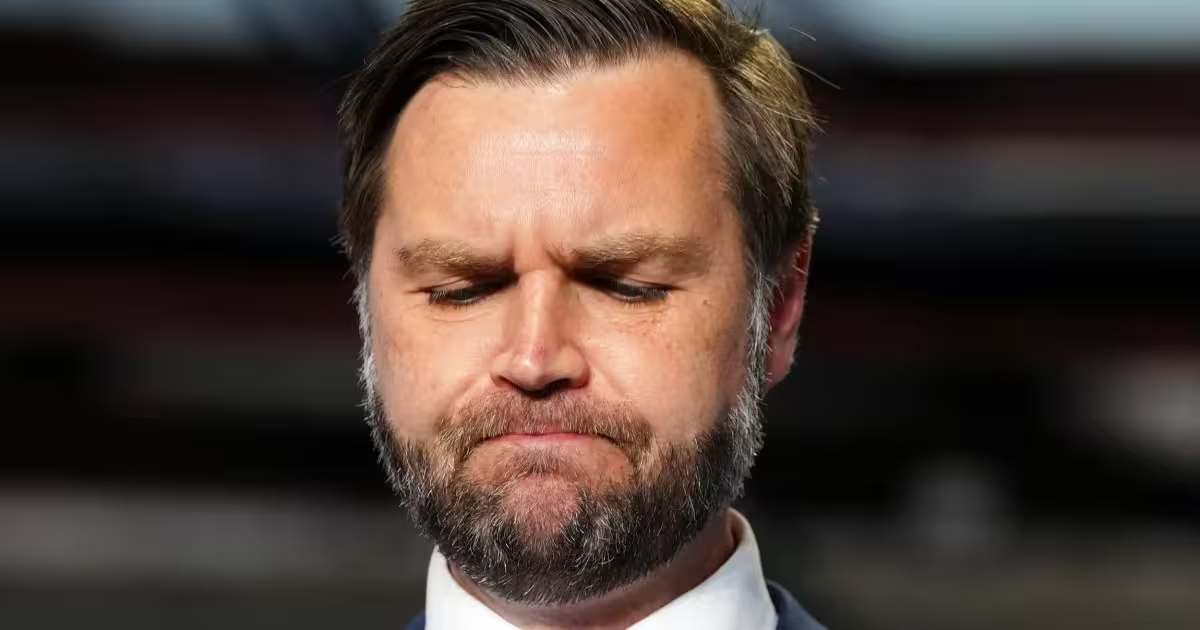
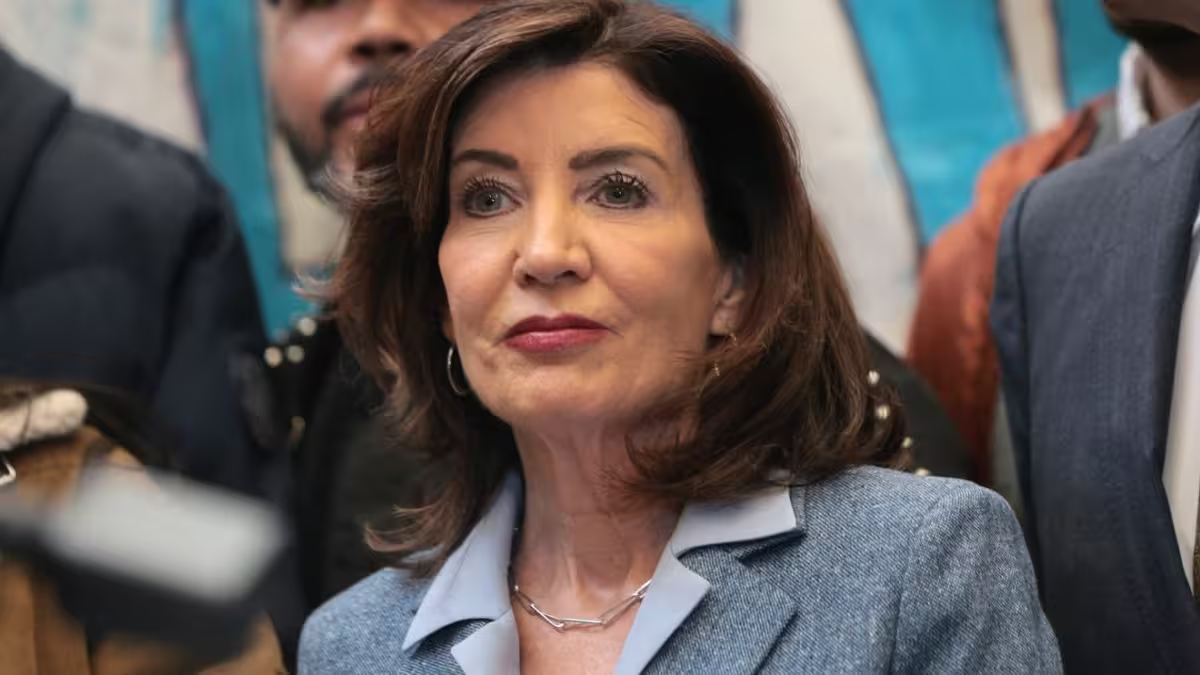
Sunday’s parade drew a list of top officials: U.S. Senator Chuck Schumer, Representatives Dan Goldman and Jerry Nadler, Governor Kathy Hochul, Attorney General Letitia James, and city leaders including Vanessa Gibson, Julie Menin and Mark Levine. Within 24 hours, Hochul said Smotrich’s extremist views run counter to New York values and called his participation an affront to a celebration of Jewish pride and unity; James declared that Islamophobia has no place in the city and denounced his rhetoric. A spokesperson for Senator Schumer said the senator’s denunciation of Smotrich’s extremism remains longstanding and unchanged.

The appearance carried weight because it came after two notable developments: it was Smotrich’s first trip to the United States in more than a year, and it occurred less than a month after he said the International Criminal Court was seeking an arrest warrant against him.
That sequence — an appearance at a large public parade followed almost immediately by sharp pushback from officials who had marched alongside him — exposed a political awkwardness for pro-Israel Democrats in New York. The event had been framed as a communal celebration; several elected officials felt compelled on Monday to draw a clear line between marching in the parade and endorsing Smotrich’s politics.
The Jewish Community Relations Council of New York (JCRC-NY) said it did not know Smotrich or other far-right Israeli officials would attend. Mark Treyger, writing on Monday, said there had been a complete lack of transparency, that some attendees were neither invited by nor known to JCRC-NY in advance, and stressed that participation in the parade should not be read as an endorsement of any political figure or ideology. Treyger also said Smotrich and other officials appeared to have been brought to the event with a group from Israel’s consulate general in New York.
The contrast between the parade’s message of unity and the presence of a politician widely described as far-right sharpened the friction. Officials who celebrated Jewish pride on Sunday found themselves distancing from one of the parade’s international participants on Monday, underscoring the narrow space pro-Israel Democrats must navigate as they balance solidarity with Israel against objections to specific Israeli figures and policies.
What remains unclear is how Smotrich and the other far-right officials were invited or routed into the parade. Organizers and city officials have not released a detailed account of who arranged the group from the consulate general or whether standard vetting and communications protocols were followed; JCRC-NY says it did not know they would be present. That gap — who brought them and why participants were not informed — is the immediate unanswered question that now drives the story.
The next steps are undefined. There is no announced inquiry or review tied to the parade, and public statements so far have been limited to condemnations and calls for clarity. For New York’s Democratic leaders, the episode will likely continue to demand quick public positioning and, at a minimum, answers from organizers about how a high-profile foreign minister with a contentious record came to march in a celebration billed as a show of community and unity.