



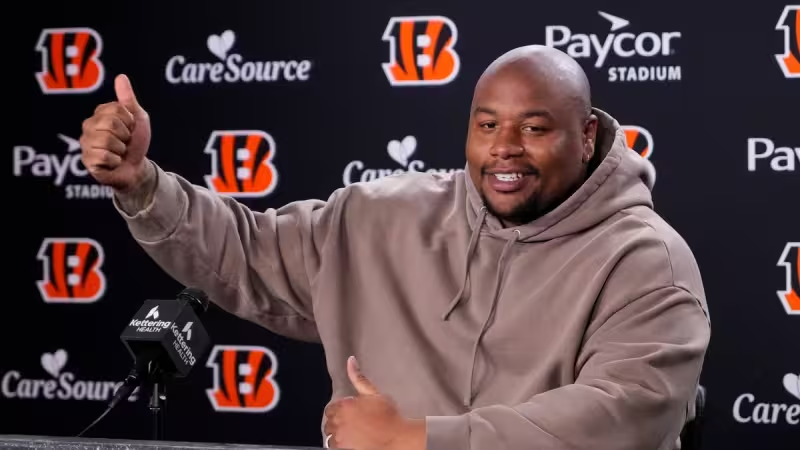
Cincinnati traded for defensive tackle Dexter Lawrence and surrendered the 10th overall pick to get him — a move that one analyst says could backfire if Lawrence does not return to peak form.
Brad Gagnon flagged three concrete risks in his critique: Lawrence turns 29 this season, his raw and rate-based numbers have fallen the last couple of seasons, and the Bengals will be on the hook for about $70 million over the next three years. That mix of lost draft capital and significant short-term cost, Gagnon wrote, makes it "hard to imagine he's the final puzzle piece for this team. And if he isn't, this is an automatic backfire."

The scale of the exchange gives the warning weight. A 10th overall pick is premium capital in any roster rebuild; a near-$70 million commitment compresses future payroll flexibility. Add Lawrence's age — 29 this season — and the documented production drift, and the move looks less like a low-risk upgrade than a high-stakes attempt to accelerate a contender window.
But the trade did more than buy immediate help on the interior. Cincinnati has publicly hoped that nagging injuries that dogged Lawrence can be managed and that improved surroundings will allow him to play closer to his best. The club views him as a sizable upgrade who should help young defensive players around him develop by occupying blockers and setting a tone in the trench, a benefit that doesn't show up fully in individual boxscore stats.
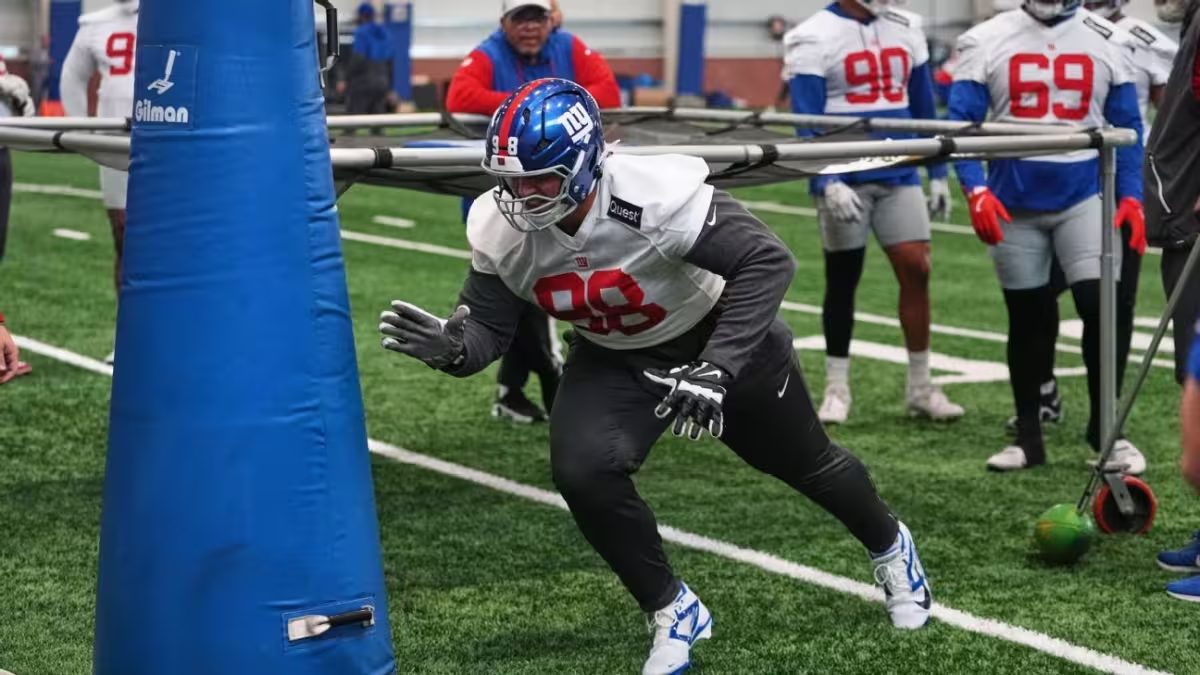

That contrast — tangible upside versus measurable liability — is the practical mechanism behind the criticism. If Lawrence rebounds, the Bengals gain a veteran anchor who fast-tracks development for younger linemen and shores up a defense without waiting on a rookie to grow into a top-10 pick. If he continues to produce below past levels or is limited by durability, Cincinnati will have traded future draft opportunity and absorbed a heavy contract for only short-term gain.
The concern is not abstract. Lawrence's decline in raw and rate-based numbers over the last couple of seasons is a factual trend Gagnon pointed to; the team’s commitment and the sacrificed draft slot are also concrete. Those three elements — age, falling production, and dollar cost — are the fulcrum that will determine whether this offseason's headline trade accelerates the Bengals toward contention or becomes a constraining mistake.
For roster architects, the decision now comes down to odds and timing. Betting that better coaching, healthier availability, and a stable scheme will lift Lawrence back to a high level is an optimistic projection with clear upside: immediate impact and developmental spillover for younger defenders. Betting that the decline continues makes the move an expensive bridge to nowhere, because the 10th pick cannot be reclaimed and the payroll commitment limits midseason adjustments.
This bengals trade dexter lawrence analysis narrows the real question: can Lawrence reverse the recent downward trend and stay healthy long enough to justify both the cost and the lost top-10 selection? How he plays this season will be the single most consequential fact the franchise will use to judge whether it pulled off a franchise-altering upgrade or wired itself into a costly mistake.



