




The state rested its case Saturday in the Carmelo Anthony trial in McKinney, Texas, after calling 21 witnesses in the prosecution’s investigation into the April 2, 2025, fatal stabbing of 17-year-old Austin Metcalf.
Anthony is charged with murder in the death of Metcalf, whom police say was stabbed in the chest with a pocketknife following an argument over seating in the stadium stands. If convicted, Anthony faces a sentence ranging from five to 99 years or life in prison; the trial is expected to last about two weeks.

The prosecution had planned to call 35 witnesses but stopped at 21, a procedural milestone that shifts the courtroom spotlight to the defense. After the state rested, the defense moved for a direct verdict, arguing prosecutors had not met their burden; the judge denied that motion, clearing the way for the defense to begin presenting its side when the trial resumes.
The testimony on Saturday focused less on the knife itself than on the social dynamics at high-school track meets. Defense witnesses painted a picture of athletes moving among tents, visiting friends from other schools and treating the meeting as a loose, social environment. An unnamed 17-year-old Memorial High School student said he did not want to be at the meet and told police after the stabbing that Eddie Parra had called Anthony over to the tent; that student also said Anthony and others shook hands and spoke after Anthony sat down.
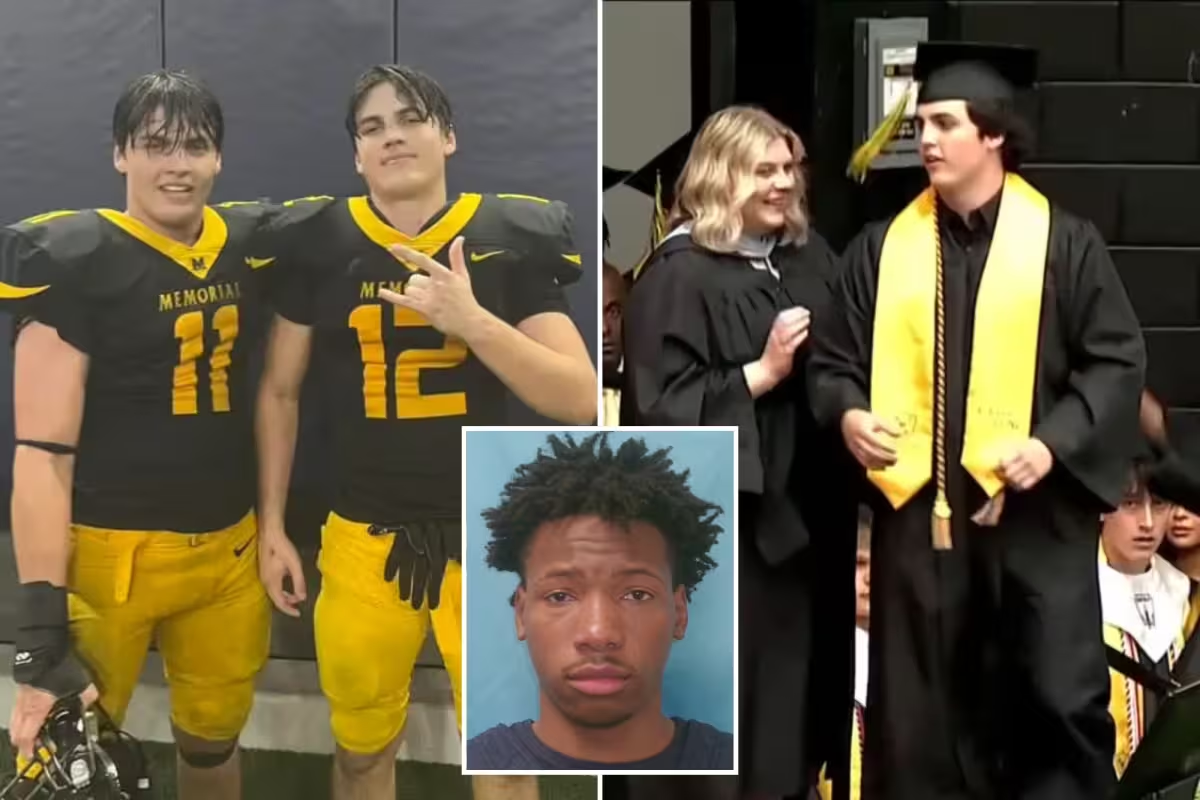
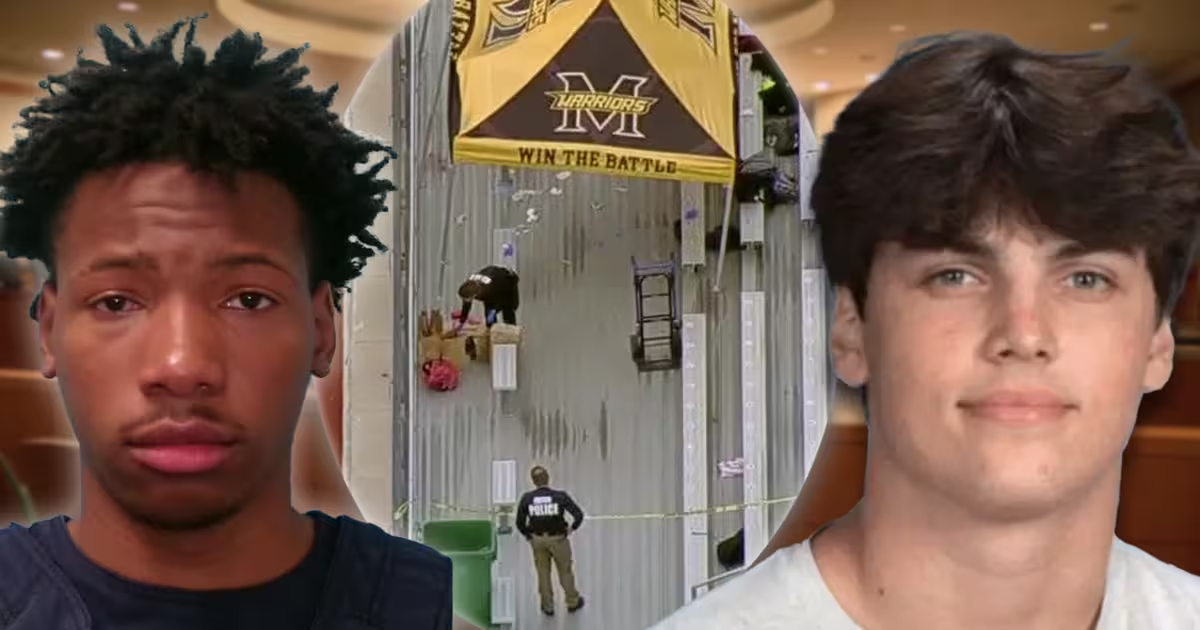
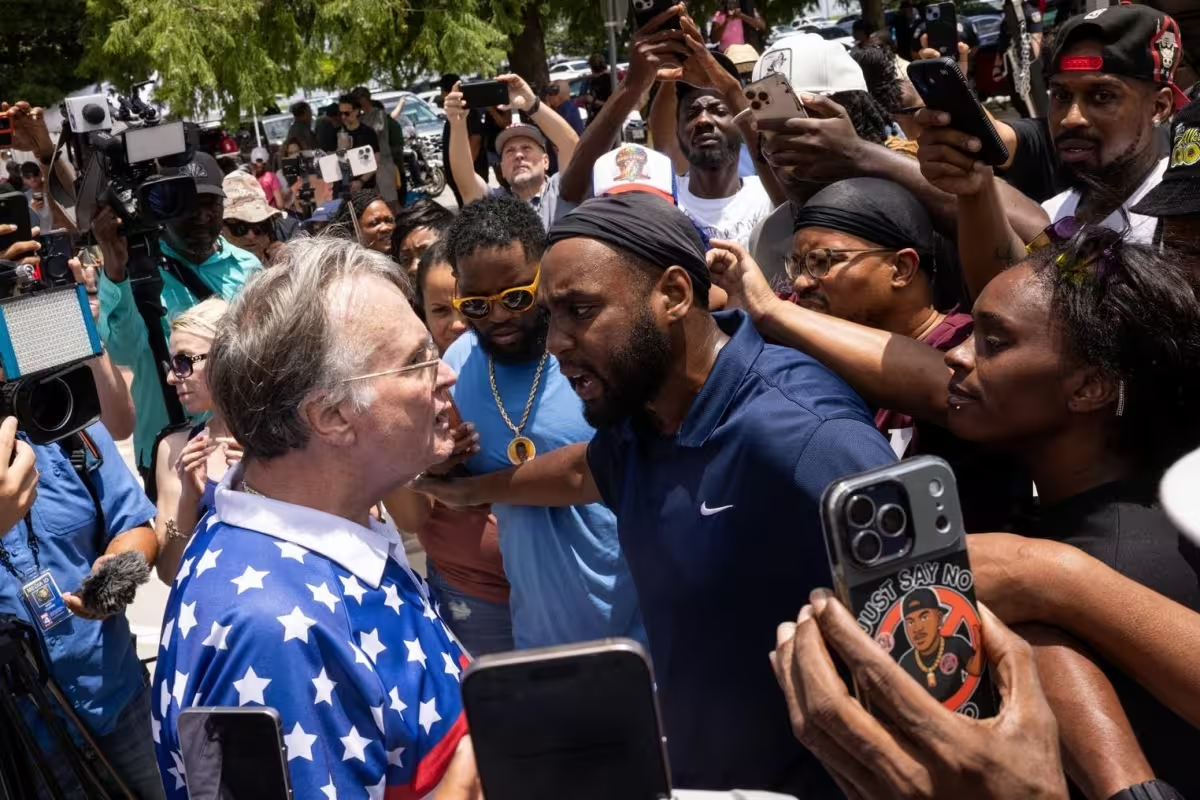
Jeremiah Smith, an 18-year-old recent graduate of Centennial High School who testified for the defense and said he considered Anthony a friend, described a culture in which athletes “walk around and find friends” during downtime. Smith said he had spent time under other teams’ tents without incident, that he would leave if asked, and that there was "no reason to carry a knife to a track meet."
Centennial coach Adam Linwood echoed that account, testifying his team did not have "enough manpower" to put up the Centennial tent at this meet and describing inter-team movement as "organized chaos." Linwood said he was unaware of any rule that barred students from sitting under other teams’ tents and that he would not remove another school’s student from his tent; he also testified the school now requires athletes to stay under their own tent.
Those descriptions were the central tension of Saturday’s proceedings. The defense used them to suggest the confrontation was a social tangle that escalated unexpectedly. The prosecution, by contrast, emphasized the deadly outcome and probed whether there was any reason to bring a knife to a track meet, pressing the point that a fatal stabbing followed an argument over seating.
The two narratives—one of casual mingling and unclear tent boundaries, the other of a confrontation that ended in a stabbing—are what jurors must sort out. The state relied on witness testimony and the sequence of events police say led to Metcalf’s death; the defense has begun to frame the encounter as typical adolescent interaction gone wrong and is positioning testimony about school culture and access to tents to undercut a claim of premeditation or intent.
The trial will pick up at 9 a.m. Monday, when the defense is expected to begin calling witnesses of its own. The single, pressing question left for jurors is whether they credit the defense’s portrait of mingling and informal access to other teams’ spaces—or the prosecution’s argument that bringing a knife to a track meet cannot be reconciled with the testimony that these were ordinary, social interactions.



