




"A maior parte dos jogadores portugueses jogam fora do país. Por isso, não sinto que o facto de eu jogar aqui mude algo em relação ao adversário," Richard Ríos said on 7 June 2026, rejecting the idea that his Benfica career gives Colombia a special insight into Portugal ahead of their World Cup group-stage meeting.
The 26-year-old Benfica midfielder and Colombia international framed the matchup as something Colombia will simply live: "Vai ser um jogo muito bom, vamos experienciar algo diferente contra eles, e sinto que será muito distinto daquilo que vivo no dia a dia em Portugal." He added he is "muito feliz, muito motivado e ansioso para que comece o mais depressa possível."

Those lines carry the story: a player who spends his week-to-week life inside Portuguese club football saying it will not tilt a single tactical scale in a World Cup game. That claim matters because it comes from a man who trains and plays in the country his national team will face, and who just days before kick-off is vocalizing how he sees the contest.
The strongest detail in Ríos's remarks is the caveat he tacks onto his dismissal. He acknowledged a concrete difference: "Ainda assim, é bom saber que as características da seleção portuguesa são semelhantes às de muitas equipas europeias, que estão habituadas a bons relvados e a bolas diferentes das que nós, sul-americanos, usamos. Acho que essa é a única coisa." In plain terms: Portuguese players may be accustomed to different surfaces and balls, and that could alter feel and play.
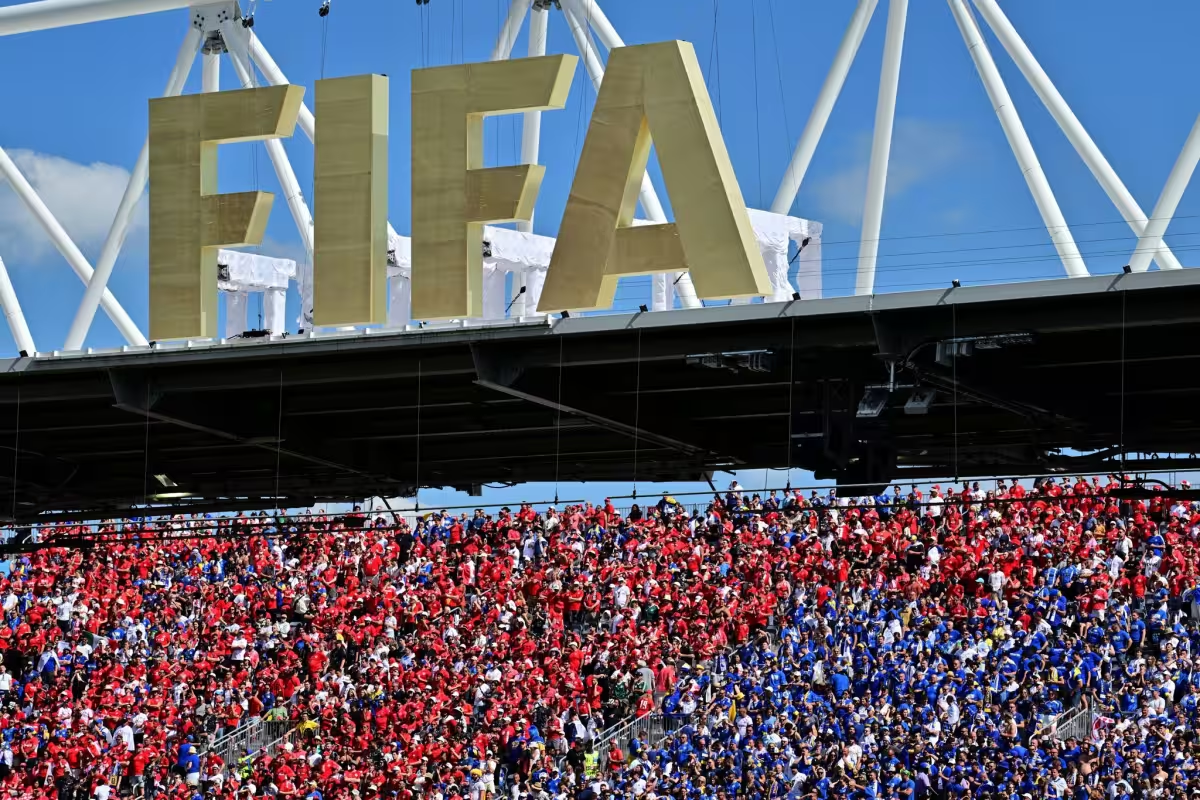


That admission is the friction in his message. Ríos reduces the strategic import of his Benfica ties, then immediately flags conditions — pitch quality and equipment — that separate Portuguese football from South American routines. He does not argue those differences will decide the match, only that they exist and could be the only notable edge.
Ríos's route to this moment sharpens the contrast he presents. He practiced futsal until he was 18, he said, and remembers the frustration of failing to break into football clubs despite his father's efforts to take him to trials. He described leaving much behind to reach this level. Those details are small biographies with big implications: a player who learned close control and quick rhythms indoors, who clawed his way into the European club game, now returns to the international stage wearing his national colors.
He framed the World Cup as the fulfillment of a personal arc: he is realizing a dream and is eager for it to begin. That view underpins why his comment about Portugal carries weight. When a player inside the opponent's domestic system says the tie will be "very different" from daily life but not fundamentally altered by his presence, it reframes expectations. It suggests Colombia will treat the game as an international test rather than a club scouting report.
What Ríos did not resolve — and what will matter on matchday — is how much he will actually influence the game. His words make him part insider, part visiting protagonist. Colombia's lineup, minutes and the coach's choices will determine whether his Benfica experience tips the balance or remains merely background color.
The immediate next scene is straightforward: Colombia will meet Portugal in the World Cup group stage. Fans and analysts will watch whether Ríos starts, how long he plays, and whether the soft edge he noted — the different ball and smoother turf — shows up as a decisive variable. Until the team sheets are published, Ríos's comments are the clearest thing on record: a player split between two footballing worlds who says the match will be different from his club life but not defined by it.



