



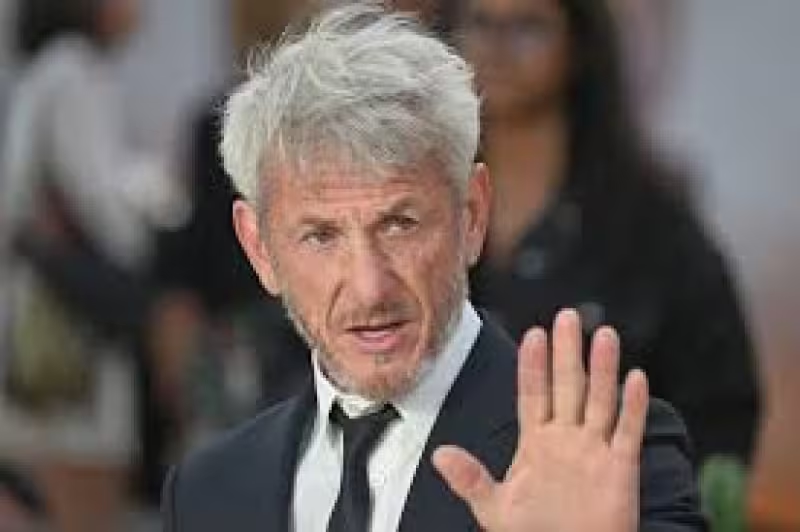
Sean Penn told a Tribeca Festival audience on Friday that he skipped the 98th Academy Awards because large public gatherings make him anxious and he hates selfies, and that he has resolved not to place himself in designated groups larger than eight people.
Penn, speaking at Spring Studios in lower Manhattan during the 25th annual Tribeca Festival, linked his absence from the Oscars directly to how award-show culture affects him. He won Best Supporting Actor this year for One Battle After Another — his third Oscar — but did not attend the ceremony. Instead, Penn said he traveled to Ukraine and watched the show there from 2 a.m. to 5 a.m.

“That always represented social discomfort for me; too many people,” Penn said. He described the calculus as both psychological and practical: public gatherings, he said, give him about 15 minutes per person before they become dread-provoking. “I’m now down, committed for life, that I won’t go anywhere to be in a designated group beyond eight people,” he added.
The moment carried weight because Penn is no stranger to awards rooms: he won Oscars for Mystic River in 2003 and Milk in 2009. This year’s Best Supporting Actor trophy was therefore notable not only for the win but for the absence. Penn said colleagues on One Battle After Another agreed it was better for his mental health that he skip the ceremony.

He framed that choice as the end point of a short string of experiments with awards-era socializing. “Knowing that I wasn’t going to do that anymore, I did one before that this year. I went to the Golden Globes; I’d never been to that before. And that’s where I decided, ‘I can’t do this,’” Penn told the audience. He qualified the feeling most people expect at an awards show: “The best that I could ever muster was relief.”
Penn broadened his critique beyond the red carpet. “It’s not just [that it’s] an awards show,” he said, arguing the mechanics of celebrity culture — including photos and close-contact rituals — wear on people. “People should not do selfies ever with anyone. It’s bad for you; it’s bad for everyone. It’s a soul-sucker.” He added a concrete illustration of his social limit: “It would be the same if this group was going to an afterparty and one stepped into that.”
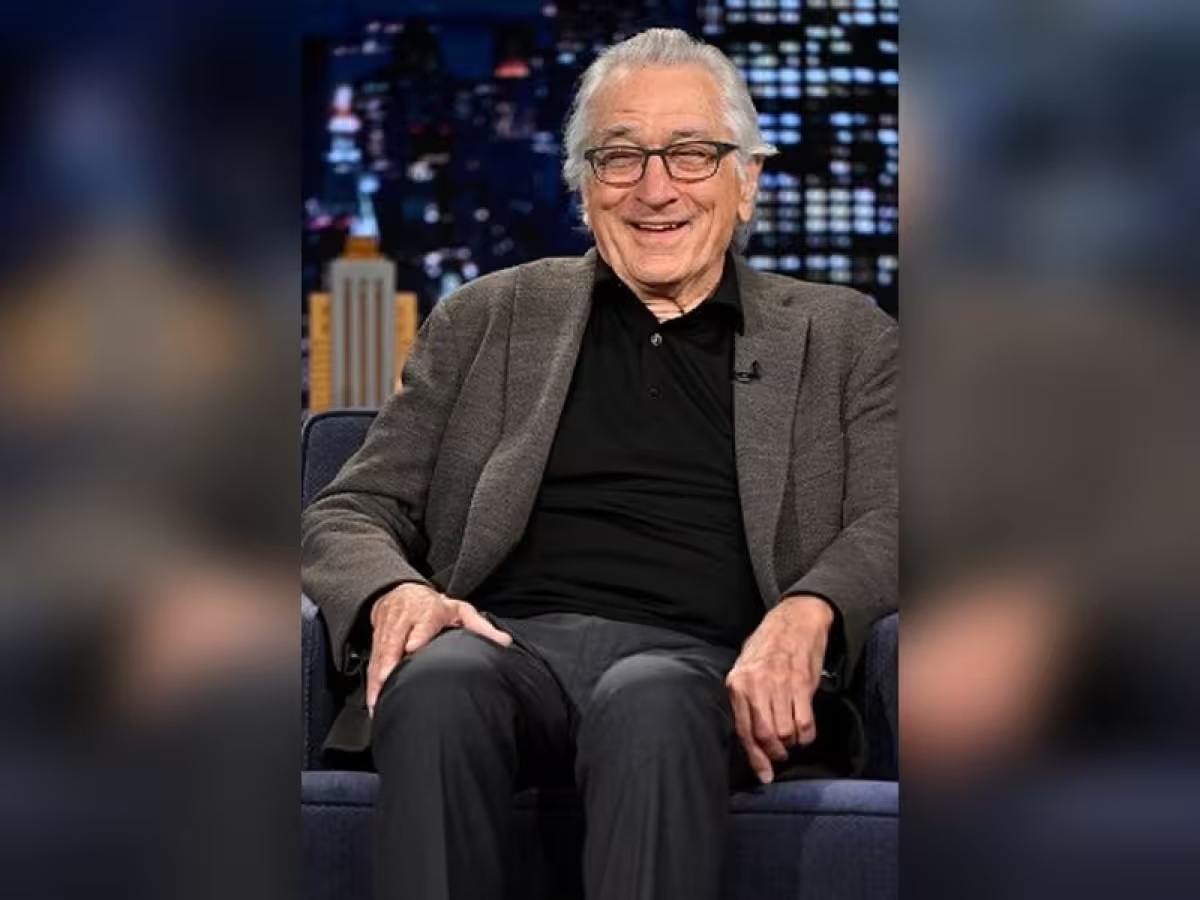
The setting underscored the personal angle. Penn’s appearance at Tribeca — where he has long-standing ties through his relationship with co‑founder Robert De Niro — turned what might have been a routine festival conversation into a moment of policy about his own public life. Festival audiences heard a performer and two-time prior Oscar winner explain, plainly, why the rituals that celebrate his work also exclude him.
The friction is clear: Penn accepted the industry’s highest honor for the film yet said the emotion awards shows elicit in him is relief, not joy. That contrast separates his win from the usual narrative of triumph and raises a practical question for ceremonies and publicists who customarily count on winners to make a stage appearance and participate in press cycles.
What comes next is less a mystery than a stated boundary. Penn said he has committed himself to avoiding designated groups larger than eight people, a decision he framed as final: “I’m now down, committed for life…” He did not announce any plans to return to awards shows; given the language he used, an attendance at future ceremonies would require him to reverse that declared commitment. For now, his third Oscar sits with him in the context of a deliberate withdrawal from the rituals that accompany such honors.



