



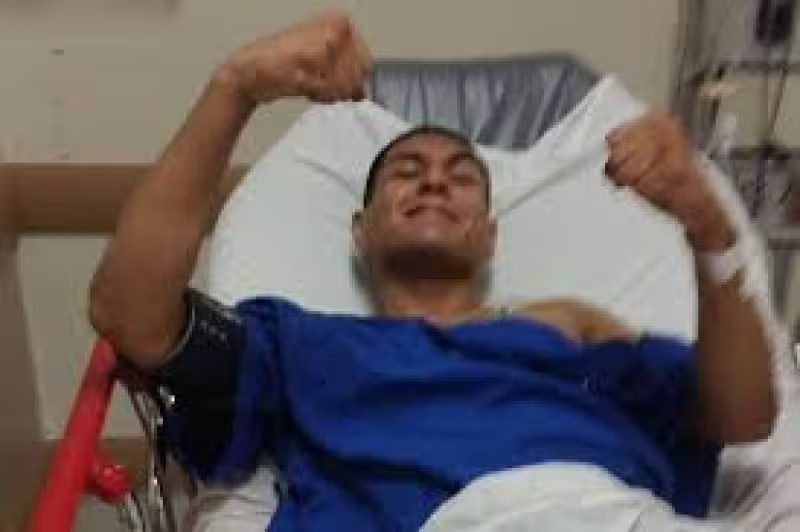
"It was a friend’s fight on the street," Edgar Chairez said, and then he described how trying to break it up left him fighting for his life. More than a decade after the incident, the 30-year-old told reporters he and a friend were fired on in Mexicali, his friend struck multiple times and Chairez himself hit only once.
Chairez said the shooters kept firing as he ran. "So I tried to break them up, and while I was doing that, since I was in the group, they shot at both of us," he said. "And well, they shot my friend, like, four times, I only got hit once." He added, with a mix of grimness and relief, "But the good thing was, they were such idiots, they had terrible aim. They only hit me once."

The detail matters now because Chairez is days from a major payday and an immediate test: his fight with Bruno Silva is scheduled for Saturday at UFC Vegas 118. Chairez framed the shooting not as a buried trauma but as part of a life that pushed him toward mixed martial arts. "The good thing is, I’m still here for a reason," he said. He also posted a photo earlier this year showing himself on a hospital bed after the attack; he said the event happened more than a decade ago but resurfaced in public discussion as he prepares for fight week.
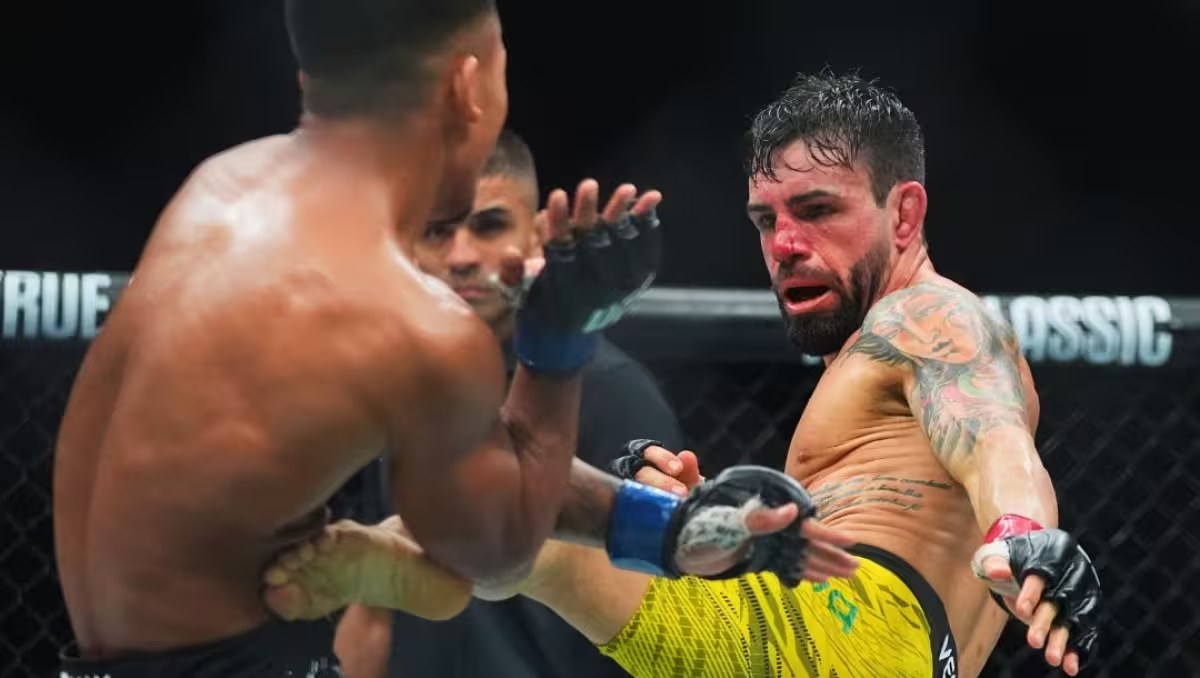
Numbers in his corner underline the stakes. Chairez carries a UFC ledger of 3-2 with one no-contest, including two straight wins over CJ Vergara and Felipe Bunes and prior losses to Joshua Van and Tatsuro Taira. The wins are the immediate context for his push up the lightweight ladder; the shooting is the backdrop he says shaped him in Mexicali, where he grew up around crime and guns.
That upbringing is central to how Chairez tells his story. "From the very beginning, my life was all about sports," he said, adding that until he was 18 he was a footballer and dreamed of a professional soccer career. He turned to MMA and, now on the national MMA team, he said he hopes a win will earn him an invite to watch Mexico play in its World Cup match five days after his bout — "I need to motivate them because I want them to invite me to a match," he said.
The account contains a tension that stays with the reader: he says he nearly lost his life, yet he repeatedly emphasized the shooters’ poor marksmanship and that he was struck only once. That contradiction is not rhetorical flourish; it raises an immediate, practical question about what the shooting left behind. Chairez laid out the facts plainly — friend hit about four times, he hit once, he survived by running while the shooters emptied their magazines — but he offered no medical detail beyond the hospital photo and the one wound.
That absence is the story’s clearest unresolved point. If the shooting changed him mentally or physically, it has not halted his career: he is scheduled to face Silva on Saturday. The single most consequential unanswered question now is how much, if at all, the attack and its aftermath still affect his body in competition — and whether a man who says "the good thing is, I’m still here for a reason" can turn that survival into a stepping stone at UFC Vegas 118.



