



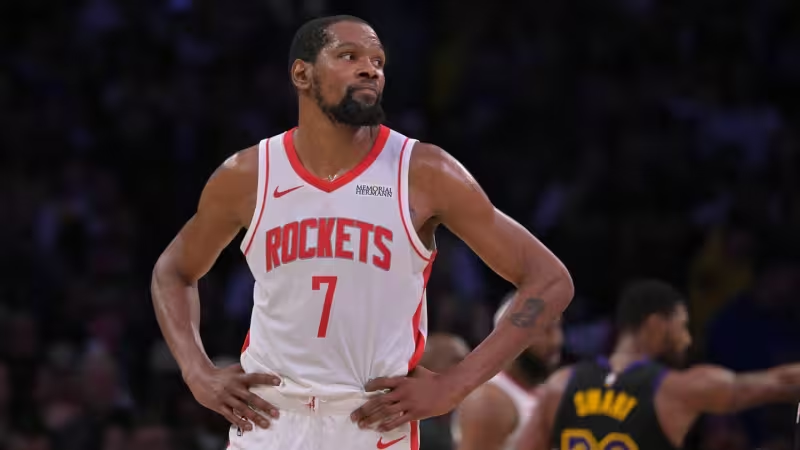
The Houston Rockets are deciding whether to use their cache of draft picks and pieces of a young core to acquire another star or to hold intact a deep, promising roster for another season.
The immediate trigger for the choice is simple: Houston added Kevin Durant last summer and still finished the playoffs 13th of 16 teams in offensive rating, with offense identified as the club's primary shortcoming. That mismatch—an elite scorer added to a team that struggled to space the floor—left the front office with two clear options heading into the next offseason.

On one side are the assets that give the Rockets genuine leverage: a young group that made a noticeable leap last summer and seven first-round picks between 2027 and 2032. Alperen Sengun, Amen Thompson, Jabari Smith Jr., Tari Eason and Reed Sheppard sit at the center of the club's upside, and the collection of future picks provides trade currency other teams value.
On the other side is the roster reality that drove the evaluation in the first place. Houston's offense ranked 13th in the playoff field, and a persistent lack of perimeter shooting invited aggressive defensive schemes that often left Durant and others standing with tougher looks. A complementary star with shooting or playmaking could force defenses into harder choices and potentially unlock a more efficient attack.
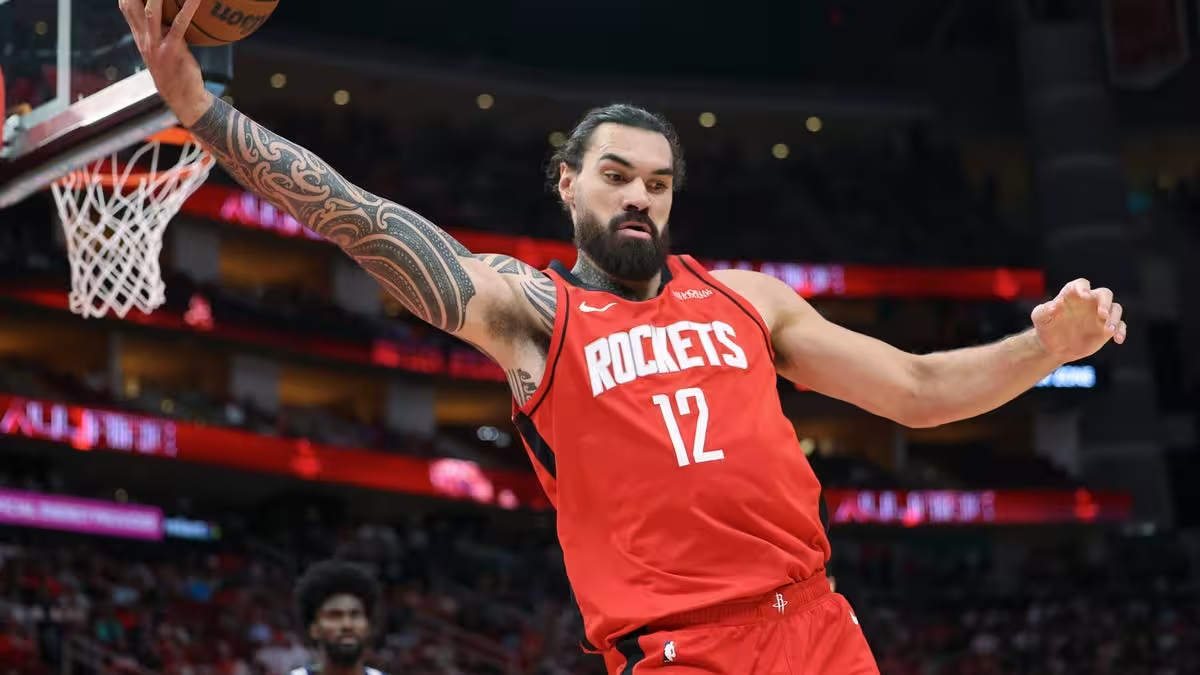
The practical mechanism is straightforward: the Rockets could package some of those seven first-round picks and portions of their young core to land a win-now star. That path mirrors how the club reshaped itself last summer, when the front office completed the move for Durant. Rafael Stone is the architect facing the same calculus now—trade depth to try to accelerate title contention, or preserve the young core and picks to protect long-term rebuilding flexibility.
The friction is the cost. Trading away rotation players or a core starter undercuts the very depth that allowed the team to improve without one singular dominant perimeter threat. Lose too many young building blocks or future first-rounders, and a short-term upgrade could leave the Rockets with a narrower ceiling in five years. Keep everything and improve gradually, and the franchise may miss a window to surround Durant with the complementary pieces needed to change how opponents defend them.
Practically, the decision will shape roster construction next offseason. If Houston moves toward a star acquisition, expect offers that include multiple future first-round picks and at least one high-upside young player. If the front office chooses to retain depth, the team is likelier to prioritize internal development, targeted free-agent additions, or smaller trades that address shooting and spacing without gutting the roster.
The unanswered and most consequential question is which path Stone and the front office will pick: trade meaningful depth now to pair Durant with another elite option, or preserve the young core and seven future first-round picks to keep a longer runway. That choice will determine whether the Rockets push hard for immediate contention or protect flexibility and growth over the next half-decade.



