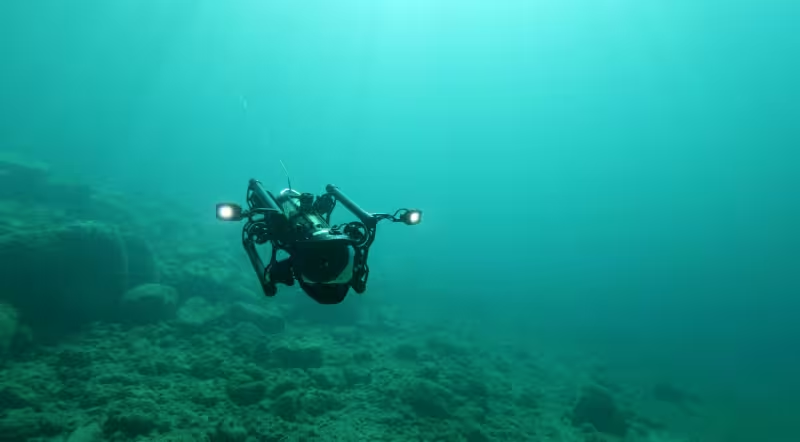
Researchers are set to send an unmanned drone into Superior Maximus, the deepest point in the Great Lakes, this weekend for the first time in 40 years, and the dive will be livestreamed as viewers submit questions from home. The planned launch is 1 p.m. Saturday, though weather could push the expedition anywhere from Saturday through Tuesday, with the exact timing to be announced shortly before liftoff.
The expedition reaches a place 1,300 feet below Lake Superior’s surface where no light can reach and the pressure is 40 times greater than at the top. It is part of the upcoming documentary Hidden Below: The Great Lakes, and the team says the underwater work is meant to show that the lakes contain a hidden world that is still active, not a wasteland.

Bridge Michigan is co-hosting the livestream, and during the broadcast Shawn Sitar, Yvonne Drebert and Zach Melnick will answer questions from the public. Drebert said people often think of the Great Lakes as “looted and dead,” but that there is “this whole vibrant world under the waves” that is still “pretty amazing,” and that it is there if people want to look for it.
The Hidden Below team will use a Boxfish Luna underwater cinematography drone to document what it finds, with hopes of capturing deepwater sculpin, forests of colourful hydra, mysis shrimp and siscowet lake trout. Scientists have recently found emaciated siscowet trout for reasons they do not yet understand, and the fish’s deep habitat has made it harder to determine what is happening to them.
Sitar said the deepest waters act as a long-term record of what is happening in the ecosystem, and that studying them helps scientists understand how energy and nutrients move through Lake Superior and how the system responds to change. The open question is what the drone will actually see at Superior Maximus and whether the expedition will help explain the condition of the trout, or instead reveal more about a part of the great lakes that has been largely unseen for decades.
Drebert said the livestream is also meant to draw in people around Michigan and the broader Great Lakes region, adding that viewers may be surprised by what they see — and may have ideas the team has not considered. That is the promise of the dive: not just a rare look into the abyss, but a chance to measure how much life still persists in a place most people have never seen.