



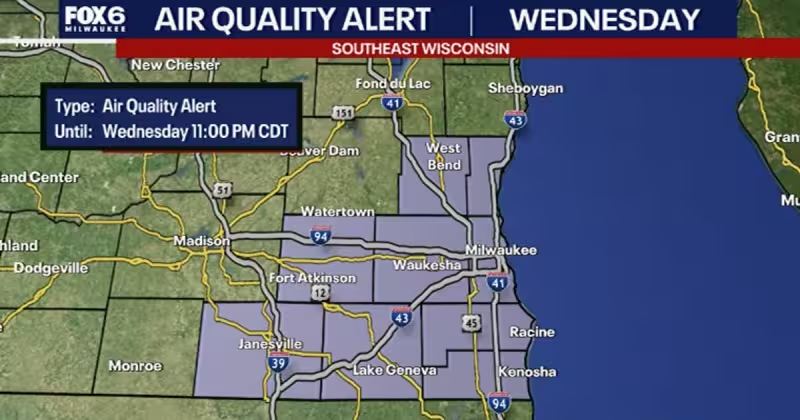
The National Weather Service issued an air quality alert for much of southeast Wisconsin on Wednesday, June 3, after ozone was expected to rise to unhealthy levels for sensitive groups and linger through 11 p.m. the same day.
The alert covers Jefferson, Kenosha, Milwaukee, Ozaukee, Racine, Rock, Walworth, Washington and Waukesha counties. People with asthma, heart or lung disease, older adults and children were urged to shorten outdoor activity and make it less intense, and officials said to watch for coughing or shortness of breath.


The air was not being clouded by wildfire smoke. Canadian wildfires were not yet sending smoke across the Midwest, and winds in Wisconsin were moving too slowly to make that likely. Instead, an uncommon weather setup was trapping ozone near the ground people breathe in. Benjamin Sheppard, a National Weather Service meteorologist, described it as a subsidence inversion pattern: a layer of warm, slow air holding emissions down while sunlight helped ozone form.
Milwaukee was under abundant sunshine on June 3, and sunny skies were expected to continue into Thursday, June 4, even as the air quality stayed poor. That is the friction point in the alert: clear skies did not mean clean air, because the problem was the chemistry close to the surface, not haze overhead.
The agency said outdoor activities should be planned for the morning, when ozone is lower, before the day’s warmth and sunlight build the concentration again. It was the first air quality alert of 2026, and the unanswered question is how long the trapping pattern will last after 11 p.m. Wednesday.



