



Charlot Lucien co‑led a basement bar full of Haitians in Back Bay in song, raising the refrain “Grenadye, alaso!” in Haitian Creole and explaining, "It means they, or we, as Africans were kidnapped and enslaved." The chant — nicknamed the Grenadye cry — rolled through the room like a promise: a way for a community to mark Haiti’s return to the World Cup and stake a claim on a very local moment.
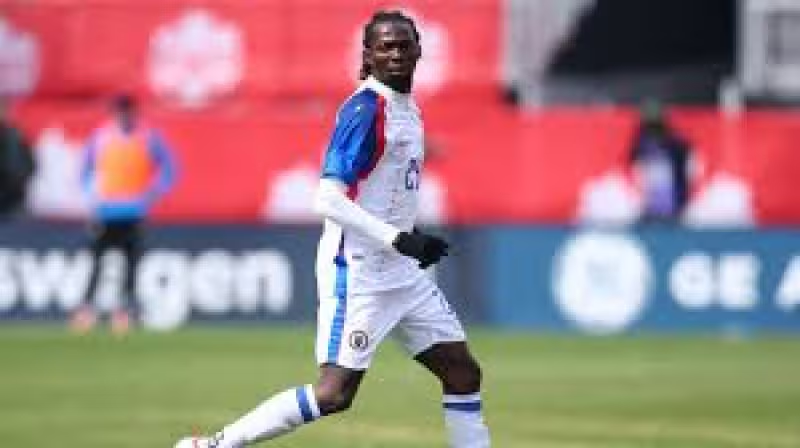
The gathering last week was a celebration of that return. Fans chanted the phrase that loosely translates to “Grenadiers, charge,” and they named a hometown link that made the night feel immediate: 31‑year‑old Frantzdy Pierrot, who attended middle school and high school in Melrose, has become a living connection between the island and Massachusetts as Haiti prepares to play Scotland at Gillette Stadium on June 13.

The numbers behind the joy are stark. Haiti had not been to the World Cup since 1974 — more than half a century. That first trip still lives in memory: Emmanuel “Manno” Sanon’s goal gave Haiti a 1-0 lead against Italy, only for Italy to win the match 3-1. Haiti left that tournament without a single point, outscored 14 to 2. The contrast — historic elation now, painful memory then — was the subtext of nearly every conversation in the bar.
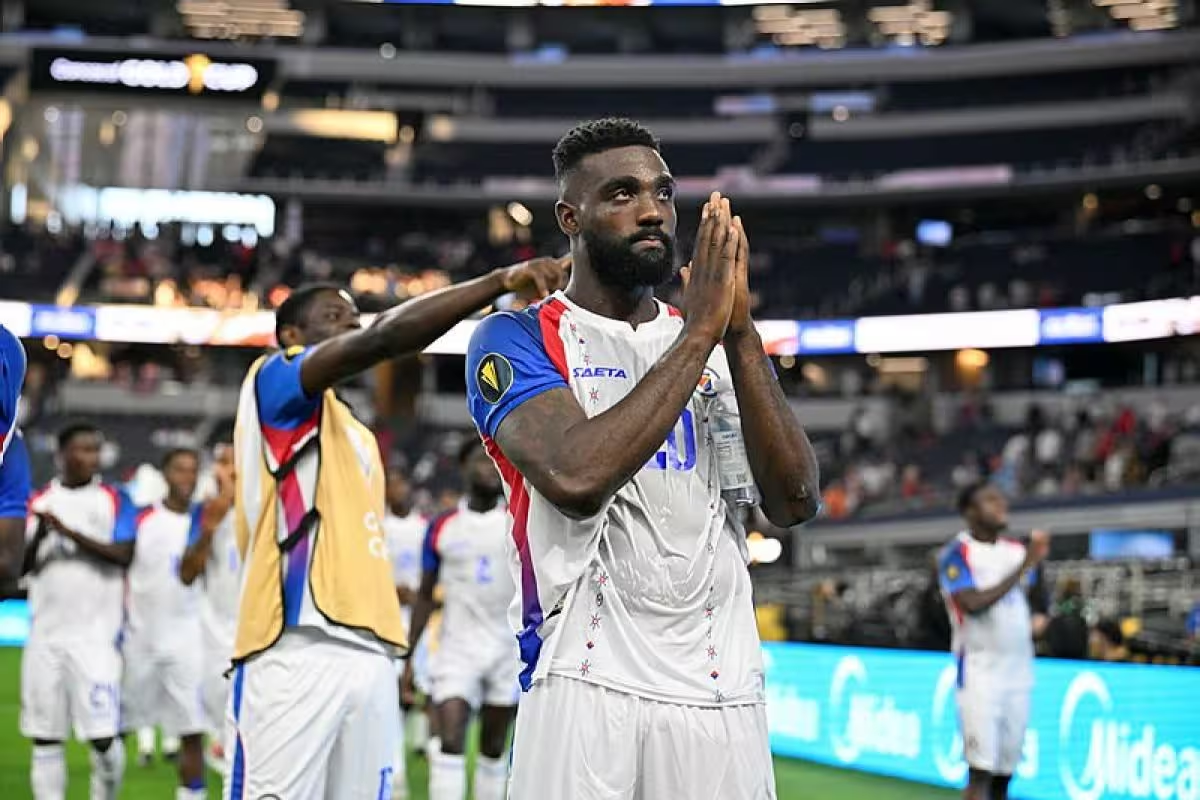
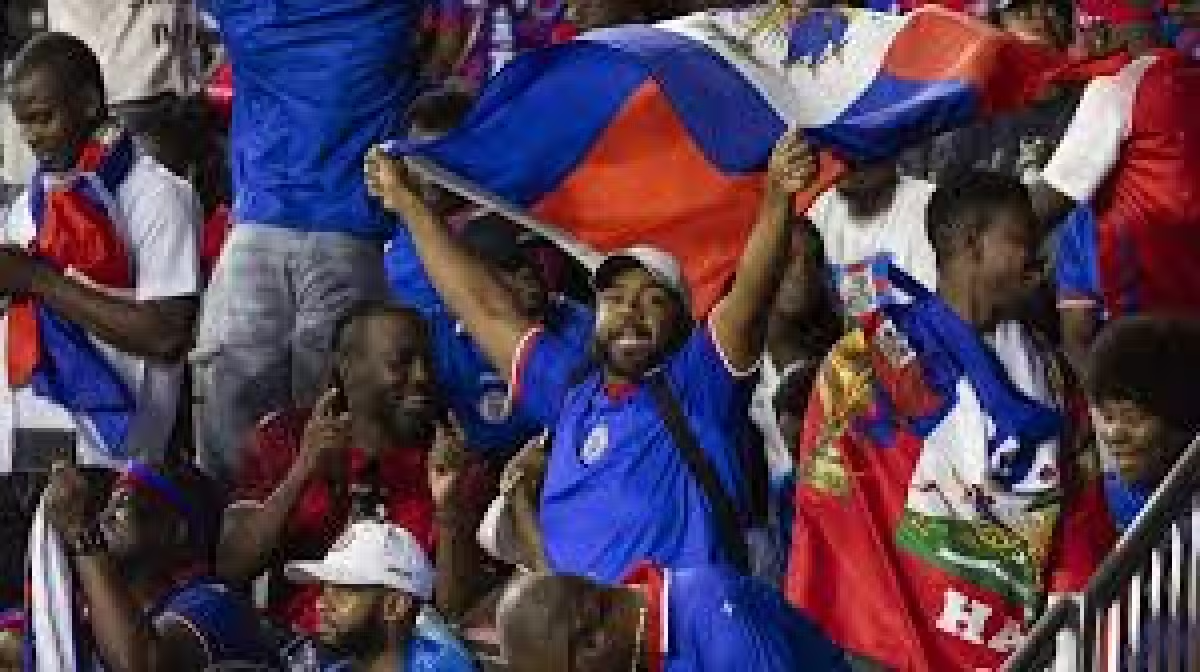
Those chants carry history as well as hope. The refrain sung in Back Bay was used during the Haitian Revolution in the late 18th and early 19th century; it pulls language about slavery, colonialism, freedom and the ruptures of family into a single cry. Lucien returned to that lineage later in the night with another, quieter line: "We have nothing to lose." For many in the room the song is not mere soccer pageantry but a way to translate generational trauma into collective energy.
What made the evening different from a typical watch party was the local angle. Pierrot’s schooling in Melrose — middle and high school years spent just a short drive from the bar — gave people a name and a familiar geography to attach to Haiti’s team. Fans spoke of packing Gillette Stadium to see whether a squad that broke a decades‑long drought can also break the old script that haunts them: the small triumph and the larger disappointment of 1974.
That split — jubilation at qualification and the memory of a tournament where Haiti earned no points and was heavily outscored — is the story’s tension. The crowd’s chant is old enough to predate the modern game and close enough to a local high school to make the coming match feel like a test of two histories at once. Nobody in the bar pretended the path here was simple; many framed the June 13 match at Gillette Stadium as the moment to see how this team measures up on a stage that once left Haiti empty‑handed.
The next public moment is clear: Haiti plays Scotland at Gillette Stadium on June 13. For the Boston Haitian community and for Pierrot’s neighbors from Melrose who filled the basement, that match is more than a date on a calendar — it is the first chance in more than 50 years to see whether Les Grenadiers can convert this long‑awaited return into something that alters the memory of 1974 rather than repeat it.



