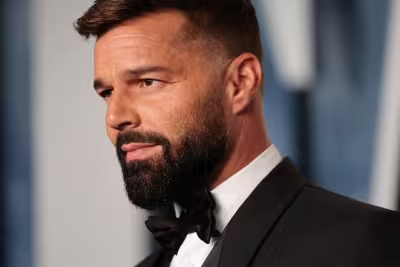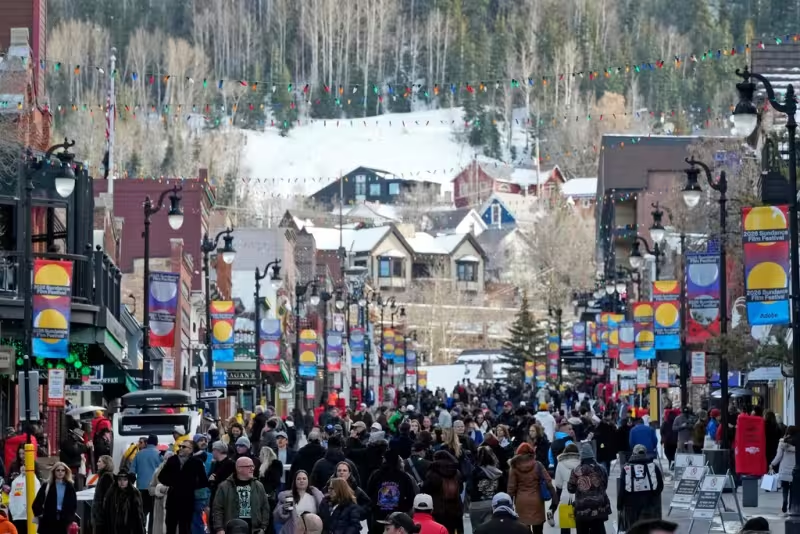
“Selling Park City Mountain Resort is the right thing to do,” Matthew Prince said on a Zoom call, repeating a campaign he began in March: he wants Vail Resorts to sell him the Utah ski area where he grew up and worked as a ski instructor in the mid-1990s.
Prince, the 50-year-old billionaire founder of Cloudflare and now the wealthiest person in Utah, has made the request public and blunt. He says Vail Resorts should thin its balance sheet, move to an asset-light, franchise-style model and keep licensing the Epic Pass rather than holding on to 42 ski areas he calls poorly managed assets.

The numbers Prince uses to press his case are stark. Vail owns 42 ski areas across the United States, Canada, Austria and Australia; its stock has traded around $137, more than 60% below a 2021 peak; and Prince argues the company’s stable of resorts is worth north of $5 billion—far more than the market seems to credit. He first started nudging Vail publicly in March and told listeners he originally thought he’d get the resort in five years, but “I am now increasingly convinced it’s going to happen a lot faster than that, because they’re in real trouble.”
Those are not casual barbs. “The current management team does not sell properties,” Prince said, adding later, “At some point shareholders are going to say you know what, you don’t get to be a capital allocator anymore.” His pitch is specific: buy Park City Mountain Resort, then push Vail to sell other underlying resorts and adopt a franchise arrangement so Vail can retain pass distribution without owning the real estate.
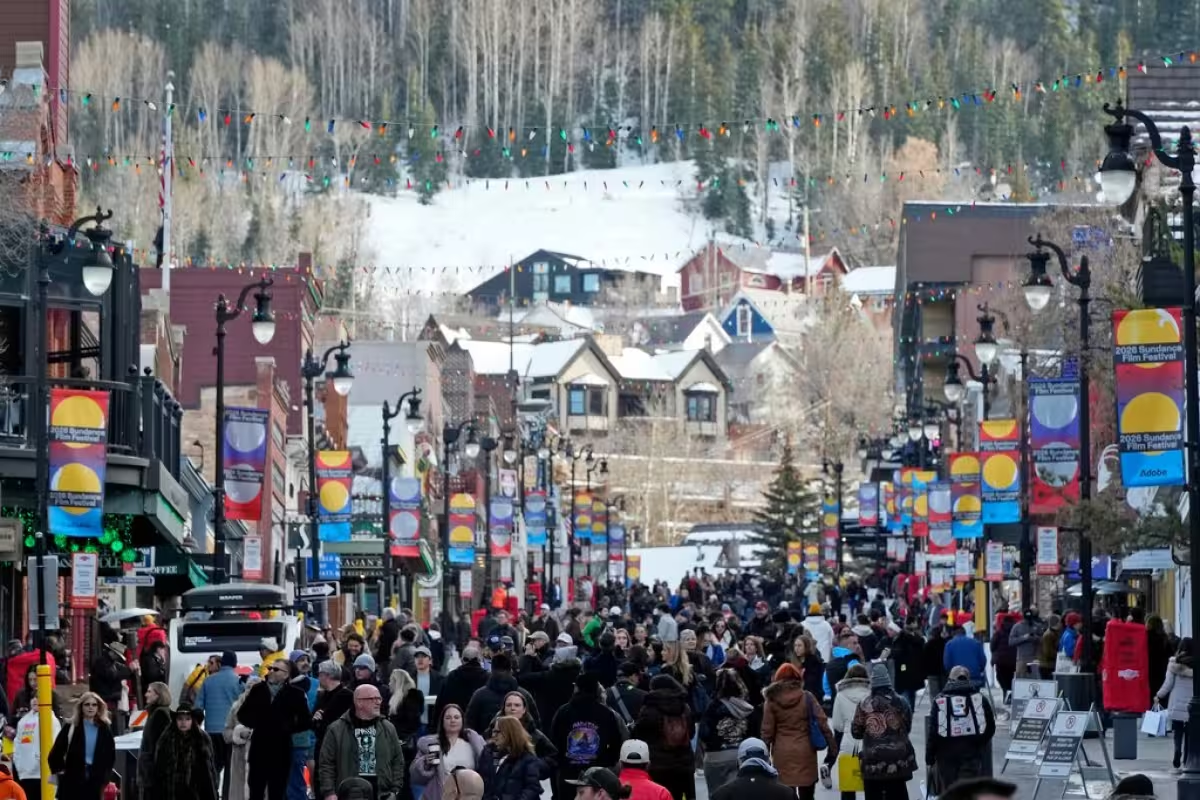
Context sharpens both Prince’s instinct and his timing. Vail Resorts has never sold a ski area; a decade ago the company closed a blockbuster purchase—Whistler-Blackcomb—for more than $1 billion. That history makes Prince’s call more audacious: he is not proposing a routine divestiture but a strategic break with two decades of consolidation.
Prince ties the argument to the company’s performance. “You can’t have stock that is limping along for 10 years and not have a change,” he said. He also warned of a steeper risk: activist investors could try to seize the company and sell off multiple trophy resorts, including Whistler-Blackcomb, Breckenridge, Vail-Beaver Creek and Park City Mountain Resort. Prince wants only Park City, he says, even as he frames a broader case that Vail’s assets would be worth more if freed from the corporate structure.
That contradiction is the story’s tension. Prince proposes a narrowly focused purchase—one resort he knows intimately—while arguing that Vail’s best future is to stop owning resorts altogether. “You don’t need to own the resorts in order to have the resorts take your pass,” he said. He also questioned management’s appetite for such a shift: “The current management team does not sell properties” and later, less gently, “Do you think the current management team is going to be around for long? Something is gonna break.”
Vail’s response, and whether it will countenance a sale of Park City, remains unresolved. Prince said he “was hopeful they would come to that conclusion themselves,” but he also told the Zoom audience that he is less patient now: “I don’t think that people appreciate how big a hole they are in and how deep it can potentially go.” He has made his case in public bursts and a recent interview; readers can see more of his pitch at
The next act is procedural and corporate: Vail Resorts must decide whether to engage with an unsolicited, high-profile push to sell its largest U.S. ski area. Prince has framed a moral and financial rationale for the deal, grounded in his personal history on Park City’s slopes and in a broader critique of Vail’s capital allocation. What remains unanswered and now central is whether Vail will regard his offer as an impetus for sweeping change—or as an isolated bid for one resort from a buyer with a publicity advantage.