



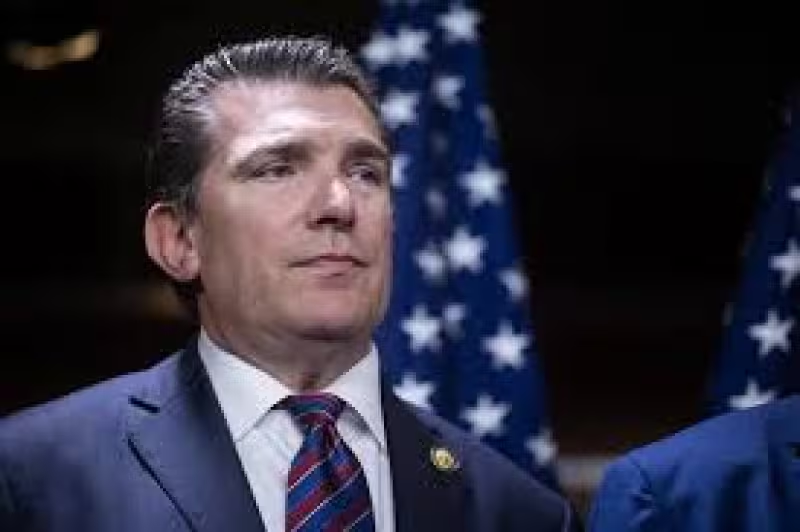
Lori Trahan and Republican Rep. Jay Obernolte on Thursday released a bipartisan draft AI bill that would set federal safety, transparency and audit rules for developers and bar states from imposing stricter AI requirements for three years.
The draft would formalize a federal AI oversight agency, require developers to report safety testing and audits, collect data on AI’s workforce impacts and impose other safety and transparency obligations. The initial authors include two colleagues from each party, and the bill’s sponsors say it is comparable to leading state-level laws in California, New York and Illinois.

The bill’s most contested feature is the three-year limitation on state law. Under the proposal, states could not adopt rules that exceed the federal baseline while the preemption is in effect. Supporters argue a temporary national standard is needed to prevent a patchwork of conflicting state mandates and to give industry clear lines for compliance. Trahan, a member of House Democratic leadership and of the Progressive Caucus, said the speed and potential dangers of AI require Congress to act now.
That urgency, however, collided immediately with opposition from technology safety advocates and some Democrats. Critics warn the three-year preemption could block states from passing stronger child-safety protections and other civil-rights measures during a crucial period. A prominent tech-safety group organized a letter last month urging Trahan to abandon the talks, and another advocacy group has begun running ads in Massachusetts targeting Trahan over her role in the negotiations.
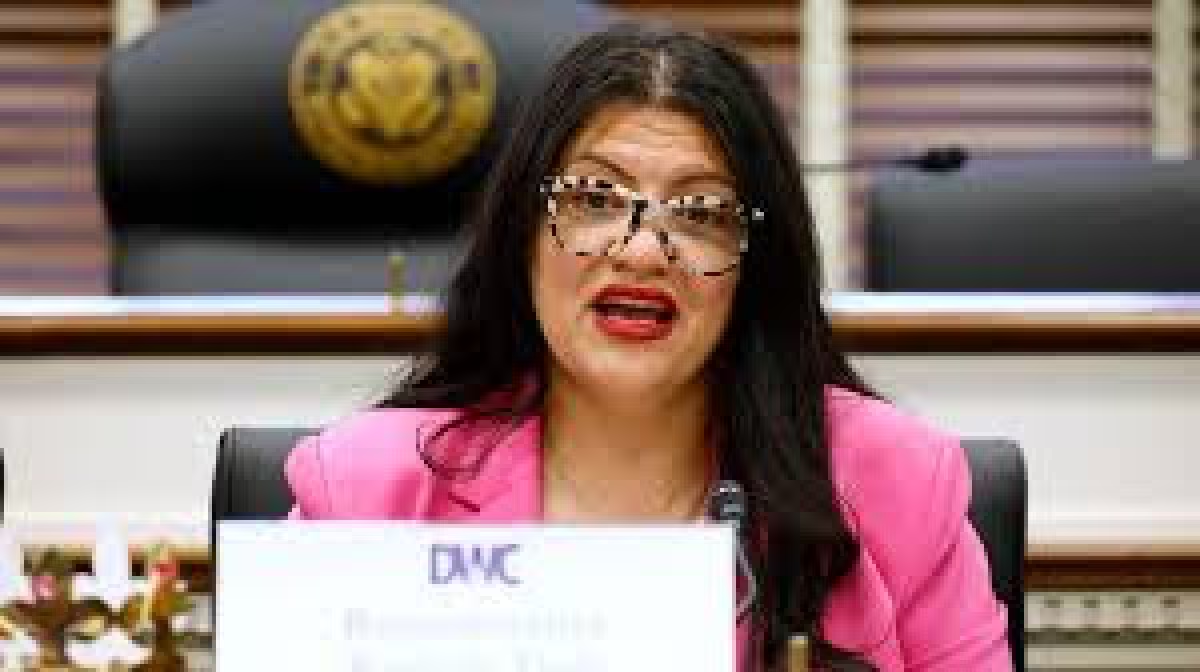
Trahan has countered those objections by arguing the draft would not prevent states from taking action the way critics claim. But the Democratic AI caucus released a statement on Thursday withholding its support for Trahan’s effort, signaling that her assurances may not be enough to win over skeptical colleagues.
The mechanics of the bill are straightforward: a federal agency would oversee compliance, companies would face transparency and audit obligations, and reporting requirements would feed into a national picture of how AI is reshaping work. For developers the bill offers a clear compliance path and for Congress it offers a line it can point to if it wants to claim a national standard. For state lawmakers and advocates, the practical effect is a pause on stronger state-level regulation for a fixed window — three years.
That pause is the practical consequence that has drawn the most heat. Child-safety advocates and civil-rights organizations say a three-year moratorium could mean lost momentum for state bills tailored to local harms. Tech safety campaigners warned the draft would weaken protections they see as urgent, and industry critics have accused some backers of siding with large AI firms. Those fights reflect a larger political disagreement over whether AI should be governed primarily at the federal level or remain an area where states can innovate with tougher rules.
The bill’s release ends weeks of closed negotiations between Trahan and Obernolte but does not resolve who will sign on next. The immediate unanswered question is whether Trahan can broaden support inside her own party — and whether Democratic lawmakers will accept a temporary national ceiling on rules that many state leaders and safety groups want to exceed. With the Democratic AI caucus withholding support and public pressure rising from advocacy groups, the draft faces a difficult path to acceptance unless its preemption provision is altered.
Congress now has a clear proposal on the table and a choice to make: accept a federal baseline and a limited pause on state action, or continue a decentralized approach that allows states to pursue stricter protections. The next step will hinge on whether negotiators can reconcile that three-year pause with the demands of child-safety and civil-rights advocates — and whether enough Democrats will back the compromise to move the bill forward in the House.



