



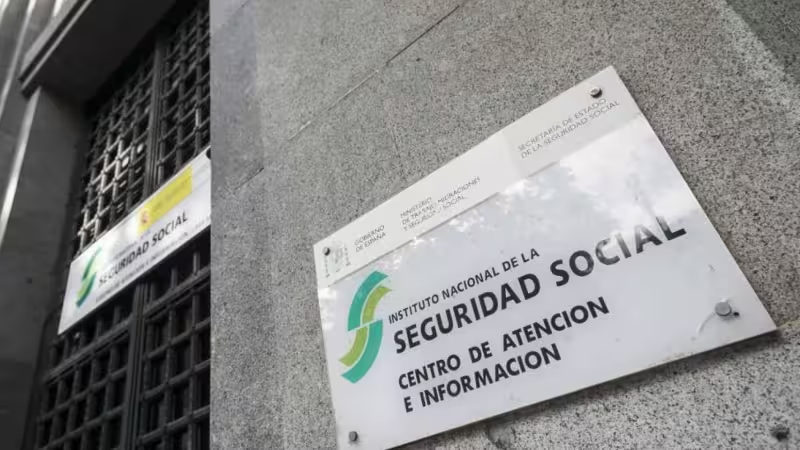
Spain’s Seguridad Social is slowing the way self-employed workers build toward the full retirement pension, and the change begins to bite in 2026 before tightening again in 2027. The floor stays the same: 15 years of contributions still entitle an autónomo to 50% of the pension. But the climb after that is now slower, and reaching the maximum will take longer than it did under the previous scale.
For workers who depend on irregular contribution histories, that matters immediately. The reform does not just adjust a technical formula. It changes when a self-employed worker can expect to hit the top of the pension table, and that can shift retirement income for people who were counting on a smoother path to 100%.

Under the new 2026 rule, the pension percentage will rise by 0.21% for each month contributed from the first to the 49th month after those initial 15 years. After that, the increase drops to 0.19% for each additional month. From 2027, the pace slows again: the increase will be 0.19% for the first 248 additional months, then 0.18% after that point. The direction is clear even if the exact finish line is not. The new rhythm means more months in work and more months of contributions before the maximum is reached.

The difference can be seen in the example used to illustrate the reform. With a regulatory base of 1,500 euros a month, the old system could leave a worker with 96% of the pension, or about 1,440 euros a month. Under the new pace, the same contribution record could end at 94%, or around 1,410 euros. That is 30 euros less each month. Over a decade of retirement, the loss would exceed 3,600 euros.
That gap is the friction in the reform. The law still starts from the same 15-year threshold and the same 50% entitlement, but the step from half a pension to a full one now stretches farther than before. In practice, that is hardest on self-employed workers who do not have long, uninterrupted careers, because a slower formula turns every missing month into a longer wait for the top rate.
The ministry’s reform calendar makes the change part of a broader overhaul of retirement conditions for autónomos, but the immediate effect is concrete: the percentage due no longer rises as fast as it did. Before, the amount was calculated through a progressive scale applied directly to the regulatory base. Now the climb is flatter, and the same contribution record buys less pension at the margin. What remains unresolved is the exact number of extra years or months an individual will need to secure 100% under the new rules, since that depends on the contribution path and where a worker lands on the scale.
For anyone checking where they stand, the practical step is to review the updated work history on the Tu Seguridad Social digital platform. The new rules are already in motion, and the next milestone arrives in 2027, when the percentage increase falls again.



