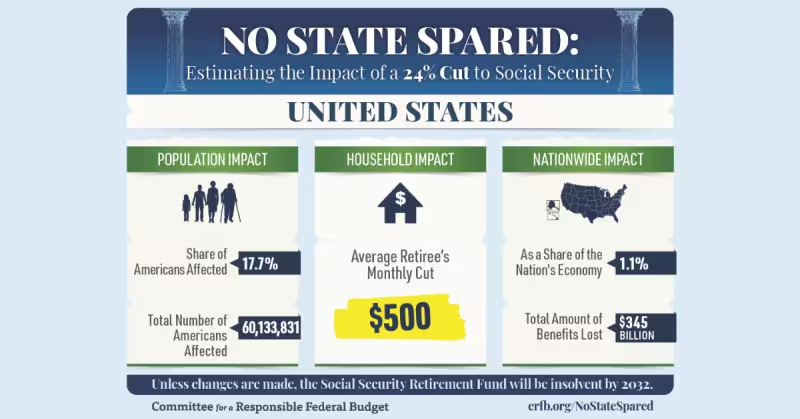
Social Security’s retirement trust fund is projected to run dry in 2032, and if nothing changes, retiree benefits would be cut by an estimated 24% almost immediately. That would hit 63 million Americans who rely on the program, from retired workers to survivors and dependents, and would mean an average monthly reduction of about $500 nationwide.
The numbers are not abstract. Using projected state data, the monthly cut would range from $459 to $556 across the 50 states and the District of Columbia, with 29 states facing reductions above $500. Retirees in Connecticut, Delaware, Maryland, New Hampshire and New Jersey would see the largest monthly losses, while the broadest share of affected residents would be in Maine, West Virginia, Vermont, Delaware, Montana and New Hampshire.

The reason the warning lands now is simple: Social Security’s retirement program has been paying out more than it takes in for 16 years, and the trust fund has been filling the gap. Once that reserve is exhausted, federal law does not allow the program to keep paying full benefits from revenue alone. The trustees’ projection means the system is now on a direct path to a shortfall that would leave less than seven years to act.



The scale of the hit would reach far beyond monthly checks. A 24% cut today would amount to about $345 billion this year nationally, equal to 1.1% of GDP. State losses would range from 0.2% to 1.9% of GDP, and in 40 states the hit would exceed 1% of economic output. West Virginia, Mississippi and Vermont would face the steepest GDP losses, followed by South Carolina and Maine.
That is the part policymakers have known for decades. The source notes that for 42 years, lawmakers have known that without changes, Social Security would become insolvent. What has changed is the calendar. The projected exhaustion date is now 2032, and the program serves one in five Americans. If Congress does not settle on a fix before then, the cut will not be theoretical; it will be written into benefits paid to retirees, spouses and dependents across the country.
The unanswered question is not whether the shortfall is real. It is whether lawmakers will act in time to prevent a systemwide cut that would reach every state and millions of households at once.