




AMC reported its strongest May crowding since 2019, welcoming 25.5 million guests across AMC Theatres and ODEON Cinemas and sending the company’s stock up more than 22% on Monday.
The surge included more than 4.2 million moviegoers over the Memorial Day holiday period, a level the company has not posted in May since 2019. AMC’s chief executive credited a “healthy film slate that combined blockbuster franchises with successful new releases” and flagged upcoming titles — Toy Story 5, Supergirl and Minions & Monsters — as reasons he feels “confidence for the rest of 2026.”

Markets responded: the shares have risen 31.68% so far in 2026 and one tracker showed a 22.5% gain for the day, 40.4% for the week and an 87.6% return over three months, even as the company’s one-year total shareholder return remains down 38.4%.
That positive price action sits beside tougher financial realities. A recent review shows AMC carrying $547.4 million in losses on $5,031.8 million of revenue, and a blended fair value of about $2.03 versus a last close of $2.12 — roughly 4.3% above that fair value. The same analysis puts AMC’s price-to-sales at 0.3x against a fair 0.6x, compared with a U.S. entertainment average of 1.3x and a peer average near 2.6x. Analysts flag that AMC still leans on fresh equity and new debt to manage its capital structure.


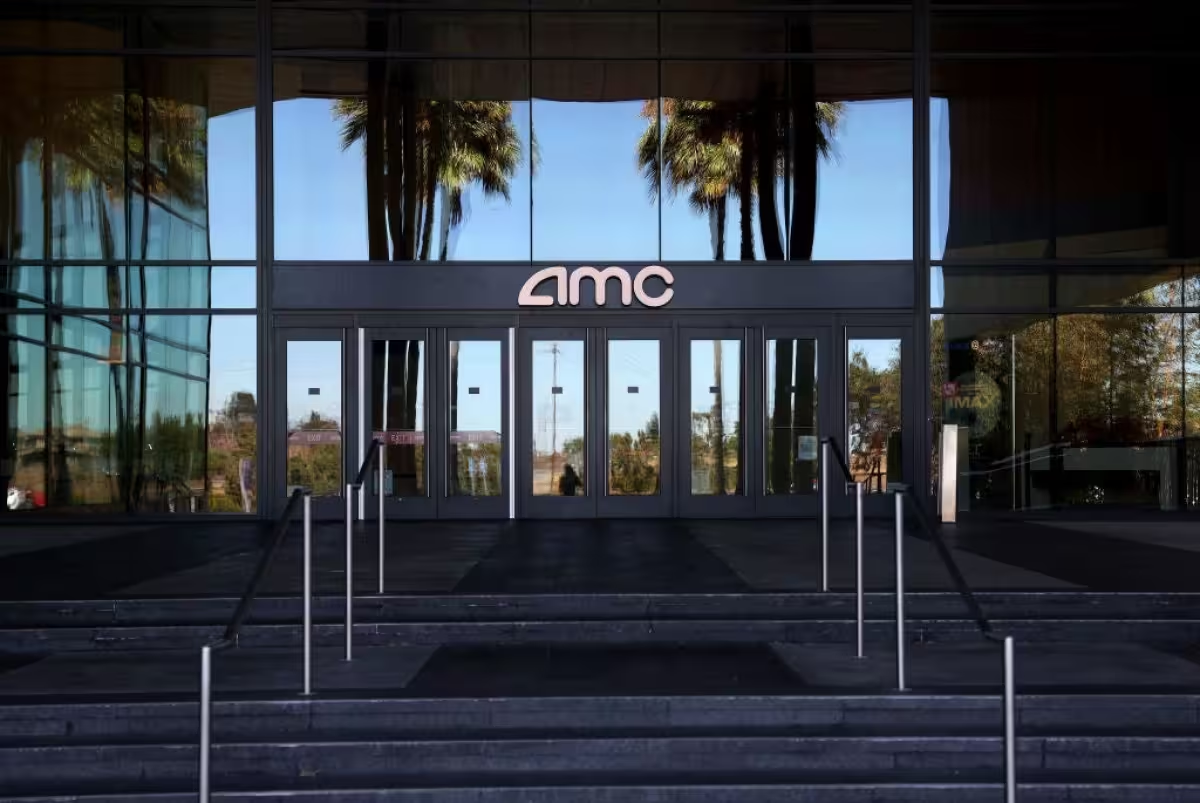
Operationally, the company has tried to narrow the gap between attendance and profitability by upgrading the product: investments in IMAX, Dolby Cinema, proprietary large-format auditoriums and laser projection are intended to lift revenue per guest and justify higher ticket pricing. Management argues those premium experiences, paired with franchise tentpoles and hit new releases, drove the May rebound.
But the data complicates a simple recovery narrative. A headline month and a holiday spike were enough to move the stock, yet the firm’s loss profile and valuation multiples suggest markets are pricing in more than one good month. Sustained recovery will require repeated months of above-average attendance and visible margin improvement — not just front-loaded box-office spikes tied to a handful of titles.
AMC has laid out the test it expects to pass next: convert the May momentum into a steady run of strong box-office months through the rest of 2026, and show that higher per-guest revenues reduce the need for frequent capital raises. Management is explicitly banking on titles such as Toy Story 5, Supergirl and Minions & Monsters to deliver that follow-through.
Will that be enough? The short answer is no, not by itself. The May numbers and resulting share move are real and useful evidence that consumer demand can return, but durable profitability will depend on a sequence of repeatable results — consistent attendance above pre-pandemic baselines, rising revenue per patron from premium formats, and narrowing operating losses. If those three things happen over several quarters, the valuation gap could close; if they do not, May will look like a strong but isolated month rather than the start of a sustained financial turnaround for AMC Movies.



