



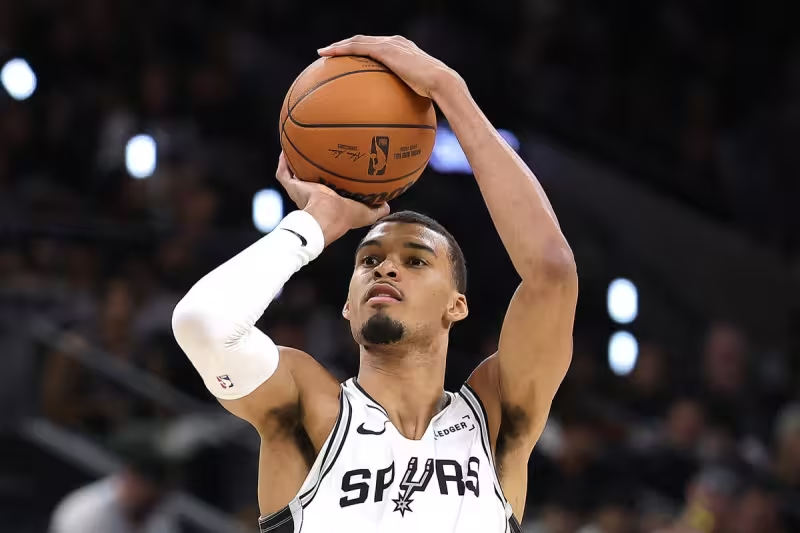
Victor Wembanyama hit a deep three to tie Game 1 of the Western Conference Finals with less than a minute left in overtime, a shot that pushed the San Antonio Spurs and Oklahoma City Thunder into double overtime and helped the Spurs win the game.
The short version of how he keeps finding that range: height plus repeatable launch mechanics. Wembanyama is listed at seven feet, four inches, routinely attempts five or more three-point shots per game and, as he himself put it after the shot, "I was thinking ‘shoot to score.’ I wasn’t messing around." Observers have zeroed in on the combination of his size and the way he releases the ball.

The immediate trigger for the wider conversation came in Game 1: with less than a minute remaining in overtime he buried a deep triple that erased a deficit, and the Spurs went on to win in double overtime. That moment crystallized a larger, series-long pattern — long-range attempts from a player usually described in scouting reports for rim protection and shot blocking. Wembanyama is among the NBA's top defenders at the net, yet he repeatedly steps to the perimeter and converts at elite moments.
Biomechanics and physics offer a plain-language mechanism. A shot launched from higher above the floor changes the geometry between ball and rim — the NBA basket ring stands 10 feet above the ground — and an elevated release point can, in theory, increase the window for an accurate entry as long as the shooter preserves the same release routine. That idea is not new: a 2008 study by Larry Silverberg and a co-author suggested free-throw shooters who release the ball from a higher starting point likely have greater accuracy if launch consistency is not harmed. Silverberg, watching Wembanyama, summed up the visible trait in two blunt lines: "He’s just launching that thing." "It’s extremely unique," he added.

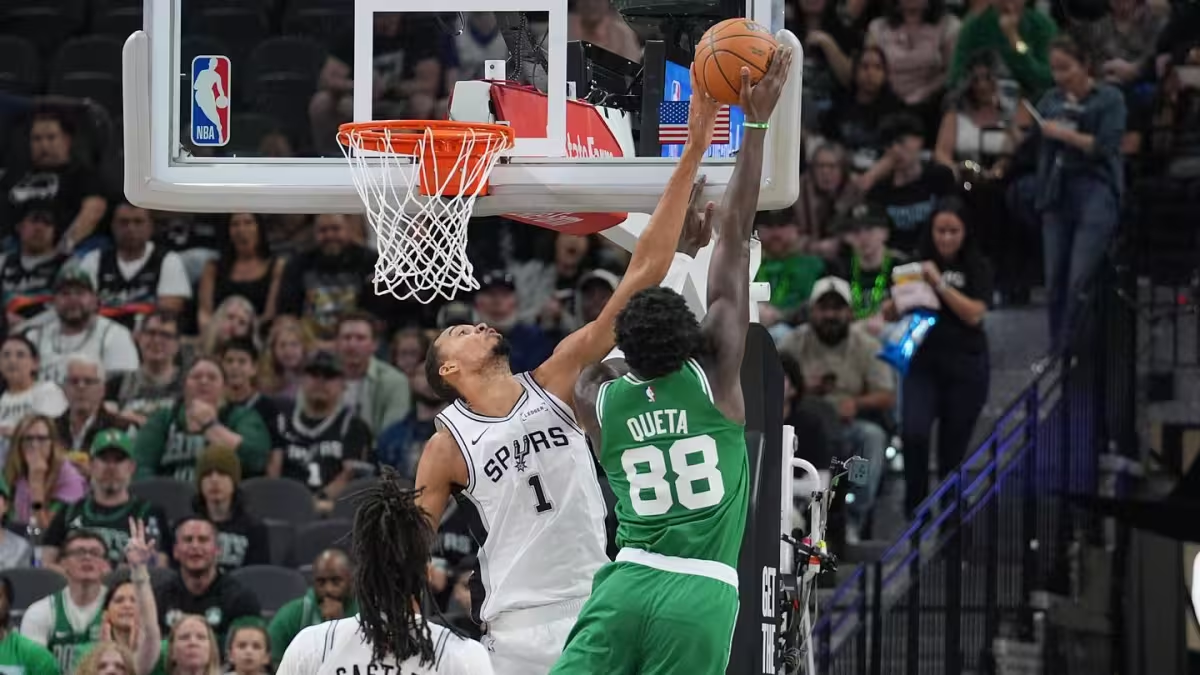
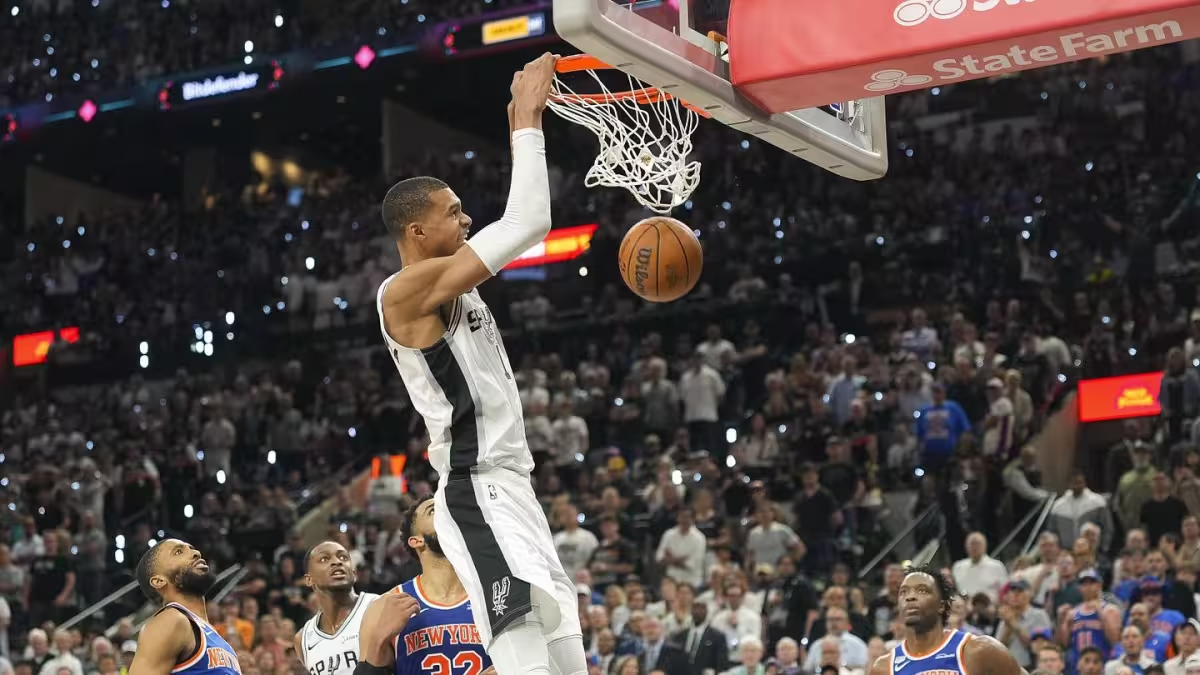
Ahead of Game 6, physics and biomechanics experts, including Dimitrije Cabarkapa, associate director of the Jayhawk Athletic Performance Laboratory at the University of Kansas, examined these repeated deep attempts to understand the repeatability of the motion. The Spurs won Game 6 on Thursday, keeping the series alive and feeding the practical consequence: opponent scouting and defensive strategy must now account for a 7-foot-4 player who will not be confined to the paint. The winner of the series will advance to face the New York Knicks in the NBA Finals in June.
The friction is subtle but central. Tall players should in theory have an easier path to accurate perimeter shots because their release point starts higher, yet that theoretical edge appears only when launch consistency survives game-speed variables — fatigue, closeouts, altered footwork, physical contact. The 2008 study warns precisely that: height helps only if consistency is preserved. Wembanyama’s shot chart and his willingness to take five or more threes per game show he trusts that consistency; defenders test it by forcing him to move off his preferred base.
Practically, opposing teams can no longer treat a 7'4" forward-center as a stationary rim protector. They must close out harder, hedge differently, and accept that contesting those attempts risks leaving other shooters open. That adjustment changes the calculus for Oklahoma City and for any opponent that meets the series winner in June. For readers tracking roster moves and front-office choices, that on-court flexibility is part of the same story that fuels unrelated coverage such as Jamal Murray trade talk:
The unanswered question that matters most now is technical and immediate: can Wembanyama maintain launch consistency under repeated defensive pressure through the remainder of this series and into the Finals? Coaches can scheme; opponents can alter approaches; the basket stays 10 feet high. Whether his release remains repeatable in consecutive playoff minutes is the single variable that will determine if a 7-foot-4 shooter remains an outlier or becomes a new template.



