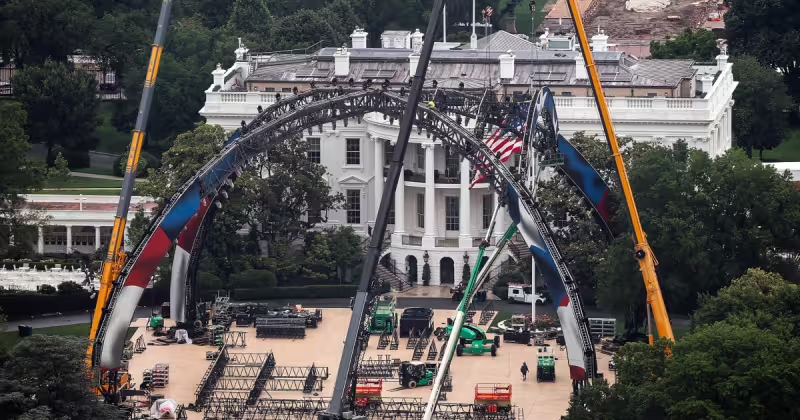
The Defense Department this week told uniformed service members that tickets to the White House UFC event on June 14 will go only to those who pass a physical screen: applicants must have a waist‑to‑height ratio under 0.55 and meet all service‑specific physical fitness test requirements, and the Pentagon will not pay travel costs for attendees.
The memo frames the fight as a high‑visibility event on the White House South Lawn, part of President Donald Trump’s celebration of America’s 250th anniversary, and notes the gathering will be standing room only, outdoors and uncovered for an audience of more than 4,000 spectators. Demand for seats is high; Trump told News earlier this month, "I’m going to make a lot of enemies because it’s impossible to get everyone tickets."

Uniformed troops from commands around the world are eligible to request tickets, the memo says, but eligibility is no longer a straight measure of rank. The Pentagon directed that tickets be distributed to genuine UFC fans rather than allocated simply on the basis of distinguished visitors or seniority, introducing a preference that will complicate any rank‑based or automatic assignment process.
The guidance adds practical conditions for those chosen to attend. Service members granted tickets must meet their branch’s physical fitness standards and the specified waist‑to‑height cutoff. They must wear a short‑sleeve uniform with appropriate military regalia and headgear at the event. Organizers and Defense Department officials have also been discussing for months whether troops attending the fight will be considered deployed — a logistical and administrative question left unresolved by the memo.


The memo’s mix of fitness screening and fan‑preference direction creates a visible tension. On paper, the checklist narrows the pool: physical standards, uniform rules and the expectation that attendees be genuine fans. In practice, commands must now balance those criteria against limited ticket supplies and competing demands from across global postings. The Pentagon’s instruction against covering travel costs raises another hurdle; troops who are eligible will likely have to absorb transit expenses out of pocket or seek local funding approvals.
For service members considering a request, the requirements are specific but not exhaustive. The waist‑to‑height ratio threshold — less than 0.55 — is an objective metric mentioned by the department. Beyond that, the memo simply refers to meeting all service‑specific physical fitness test requirements, leaving evaluations to each branch’s existing standards and records. The event’s standing‑room, uncovered configuration and the short‑sleeve uniform mandate are practical details that may affect who can comfortably and safely attend.
What the memo does not do is name which commands or how many slots each command will receive. That gap is the most consequential unresolved item: without a distribution plan, units must await implementing instructions to know whether their eligible troops will actually be offered tickets. The Pentagon declined to comment on finer selection mechanics as the White House and organizers finish preparations.
The immediate effect is clear. Troops who want to be among the limited number on the South Lawn on June 14 now face a pre‑screen that is partly medical, partly meritocratic and partly subjective. The next steps to watch are the implementing messages from individual commands and whether those messages will explain how officials will verify fan status, allocate scarce seats and handle travel funding. Until those operational decisions arrive, the memo makes eligibility conditional, but it does not resolve who will ultimately sit in those seats.