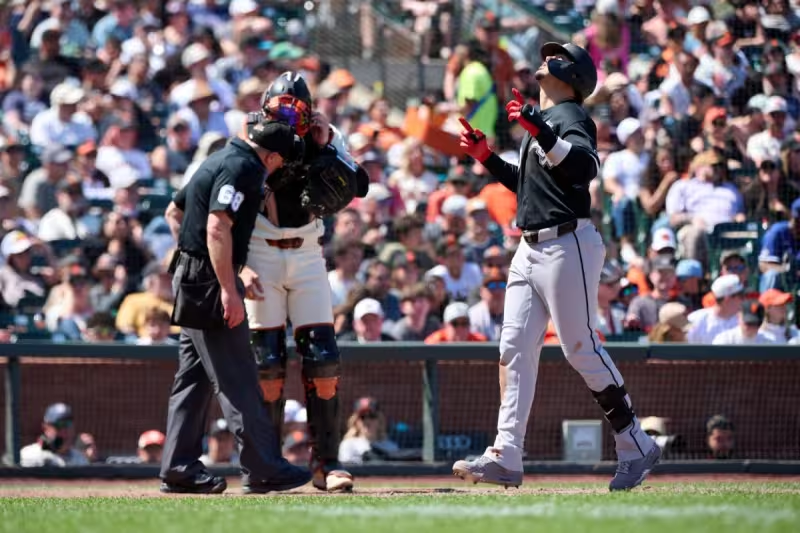
Miguel Vargas has leaned into the spotlight this spring — not with a dramatic home-run swing celebration, but by turning a projection into a headline when slotted him seventh on its top-10 list of American League MVP contenders.
The designation is the clearest sign yet that Vargas’s early-season performance for the Chicago White Sox has outpaced expectations. Through the start of the 2026 campaign he is hitting.239/.369/.489 with 12 home runs, 31 RBI and eight stolen bases, numbers that combine power, patience and speed in a package the national outlets are now tracking.

That mix is the weight to this story. Analysts point not just to raw counting stats but to changing mechanics: a reported jump in average swing speed from roughly 70.6 MPH to 73.9 MPH, a 15.4 percent barrel rate and a projection that put him on a 35-homer, 25-steal pace. A recent breakdown that evaluated his season so far concluded his breakout is legitimate — a verdict that helps explain ’s placement.
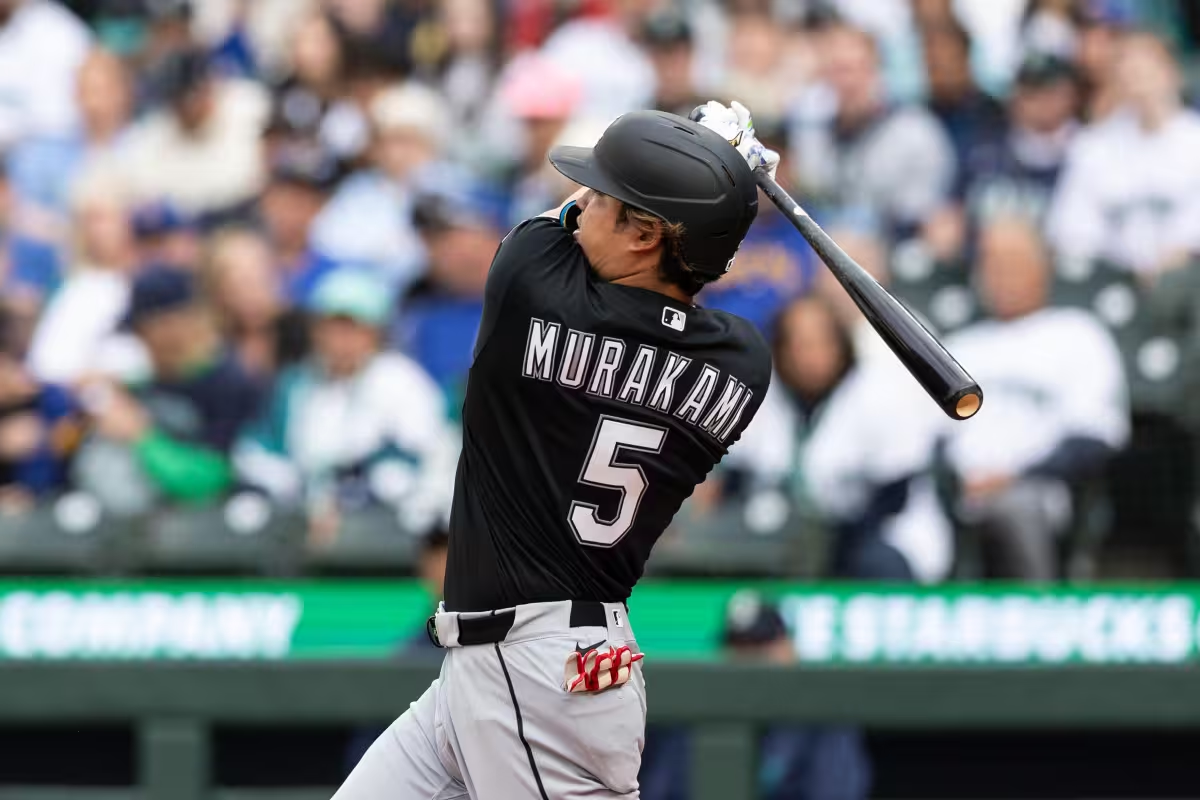
Vargas’s climb is also a roster-level development for the White Sox. The club acquired him from the Dodgers in 2024 and had entered 2026 expecting Munetaka Murakami to be the team’s signature offensive star. Murakami is producing his own strong numbers —.235/.374/.540 with 18 homers and 37 RBI through the team’s first 53 games — but Vargas’s surge has nudged the White Sox offense into a different conversation than last year’s, when Vargas was judged roughly league average at the plate with a 101 wRC+.

That context makes Vargas’s ranking notable: it is evidence of a player who moved from an ordinary 2025 season into legitimate MVP-level discussion. He played a career-high 138 games in 2025, hitting.234/.316/.401 with 16 homers and 60 RBI, and now his tools — the increased exit metrics and a booming barrel rate — are translating into runs and extra-base hits earlier in 2026.
The friction in this rise is unavoidable. Vargas’s slash line carries an eye-catching on-base and slugging profile, but the batting average sits at.239 — a mark that exposes the gap between the counting stats and the kind of all-around hitting voters reward for MVP honors. Put plainly: the power and speed are authentic, but Vargas still needs to hit more frequently to be a true frontrunner.
That contradiction shows up in how evaluators describe him. One national commentator called Vargas’s current place in the race an intriguing development; another assessment shortened the verdict to its essence, arguing the performance through late May had real substance behind it. Yet the numbers that most voters prize — consistent batting average and run creation against the league’s best pitching — remain uneven.
The practical question for the White Sox and for Vargas is whether the early-season profile can sustain itself and broaden. Can he push his average up from.239 while maintaining the patience that produces a.369 on-base percentage, or will regression in batting average pull down his overall value even as homers and steals continue? The answer will determine whether he climbs from a seventh-place mention on a midseason list to a genuine MVP challenger.
The coming weeks will be the proof point. If Vargas keeps converting barrels into hits and lengthens the stretch of games he impacts, he will force voters to take him more seriously than a tidy ranking. If his average stalls and the surface numbers flatten, ’s seventh slot will look like a premature headline rather than the opening of a season-defining story.