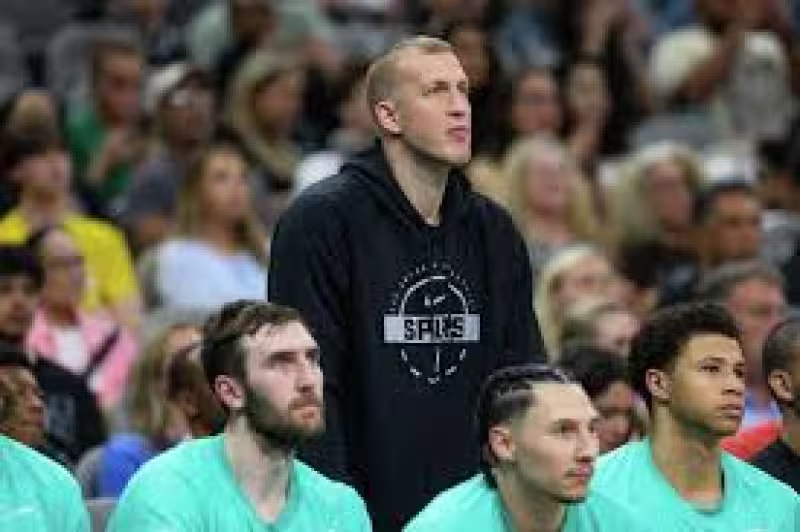
The Thunder-Spurs series became more interesting after Game 5 when Bismarck Biyombo hit rookie Jared McCain hard on a drive, leaving McCain on the floor and stirring talk of retaliation.
McCain, who had another star turn against San Antonio on Tuesday night, was struck in the face on the play and fell to the floor; his head appeared to bounce off the wood. The sequence followed an earlier hard foul in the same game when Mason Plumlee, shortly after entering, gave McCain an elbow in the back — two hard fouls that left the clip of the McCain-Biyombo collision circulating widely.

At the free-throw line after the play, McCain confronted Biyombo, asking, "why’d you do that man." Biyombo replied, "I got another one for you too." The exchange, captured on video, is now central to debate over whether the Thunder almost have to retaliate after the clip circulated.
Those calling for a response have been pointed about targets and means: the article said the Thunder's likely target would be Victor Wembanyama, while Isaiah Hartenstein would be the logical player to respond. The calculus for Oklahoma City's team is complicated by personnel — the article said the Thunder are lacking a powerful big man without the injured Thomas Sorber — and by broader changes in the league: the NBA does not really do enforcers the way it used to.
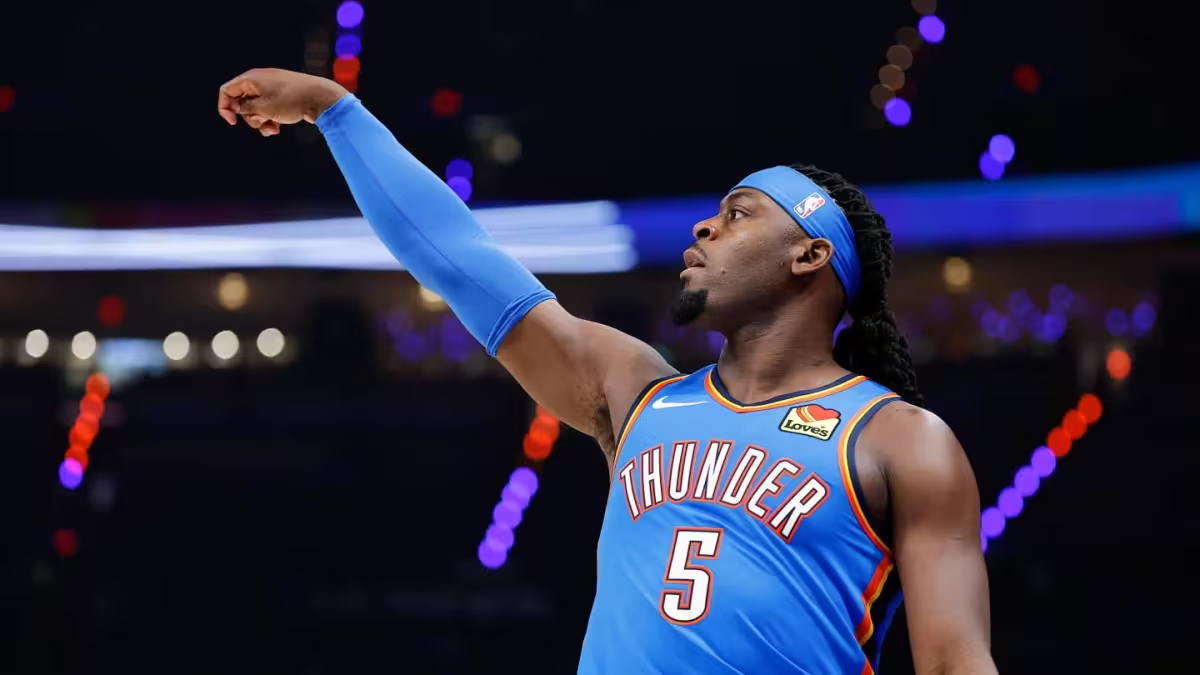
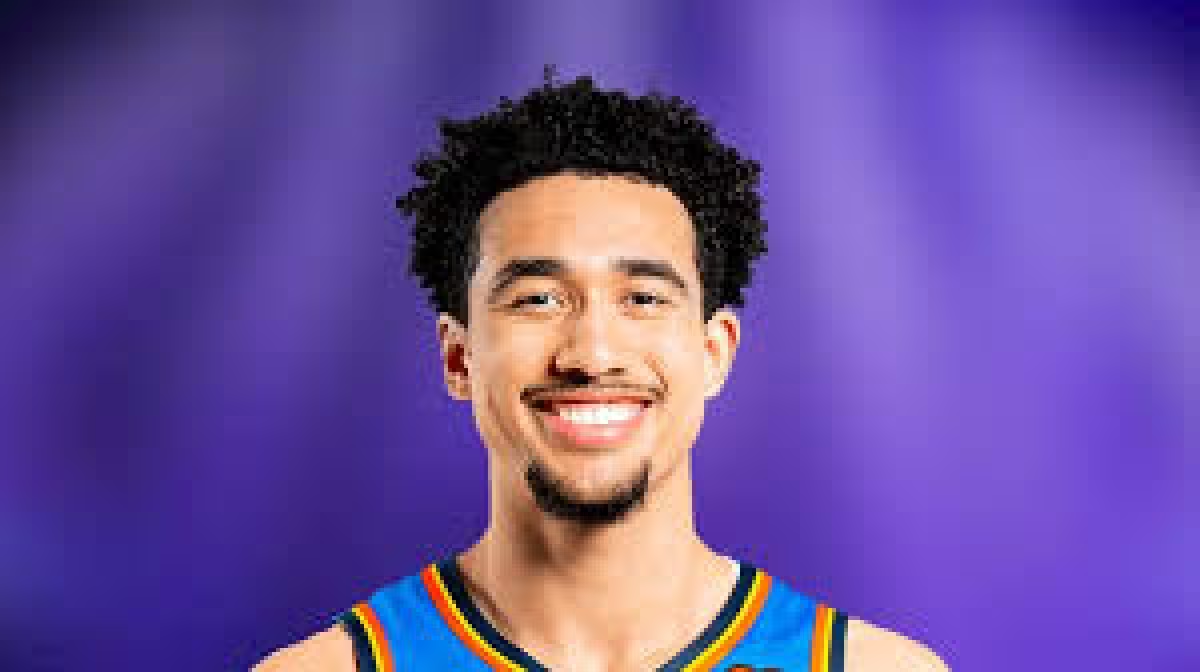
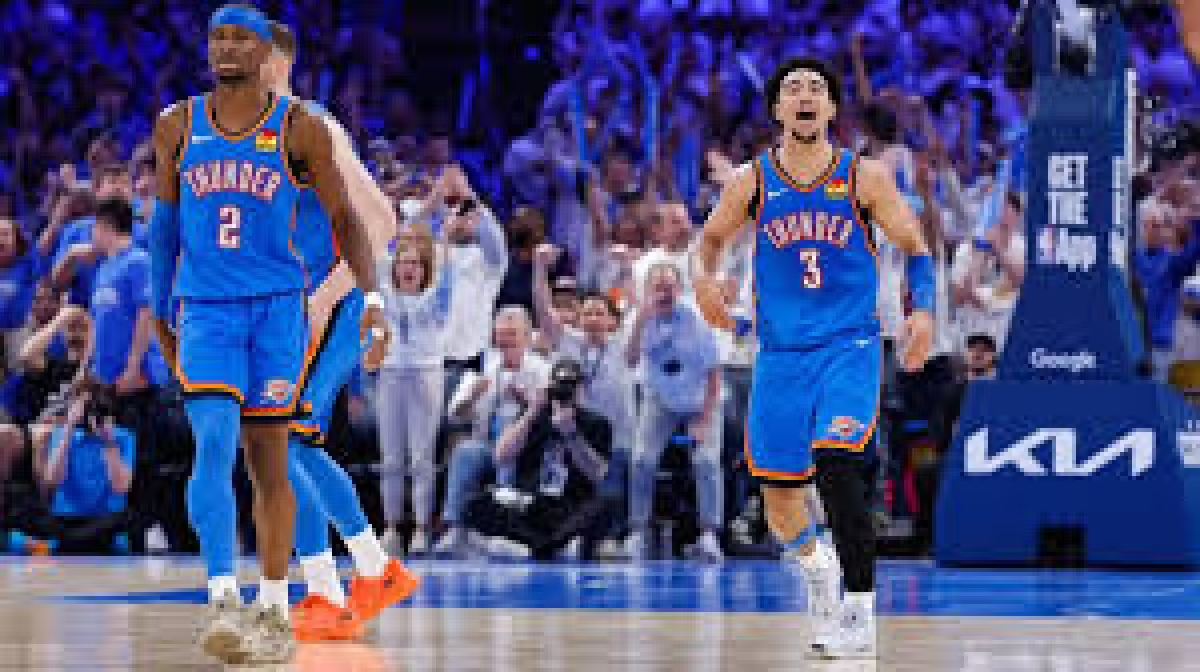
The weight of the moment is small but sharp: two flagrant-seeming incidents in one game, a young player on the floor with his head hitting the court, and a terse line of words exchanged between the players. The visuals and the raw confrontation made the series feel, briefly, less about Xs and Os and more about who will police the game itself.
Context matters here. The debate over dirty plays and retaliation is not new; the article drew a line to the 1987 Eastern Conference Finals, when Robert Parish took out Bill Laimbeer after Laimbeer had sent cheap shots at Parish and Larry Bird. That era’s physical policing by certain players is largely gone from the modern NBA, which prizes spacing and skill and generally discourages designated enforcers.
That shift creates the tension now. The Thunder are described as keen on trading up to get Cameron Boozer, which signals a front office thinking about long-term roster balance rather than short-term muscle. Yet the immediate question for the team on the floor is whether to allow the incident to stand as-is or to send any kind of message the way teams once did. Without a clear, traditional enforcer beyond Hartenstein, the options are limited.
The series-level stakes are practical: a retaliation would invite fines, ejections or suspensions and could reshape matchups in the next game. The article said the Thunder almost have to retaliate after the clip circulated; it also said the NBA does not really do enforcers the way it used to, leaving a gap between impulse and capability.
The single most consequential unanswered question is whether the Thunder will choose to retaliate and, if so, who will do it without turning a short-term instinct into a long-term cost for the team. That decision will tell whether modern teams still handle policing on the court the old way—or whether incidents like the Biyombo hit and the Plumlee elbow simply become part of the highlight reel and nothing more.