
























Punch Monkey: why a punch monkey born at Ichikawa zoo is drawing crowds

Footage of Punch, a seven-month-old Japanese macaque, has gone viral after he was rejected by his mother and formed a bond with a soft toy. The punch monkey’s footage and the zoo’s response have drawn visitors and prompted questions about maternal abandonment and social integration among Japanese macaques.
Born last July at Ichikawa zoo, Punch was abandoned and given a toy
Punch was born last July at Ichikawa zoo and was abandoned by his mother soon after birth. After several interventions, zookeepers introduced a stuffed orangutan toy for Punch following abandonment; they reached that step after trying alternatives, including rolling towels to different thicknesses for him to cling to. Zookeeper Kosuke Shikano said, “Baby Japanese macaques immediately cling on to their mother’s body after birth to build muscle strength. They also get a sense of security through holding on to something. However, because he had been abandoned, Punch had nothing to grip on to. ” Shikano added, “We thought that [the toy] looking like a monkey might help Punch integrate back into the troop later on. ”
Punch Monkey footage: viral clips show bullying, grooming and hiding
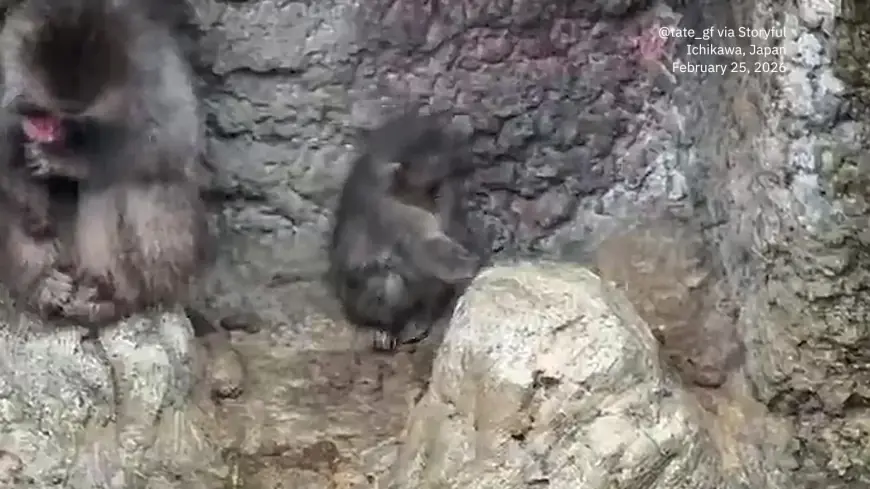
Videos released last week show Punch being bullied by other monkeys inside the enclosure and have circulated around the world. Early clips captured him wandering alone with the toy after being pushed away by older Japanese macaques, clutching it tightly while being harassed. Viewers saw a brief respite when footage showed another monkey grooming and comforting him, but days later new video showed Punch dragged aggressively in a circle by a much larger monkey before he ran to hide behind a rock, hugging his toy.
Expert Alison Behie cites age, health and inexperience; notes mother was first-time
Alison Behie, a primatology expert at Australian National University, said such abandonment is unusual but can occur under certain conditions, citing “age, health and inexperience” as possible factors. Behie said, “In Punch’s case, their mother was a first-time mother, indicating inexperience. ” Behie also noted zookeepers suggest Punch was born during a heatwave and described that as a high stress environment: “In environments where survival is threatened from outside stress, mothers may prioritise their own health and future reproduction rather than continue to care for an infant whose health may be compromised by those environmental conditions. ”
Behie on attachment, hierarchy and potential long-term effects
Behie suggested the stuffed orangutan may be serving as an attachment figure, saying, “The toy Punch has may be serving as an attachment figure, especially given they are six months old so likely still need to be nursed. ” She also framed the interactions Punch is facing as part of normal macaque social life: “The behaviours of other monkeys towards Punch isn’t bullying or any abnormal behaviour, but regular social interaction. ” Behie described Japanese macaques as having strict matrilineal hierarchies, “where higher-ranking families assert dominance over lower-ranking ones. ” She warned that even with his mother Punch would probably still face aggression, and that without his mother, “Punch may not develop the appropriate subordinate responses to show they submit to the dominance, which could have ongoing implications for the way they integrate into the group as an adult. ”
Visitor surge prompts new rules around Punch’s enclosure
In recent days the zoo has experienced a surge of visitors hoping to catch a glimpse of Punch. In response, officials have enforced stricter barriers around the enclosure and urged visitors to remain quiet, avoid using stepladders or tripods for photography and limit prolonged vi