

























Trail Blazers Vs Hawks: Rebounding Advantage and Key Absences Could Decide a Tight Play‑In Fight

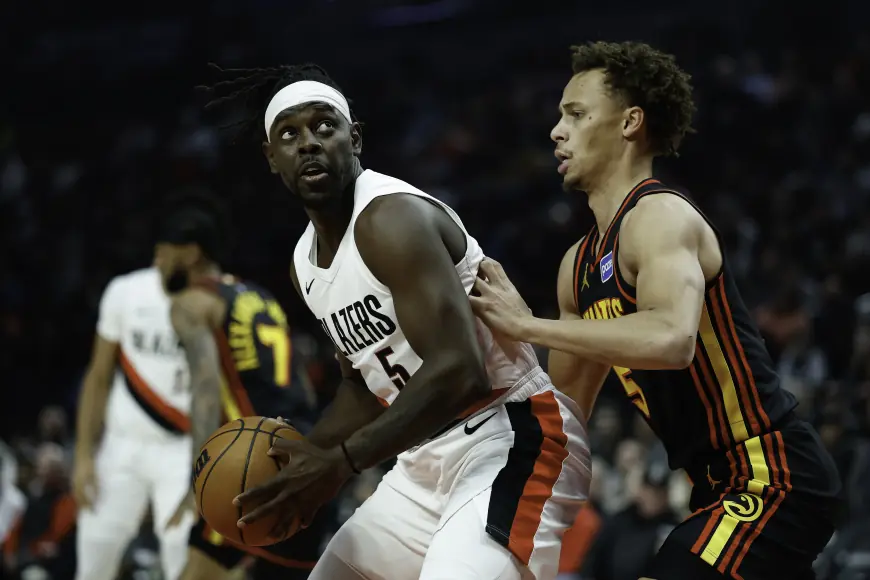
Why this matters now: The trail blazers vs hawks matchup lands with both teams jockeying for play-in positioning and immediate roster impacts. Portland arrives on a long east coast trip with multiple players listed out or questionable, which hands greater responsibility to their rebound-heavy approach. Atlanta’s three-game streak and healthier lineup mean small availability and shooting swings could directly alter seed trajectories in both conferences.
Trail Blazers Vs Hawks — who feels the impact first: rotations, boards and perimeter heat
Availability will shape minutes and matchups. Portland lists several key names as out or questionable, forcing changes to regular rotations and offensive balance. A thinner Blazers rotation increases the importance of offensive rebounds and inside possessions; Atlanta’s relative health and short winning streak mean the Hawks can apply pressure by exploiting any mismatch on the glass or collapse off perimeter defense.
- Portland injury status: Sidy Cissoko, Yang Hansen (Questionable); Shaedon Sharpe, Damian Lillard, Deni Avdija, Caleb Love, Robert Williams III (Out).
- Atlanta injury status: Jalen Johnson, Nickeil Alexander‑Walker (Questionable); RayJ Dennis, Asa Newell (Doubtful).
What's easy to miss is how much Portland’s offensive identity leans on volume from deep—when those attempts underperform, their top‑10 rebounding numbers carry extra weight.
Game context, recent form and tactical edges
Basic matchup facts: Portland (29-32) travels to Atlanta (30-31) on Sun. Mar. 1st — the scheduled tip is 3pm Pacific. Both teams are positioned around the play-in cutoff: the Hawks sit 10th in the Eastern Conference while the Blazers sit 9th in the West. Portland’s road trip began with a win over Chicago and a loss to Charlotte; Atlanta enters on a three-game winning streak after a stretch that included Brooklyn and two games versus Washington.
Two tactical contrasts stand out:
- Three‑point volume vs. efficiency: Portland has one of the highest three-point attempt rates, averaging 42. 3 attempts per game and firing 47 attempts in the recent loss to Charlotte (making 11). The team’s season mark from deep sits at 33. 7%, the league’s lowest among the highest-volume shooters. A returning perimeter threat regaining form could flip Portland’s offensive ceiling; without it, the high volume is a liability.
- Rebounding tilt: Portland ranks in the top 10 in total rebounds (45. 7 per game) and offensive rebounds (14. 1 per game). Atlanta ranks 22nd in both categories. If Atlanta’s leading rebounder is sidelined, the board edge grows in Portland’s favor and can offset three-point inefficiency.
The real question now is whether a perimeter shooter returning to previous accuracy will change Atlanta’s defensive approach; one immediate signal will be if a recently acquired wing can climb back to the 40% range from distance after a slump in his first games with Portland.
Here’s a compact look at the short timeline that matters:
- Portland: began the road trip with a win over Chicago, then a loss to Charlotte (high three-point volume, low makes).
- Atlanta: arrives on a three-game win streak after facing Brooklyn and two games against Washington.
- Availability updates and a single shooter regaining form could swing the matchup quickly.
Micro Q&A
- How will rebounding influence the outcome? Portland’s 45. 7 total and 14. 1 offensive rebounds per game provide a built-in counter whenever three-point shots aren’t falling; Atlanta’s 22nd-place ranking in those categories makes the boards a clear tactical lever for the Blazers.
- Can Portland’s three-point volume carry them? The team attempts a league-high-ish number of threes (42. 3 per game) but is converting at a low clip (33. 7% season mark). If one or two perimeter players regain stronger accuracy, the Blazers become much more dangerous; otherwise their heavy volume risks wasted possessions.
- What shifts the standings most quickly? Small margins: a home Hawks win would extend their push in the Eastern play-in race; a road victory for Portland moves them closer to a positive record before returning home.
How to watch: check your local team television network for antenna or cable options. Streaming will use the team’s regional stream in Oregon and Washington; a leaguewide streaming package is listed as the option elsewhere. Schedule subject to change.
The bigger signal here is that availability, not pedigree, could decide this matchup—the combination of Portland’s rebounding profile and Atlanta’s short-term momentum sets up a game where a single rotation shift or a shooter finding form alters the immediate play-in landscape.