

























Centcom Responds as U.S.-Israeli Strikes Continue After Khamenei Killing; Trump Says US Forces Sank Nine Iranian Ships

U. S. -Israeli strikes on Iran continued Sunday after the killing of the Iranian Supreme Leader Ayatollah Ali Khamenei on Saturday, and centcom intervened to rebut a battlefield claim as tensions and regional instability mounted. Senior U. S. and regional developments in the last 24 hours include reported U. S. service member casualties, a presidential claim that U. S. forces sank nine Iranian naval ships, explosions in Tehran, and broad Iranian retaliation.
Casualties and battlefield claims
It was reported on Sunday that three U. S. service members were killed and five were seriously injured in the strikes; the identities of the victims were not made available. The Islamic Revolutionary Guard Corps claimed that a U. S. military aircraft had been struck, but Centcom debunked that claim in a social media post. The back-and-forth underlines how rapidly contested battlefield statements are being made and challenged in public forums.
Trump’s public claim: nine Iranian naval ships sunk
In a social media post, President Donald Trump revealed that U. S. military forces sank nine Iranian naval ships, describing some of them as relatively large and important. That assertion came as strikes and counterstrikes proliferated across multiple fronts, contributing to heightened uncertainty about the scale and sequencing of naval and aerial operations in the region.
Attacks, retaliation and threats across the region
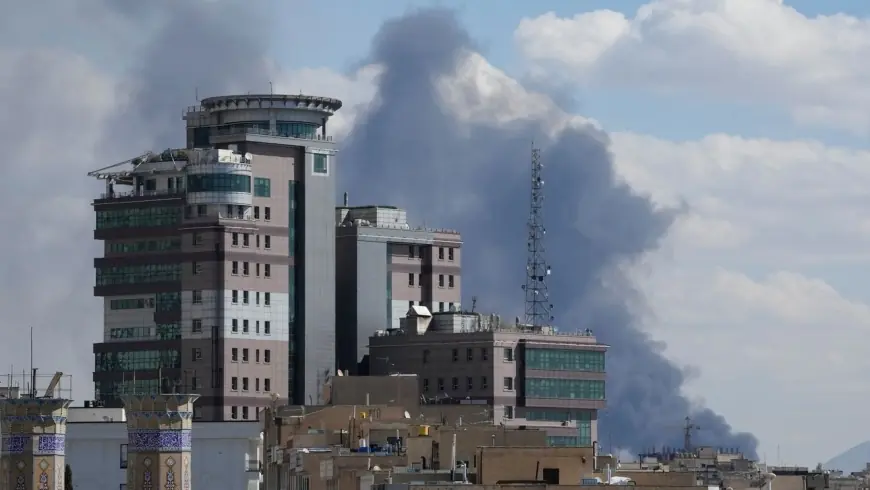
Iran has retaliated by firing missiles and drones at U. S. and Israeli military bases as well as at the Saudi capital and the global business hub of Dubai. Iran’s paramilitary Revolutionary Guard has threatened what it described as its “most intense offensive operation” ever, targeting U. S. and Israeli bases. On Sunday there were explosions in Tehran as Israel made its way through Iran’s capital, and a plume of smoke rose after a strike in Tehran on Sunday, March 1, 2026.
Diplomatic and civilian precautions
U. S. embassies across the Middle East have told their employees to continue sheltering in place on Sunday amid ongoing strikes. American citizens living or traveling in the region have been advised to take similar precautions. The State Department has issued a worldwide caution notice, advising Americans abroad everywhere, but specifically in the Middle East, to exercise heightened vigilance and follow local safety guidance.
Iran’s interim leadership and U. S. priorities
Meanwhile, Iran has selected a 66-year-old cleric to join the leadership council that is currently governing the country until a new supreme leader is chosen. The development comes amid commentary from U. S. intelligence oversight that the priority for the U. S. remains Iran’s “vast missile arsenal, ” a chairman of the U. S. Intelligence Committee said. Those two threads — interim governance and weapons concerns — are shaping policy and operational focus as the situation evolves.
Military posture and vows of continued strikes
Israeli Defense Minister Israel Katz has vowed a “non-stop air train” of strikes against Iran, signaling the likelihood of sustained aerial operations. The combination of high-level vows, battlefield claims and counterclaims, and active retaliation by Iran creates a volatile operational environment that military commands and diplomats alike will be monitoring closely.
An editor's note on the original coverage indicated that another news organization contributed to initial reporting. Recent updates indicate many details remain fluid; further developments may change the picture on casualties, operational claims, and the political response.