





















Scary Movie Market Shift: Why Scream 7’s $59M Start Forces Studios, Fans and Investors to Recalculate

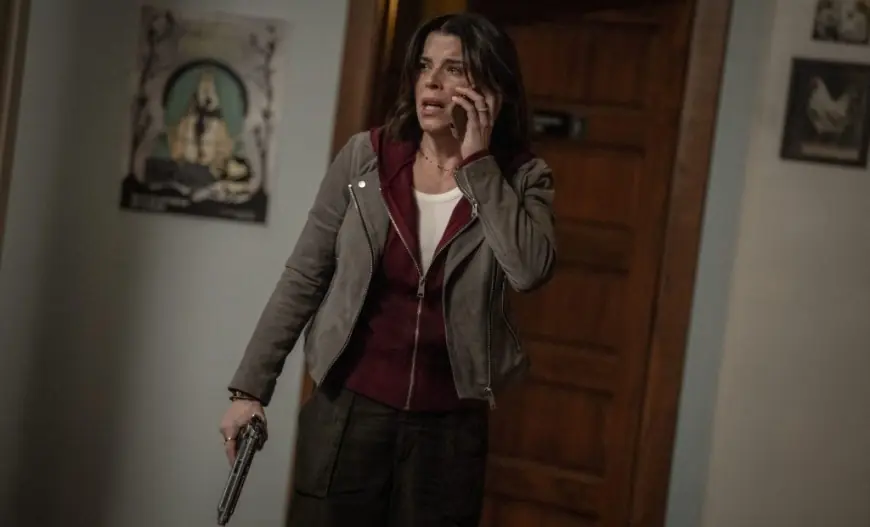
Here’s who feels the impact first: franchise fans, studio marketers and market watchers. Scary Movie momentum landed with Scream 7 posting a franchise-best $59M opening projection after a $28M Friday that included $7. 8M in previews, driven in part by Neve Campbell’s return and Kevin Williamson directing. That combo is already reshaping expectations for horror rollouts and the financial positioning around blockbuster weekends.
Scary Movie implications for release strategy and fan demand
Studios and exhibitors now face a recalibrated trade-off: a big opening can vault a title into record territory but increases the risk of sharp front-loading for horror films. Rival estimates pushed some weekend forecasts well past $60M, yet caution is warranted because horror pictures often concentrate grosses in early sessions. The immediate consequence is a pressure-test on marketing windows, presales and how star returns like Neve Campbell’s influence word-of-mouth timing.
Numbers and how this opening compares to recent franchise benchmarks
Scream 7’s $59M opening projection follows a $28M Friday that includes $7. 8M in preview revenue, a franchise preview record. For context from the series’ recent runs: the 2022 revival posted $13. 3M in previews/first Friday, which represented 44% of its three-day total ($30M) and fell within a four-day MLK weekend frame that reached $33. 8M. In 2023, a prior entry posted $19. 2M in combined previews/first Friday, representing 43% of that film’s $44. 4M three-day opening. The current weekend looks comfortably ahead of the same frame a year earlier, when the comparable window did $54. 4M.
Audience reach, social footprint and the comeback factor
Pre-release social tracking put Scream 7’s combined platform reach at roughly 264. 5 million, about 11% above typical horror-franchise norms but roughly 27% lower than the last film’s 360. 5 million reach. Cast-level engagement skews uneven: Neve Campbell accounts for roughly 672, 000 social followers while another franchise star holds about 20. 7 million. Conversation has tilted mixed-positive, with better word of mouth credited to Campbell returning as the franchise’s central figure rather than a cameo. Fan reactions sampled around the film emphasize nostalgia, franchise iconography and a sense that Sidney Prescott’s presence restores a familiar spine to the series—comments range from celebratory to framing the film as a reinvigoration of the mythos.
Studio, production and market reverberations
On the production and corporate side, the current co-production traces to a Spyglass initiative launched under the prior Paramount leadership; the present studio administration, led on marketing by Josh Goldstine, is credited with securing the franchise opening record. A producing partner, David Ellison, is noted as having another weekend win while aligning with Warner Bros in the marketplace. Financial markets reacted: the PSKY ticker was trading at $13. 51, up roughly 21% at the time of the update after news of a studio-level deal shift among major players.
Here’s the part that matters for stakeholders:
- High preview share: $7. 8M in previews signals heavy front-loaded demand that could compress later-weekend legs.
- Social reach gap: 264. 5M vs. the prior 360. 5M suggests strong interest but room to convert casual reach into turnout.
- Creative pull: Neve Campbell plus Kevin Williamson directing is clearly driving sentiment and word of mouth.
- Market reaction: the PSKY move highlights investor sensitivity to studio deal news tied to big releases.
The real question now is how steep the second-week drop will be and whether sustained word of mouth can broaden the audience beyond opening-day fans. If the film holds more evenly than earlier entries that leaned heavily on previews, it will prove the return-of-the-hero strategy lifts longevity, not just opening tallies.
It’s easy to overlook, but the creative teams behind this installment matter: Kevin Williamson co-wrote the screenplay with James Vanderbilt and Guy Busick, both of whom worked on recent series entries, and Williamson’s direction surfaces in sharp dialogue and a fiery opening sequence that explicitly warns against chasing nostalgia. The story’s opening centers on a quarreling couple—Scott (played by Jimmy Tatro) and Madison (Michelle Randolph)—whose choice to stay at Stu Macher’s house, now an experience destination decorated with Stab memorabilia and crime-scene plaques, becomes a thematic declaration against living in the past. The opening kills are described as more vicious than earlier franchise entries and are compared in tone to a later era’s graphic trends; that escalation follows a franchise pattern where violence and genre shifts have periodically reset audience expectations (one earlier entry opened with a notably brutal assault on Jenna Ortega’s character).
Writer’s aside: the combination of a legacy lead returning and the original architect directing is a rare alignment that often produces both headline openings and testy debates about franchise direction; the next several weekends will separate headline numbers from durable success.