























Who Is The Designated Survivor Tonight: What to Know About the Role and This Year’s Picks

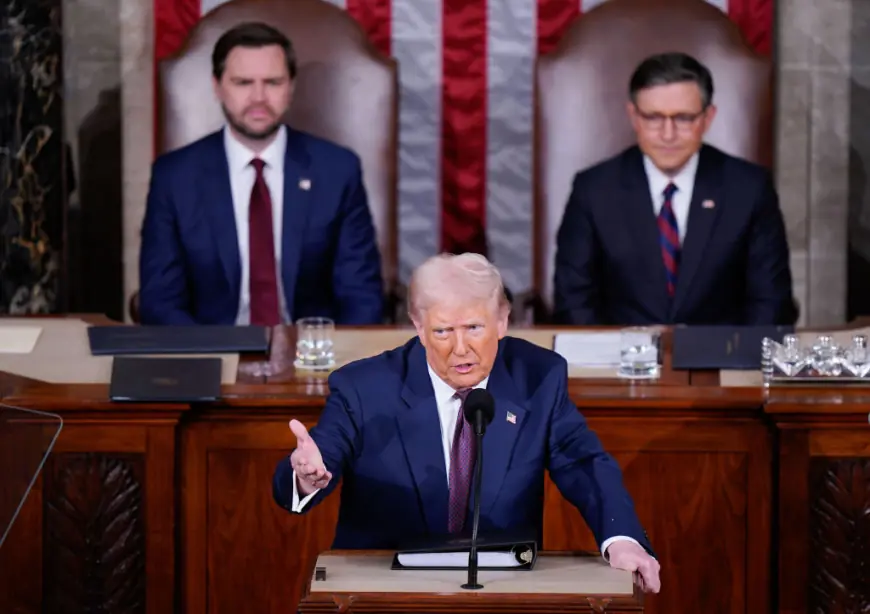
The question who is the designated survivor tonight is taking on fresh relevance as President Donald Trump prepares to deliver the State of the Union on Tuesday evening. The answer remains partly unresolved: the designated survivor for the President has not yet been revealed, even as Democrats name their own pick.
Who Is The Designated Survivor Tonight
On the Democratic side, California Rep. Mike Thompson announced on Monday that House Minority Leader Hakeem Jeffries chose him to serve as the Democrats’ designated survivor for the State of the Union address on Tuesday. Thompson said he would be watching the address from a secure, undisclosed location. Thompson’s communications director, Lauren Ott, said Democrats have tapped the California lawmaker to serve as a designated survivor each year since 2020. Meanwhile, the president’s pick to sit out this time has not yet been announced, and the designated survivor for the President has not yet been revealed.
What the Designated Survivor Role Actually Is
The designated survivor is an official in the presidential line of succession selected to skip a function that convenes the federal government in one place—examples include the State of the Union, inaugurations, or the President’s joint congressional address. That person is kept in a secure, undisclosed location away from the area so the full government would not be wiped out if a catastrophic event were to occur. The designated survivor’s purpose is to preserve the presidential line of succession established by the Constitution if the President and other leaders in the Administration and Congress were incapacitated.
Eligibility and Selection: No Fixed Protocol
The U. S. Constitution does not require a designated survivor or explicitly mention the process of selecting and sequestering one. The designated survivor must be eligible under the Constitution to serve as President, meaning they must be a natural-born American citizen and at least 35 years of age. There is no official process or protocol for how the designated survivor should be chosen; it is believed the President and/or the President’s Chief of Staff typically select the designated survivor. In recent years, congressional leaders have also begun selecting lawmakers to serve as designated survivors; those legislative-designated survivors are chosen not to succeed the President but to ensure the legislative branch could continue functioning after a catastrophic incident.
How the Role Has Evolved and Been Portrayed
The practice is believed to have started during the Cold War, when the U. S. government worried about the possibility of a nuclear strike from the Soviet Union. Some trace aspects of the modern approach to the aftermath of the Sept. 11, 2001, attacks. The idea has captured public imagination and been dramatized in novels and in a network series starring Kiefer Sutherland that aired from 2016 to 2019. Observers note the role blends a real national-security contingency with the romance of an ordinary official potentially being thrust into the presidency.
Past Examples and the Practical Details
They typically start the day as low-profile Cabinet secretaries and end it that way too, God willing, a reality underscored by many past designated survivors. When President Trump addressed a joint session of Congress last March, Veterans Affairs Secretary Doug Collins served as the designated survivor. James Nicholson, who was President George W. Bush’s veterans affairs secretary and the designated survivor during the 2006 State of the Union, has described the experience as one that sharpens attention and prompts private reflection on the stakes involved. Historian and journalist Garrett M. Graff has observed that the concept captivates because it combines public fascination with danger and the notion of an everyman suddenly elevated to the presidency.
Practical arrangements have varied. Until the Sept. 11, 2001, attacks, designated survivors had more freedom to choose destinations. President Bill Clinton’s energy secretary, the late Bill Richardson, was picked in 2000 and moved up a planned weekend trip to Oxford, Maryland, a waterfront town about 80 miles (130 kilometers) away so he would be there during the State of the Union. Dan Glickman, Clinton’s agriculture secretary, was tapped during the 1997 State of the Union and opted for New York, where his daughter lived, because his hometown of Wichita, Kansas, was too far away. In 2007, Alberto Gonzales, then attorney general, was the designated survivor; White House chief of staff Josh Bolten called a few days before with options. Gonzales chose to be in flight and arrived at what was then called Andrews Air Force Base in Maryland to find members of many departments and agencies ready to travel with him, carrying thick binders of memos and protocol instructions, just in case.
What to Watch Tonight
The central factual points remain: President Donald Trump will deliver the State of the Union on Tuesday evening; Democrats have named Mike Thompson as their designated survivor and he will watch from a secure, undisclosed location; the president’s designated survivor has not been disclosed. Recent coverage and historical practice suggest sequestering a designated survivor remains a quiet but serious contingency measure.