






















Trump turns longest State Of The Union into awards show and offers Americans thin gruel

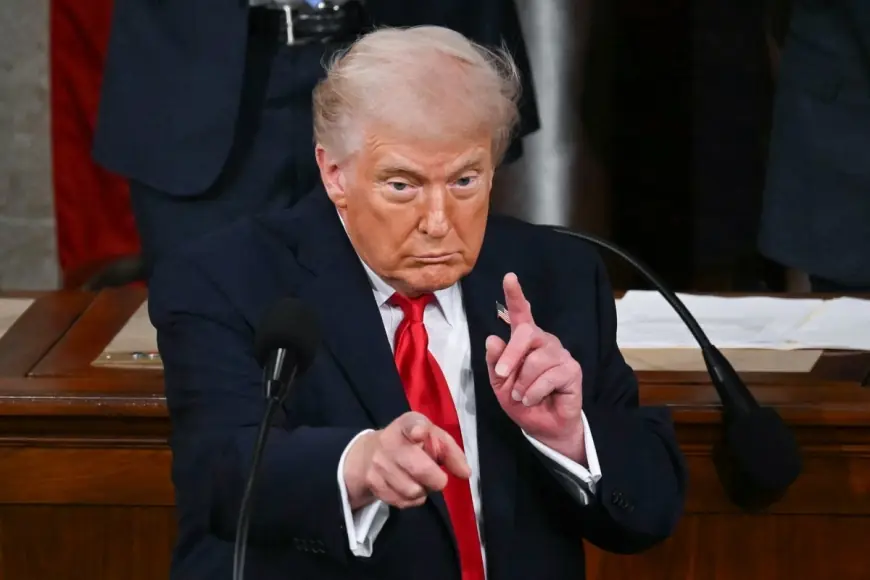
The president used a prime-time stage in the state of the union to pare policy detail down to spectacle, doling out surprise medals and repeat boasts even as approval ratings and polling figures remain weak. The speech, the longest-ever address to Congress, blended showmanship with forceful economic claims and repeated attacks on the Supreme Court and Democrats.
State Of The Union: showmanship over substance
Commentary from Andrew Feinberg framed the address as a choice of showmanship over substance. The president opened what became the longest-ever address to Congress with sweeping claims that the country is bigger, better, richer and stronger after his first year back in the White House, and presented the event in a style that included prizegiving moments and public introductions rather than a tightly focused policy delivery.
Economic claims, tariffs and contested figures
The president repeatedly asserted economic progress, saying inflation is falling, incomes are rising and the economy is roaring. He pointed to gasoline prices, mortgage rates and a claimed $18 trillion in foreign investment since his inauguration last January. At the same time he defended import taxes he has imposed, even as the Supreme Court found he exceeded his authority in using the 1977 International Emergency Economic Powers Act to impose many global tariffs. The high court declared those tariff policies illegal last week, though the president maintained they remain central to his economic pitch.
New tariffs, congressional oversight and time limits
The president touted a new 15% global tariff under section 122 of the Trade Act and suggested it would be an improvement. He also said these duties would not require congressional oversight; however, the new tariffs can last only 150 days before Congress has to agree to extend them. Economists estimate that earlier import taxes have cost American families at least $1, 700 each since last year.
Courtroom tension and direct confrontations
Members of the Supreme Court sat in the chamber as the president criticized a disappointing ruling and publicly attacked the justices while they watched. Four justices attended in the president's eyeline during parts of the address. He framed the Court decision as unfortunate but continued to insist tariff policies could substantially replace the modern system of income tax, a claim at odds with the high court's recent ruling.
Chamber moments: reactions, protests and guests
The address included high-profile moments beyond policy. The president introduced the U. S. men’s Olympic hockey team early in the speech and joked about having to invite the women’s team as well; both teams had recent victories. Democratic representative Al Green held up a sign decrying a racist video depiction, then left the chamber after confrontation with several Republicans. Representative Ilhan Omar called the president a liar from her seat after he repeated a claim about Somali migrants in Minnesota. More than an hour and a half into the address the president discussed escalating tensions with Iran, saying diplomacy was preferred but asserting he would never allow what he labeled the world's top sponsor of terror to obtain a nuclear weapon.
Politics, polls and the path to November
With 251 days remaining until voters decide whether to let his party keep control of Congress, the president delivered a historically long state of the union while facing slipping approval ratings. Latest polling figures put his approval at 36%, and commentary noted that broader public approval has been weak with midterm elections on the horizon. Democrats offered a formal rebuttal condemning the president's record, and the president's presentation mixed aggressive attacks on Democrats and the Court with policy pledges such as new "ratepayer protection" promises aimed at shielding Americans from rising electricity costs tied to increased demand from AI datacenters.
The address was the president's fourth formal State Of The Union speech. It followed an earlier, bombastic hour-and-40-minute return to the Capitol roughly six weeks into his second term, at a time when he had been buoyed by momentum tied to a so-called Department of Government Efficiency led by Elon Musk and by some of the highest approval ratings of his near-decade in the political spotlight. This year's lengthy, theatrical approach emphasized winners, medals and ostentation while critics pressed on substance and legality.
Recent coverage notes competing narratives from the speech: a showman styling and ceremonial moments on one hand, and contested legal and economic claims on the other. Reactions in the chamber ranged from applause by members of the president's party to public protest and a formal Democratic rebuttal, all unfolding with months still to go before voters determine control of Congress.