























Space spotlight shifts to the military in SOTU, leaving Artemis 2 astronauts visibly sidelined

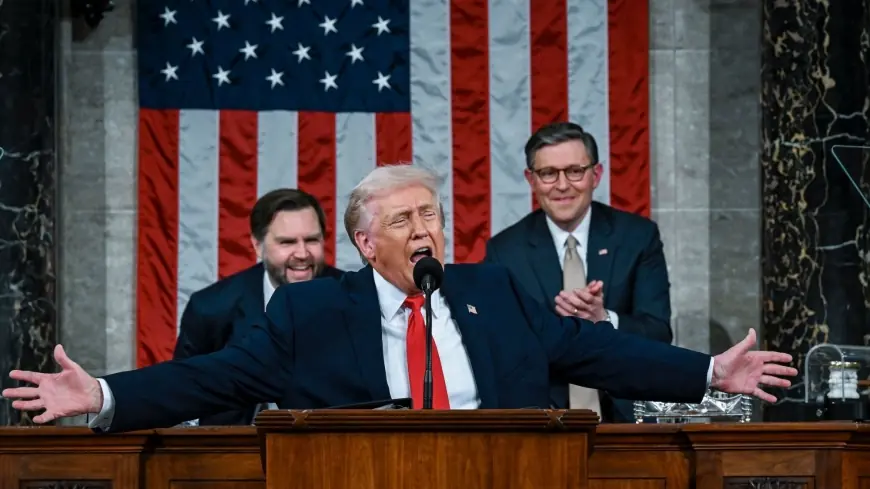
The president used much of a record-length State of the Union to celebrate U. S. military achievements, singling out the Space Force as a signature initiative, while the Artemis 2 moon crew sat in the chamber without a named mention of their upcoming mission. For space supporters and the astronauts themselves, that absence changes the optics of presidential endorsement at a high-profile public moment — and it reframes which parts of the national space agenda get televised attention first.
Who feels the immediate impact as Space language favors military accomplishments
Here's the part that matters: the emphasis on the Space Force over the civilian lunar mission shifted public attention in the chamber. The Artemis 2 astronauts were present as guests of the Speaker of the House, yet the president’s address highlighted the military branch he called his initiative and tied it to a recent overseas operation that involved the Space Force. That framing pushes a narrative where military space capabilities take center stage in a speech meant to showcase national priorities.
- Crew and program visibility: The Artemis 2 astronauts were seated in the gallery but the mission did not receive a named mention, reducing a presidential platform moment many in the space community would expect.
- Public perception: Emphasizing military space may steer public and political attention toward defense applications over exploration milestones.
- Policy signaling: High-profile praise for the Space Force during a major address functions as a show of continued political backing for military space initiatives.
It’s easy to overlook, but the optics of who gets called out on a national stage matter for funding, public enthusiasm, and media cycles that shape follow-on political support.
Event details woven into the impact: attendance, omissions and scheduling context
The State of the Union stretched beyond 107 minutes. During that address the president extensively praised the Space Force and tied it to a recent operation overseas where that branch played a role. There was one other reference to the broader final frontier later in the speech as a nod to past U. S. achievements, but the specific Artemis 2 mission — a crewed lunar flight planned as soon as April 1 that would be the first beyond low Earth orbit since the early 1970s — was not named.
The Artemis 2 crew members in attendance are the four astronauts identified by the program, including one from the Canadian space agency, and they were present as guests of the Speaker of the House. Their presence without a presidential naming of the flight creates a contrast between the administration’s televised priorities and the high-profile milestones the civilian program represents.
- State of the Union speech exceeded 107 minutes on the night in question.
- The Artemis 2 astronauts attended the address as guests of the Speaker.
- The Artemis 2 mission was described as planned to launch as soon as April 1 and noted as the first crewed flight beyond low Earth orbit since the early 1970s.
Schedule subject to change as the program advances.
The real question now is how this moment reshapes coverage and political momentum for civil exploration versus military space priorities. If future high-visibility platforms continue favoring military framing, NASA’s crewed lunar milestones may need different public champions to keep the exploration narrative prominent.
What’s easy to miss is that omission at a single national speech doesn’t change technical schedules or crew assignments immediately, but it does affect who gets credited in public lore and which initiatives dominate the next news cycle.
Short-term signals that would confirm a shift include more frequent public mentions of military space accomplishments on comparable stages or a renewed pattern of not naming civilian missions when their crews are publicly present. For the Artemis 2 team and the broader community watching closely, this SOTU episode is a reminder that symbolic recognition and political spotlight are separate from mission timelines, yet both shape public expectations.