

























Tesla Registrations Crash 17% in Europe as BEV Market Surges

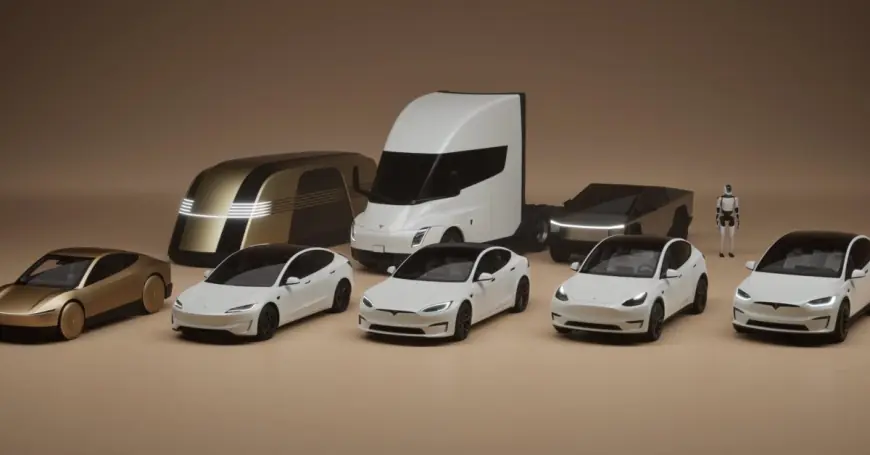
tesla registered just 8, 075 vehicles across the EU, EFTA and UK in January 2026, a 17% drop from a year earlier, marking a thirteenth consecutive month of year-over-year declines for the automaker. The downturn matters because it comes while the broader European battery-electric vehicle market expanded sharply, underscoring the company's falling footprint in a growing segment.
Tesla's January registrations and ACEA figures
Data published by the European Automobile Manufacturers' Association (ACEA) shows 8, 075 Tesla registrations in January 2026, down 17% from January 2025. Across the same territories — the EU, the European Free Trade Association and the UK — battery-electric vehicle registrations rose to 189, 062 units in January 2026, up 13. 9% from 165, 930 a year earlier, lifting BEV market share to 19. 3% from 14. 9% the prior January.
BYD registered 18, 242 vehicles in January, a 165% increase year-over-year and more than double Tesla’s January volume in the region; BYD now holds a 1. 9% market share versus Tesla’s 0. 8%. In the EU specifically, Tesla posted 7, 187 registrations in January 2026 versus 7, 305 a year earlier, a modest 1. 6% decline — the steeper 17% fall for the combined EU+EFTA+UK figure was driven largely by EFTA markets such as Norway, where total new car registrations plunged 76. 3% after the end of tax exemptions.
Context and escalation
The January weak point follows a prolonged slide for Tesla in Europe: sales tumbled 27% across 2025, and the January result represented the thirteenth straight month of declines. Industry shifts are evident — plug-in hybrids surged 32. 2% across the EU+EFTA+UK, while petrol and diesel registrations plunged 28. 2% year-over-year in the EU. Major national markets showing BEV strength included France (+52. 1%), Germany (+23. 8%) and Denmark (+52. 7%).
Several structural factors are driving the divergence. Chinese automakers have expanded rapidly into Europe with lower-cost battery and hybrid models that have found strong consumer demand; those models are flourishing even as overall car registrations fell 3. 5% across the region. Internally, Tesla has faced headwinds tied to limited product refreshes at lower price points and public perception challenges linked to senior leadership, which have been cited as factors dampening its competitiveness versus more affordable imports.
What makes this notable is that the January 2026 decline cannot be chalked up to a temporary production transition: the refreshed Model Y completed its rollout well before the recent month, leaving competitive pressure and market shifts as clearer drivers of the drop.
Immediate impact
European buyers are shifting to a wider array of BEV and hybrid offerings, and the immediate consequence is a reallocation of market share. With BEV registrations up 13. 9% regionwide but Tesla down 17%, the rest of the market — excluding Tesla — recorded BEV registrations up 15. 9% year-over-year (180, 987 units versus 156, 197 a year earlier). For Tesla, the result erodes market contribution in key countries where it previously led, and it magnifies the effect of national policy changes such as Norway’s tax exemption adjustments.
Manufacturers that expanded sales in January include Stellantis, which grew 6. 7% to 164, 436 units across the EU+EFTA+UK, with Fiat up 24. 6% and Opel/Vauxhall up 12. 7%. Volkswagen Group remained the largest player, commanding a 26. 7% share despite a 3. 8% decline, while Mercedes-Benz edged up 2. 8% and BMW Group fell 5. 7%.
Forward outlook
Confirmed milestones and near-term developments to watch are already charted in the data flow: ACEA will continue to publish monthly registration figures that will indicate whether Tesla’s slide stabilizes or accelerates relative to the rising BEV baseline. Tesla's broader global metrics also form part of the picture — the company’s overall global sales fell 9% last year after a 1% decline in 2024 — and the firm recently reached a production milestone in another area, rolling the first Cybercab off the Giga Texas line within its targeted first-half-2026 timeframe.
Regulatory and market shifts will remain material: the end of tax incentives in markets such as Norway has already shown a direct, measurable impact on new-car volumes, and expanding Chinese presence across Europe has yielded concrete market share gains for companies like BYD. Upcoming ACEA monthly releases will provide the next confirmed signals on whether Tesla can arrest the trend or whether the company's European downturn persists.