
























State Of The Union 2026 Date And Time: state of the union 2026 date and time as Trump prepares address

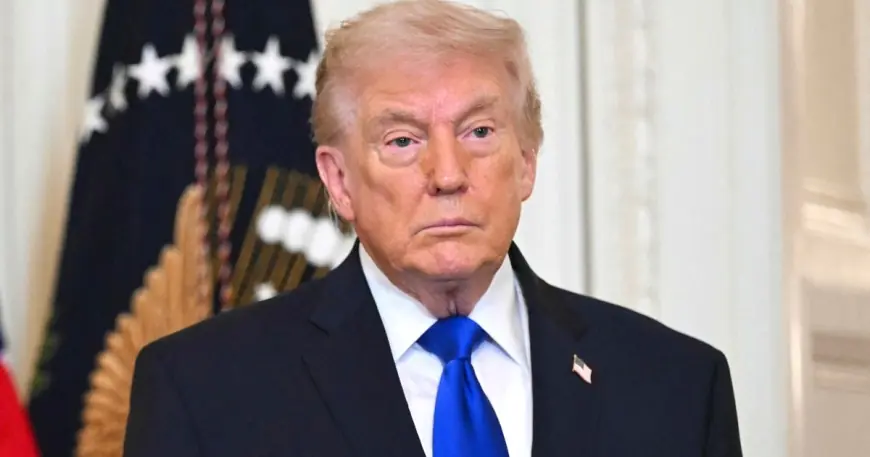
President Donald Trump will deliver the first State of the Union address of his second term on Tuesday, and Virginia Gov. Abigail Spanberger will offer the Democratic response. The state of the union 2026 date and time remain framed in preview coverage as the nation prepares for an address focused on the economy, immigration, crime, energy and national security.
State Of The Union 2026 Date And Time
The president is set to speak on Tuesday for what is billed as the first State of the Union address of his second term. The exact hour and fuller scheduling details are unclear in the provided context.
Administration priorities and messaging
Priorities for the Republican’s administration have centered largely on the economy, immigration, crime, energy and national security. Trump has spent the last year touting his accomplishments while mocking the record of his predecessor, former President Joe Biden. Much of that public bluster is based on false and misleading claims, many of which are likely to be a part of the president’s address to the nation.
Economic performance and recent trends
Observers point to mixed economic signals from the recent period. In 2024, the last year of Biden’s presidency, U. S. gross domestic product grew 2. 8%, adjusted for inflation, faster than any wealthy country in the world except Spain. The economy also expanded at a healthy rate from 2021 through 2023. GDP shrank for the first time in three years during the first quarter of 2025; growth rebounded in the second half of the year but slowed again in the fourth quarter. Annual GDP growth in 2025 was 2. 2%.
A key measure of inflation fell to nearly a five-year low in January. The Federal Reserve’s preferred measure shows inflation remains elevated as the costs of goods such as furniture, clothes and groceries have increased.
Hiring, markets and investment claims
Companies have sharply reduced hiring: employers added just 181, 000 jobs in 2025, the fewest — outside a recession — since 2002. Economists point to a range of factors, including uncertainty created by tariffs and artificial intelligence, that likely caused many firms to hold back on adding workers. Many companies hired heavily in the aftermath of the pandemic and have since decided to forgo creating new positions.
The U. S. stock market did well last year but underperformed many foreign markets. The benchmark S&P 500 index climbed 17%, short of a 71% surge in South Korea, 29% in Hong Kong, 26% in Japan, 22% in Germany and 21% in the United Kingdom.
On investment totals, Trump has repeatedly claimed the U. S. has secured up to $18 trillion in investments but has presented no evidence for such a high number; that figure appears exaggerated, highly speculative or both. The White House website offers a far lower number, $9. 6 trillion, and that figure appears to include some investment commitments made during the Biden administration. A study published in January raised doubts about whether more than $5 trillion in investment commitments made last year by many of America’s biggest trading partners will actually materialize and questioned how such funds would be spent if they did.
Immigration rhetoric and claims
A key aspect of the Trump administration’s agenda is curbing illegal immigration, though the president often uses falsehoods to support his arguments. Trump often says the U. S. is now "the hottest country anywhere in the world" after years as a "dead country. " The U. S. economy was hardly "dead" when Trump returned to office last year, and in his second term it has generally performed strongly after getting off to a bumpy start. For example, Trump has repeatedly claimed unclear in the provided context
Photo and scene setting
A file photograph shows President Donald Trump speaking at an event to announce new tariffs in the Rose Garden at the White House on April 2, 2025, in Washington. The photograph is credited to Mark Schiefelbein.
Trump’s first State of the Union in his second term is presented as a showcase of administration priorities and contested claims, followed by a Democratic response from Virginia Gov. Abigail Spanberger.