






















Ibm Stock plunges 13.5% after Anthropic revives COBOL automation fears

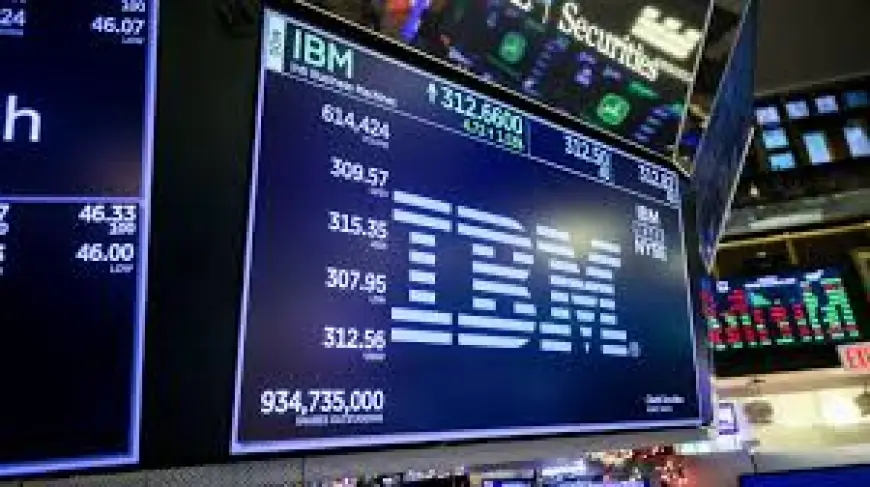
The AI scare trade sent ibm stock sharply lower: the shares fell 13. 5% on Monday after Anthropic renewed concerns that AI code assistants could disrupt legacy COBOL workloads, wiping about $31 billion off IBM's market value and leaving shares only slightly higher on Tuesday.
Ibm Stock hit after Anthropic blog post
Anthropic (ANTH. PVT) said in a new blog post that hundreds of billions of lines of COBOL remain in daily production across finance, airlines, and government, and argued that AI can now automate analysis tasks that historically made modernization slow and costly. The post framed COBOL as still central to mission-critical infrastructure — payments and financial systems — areas where IBM has been the leader for years.
How the market reacted and the immediate fallout
The market "shot first and asked questions later, " the coverage said, and the sell-off erased roughly $31 billion in market value. Shares recovered only slightly the next trading day; the context notes they were "up only slightly on Tuesday. "
Evercore pushes back: mainframe work remains complex
Evercore analyst Amit Daryanani argued IBM has been investing in code modernization for years and pointed to the firm's own tools, noting that more than two years ago IBM launched watsonx Code Assistant for Z. Daryanani said "Translating COBOL is the easy part" and listed the harder engineering challenges as "data architecture redesign, runtime replacement, transaction processing integrity, and hardware-accelerated performance built over decades of tight software and hardware coupling. " He added that AI is "the most powerful tool we have ever had to do it. "
Daryanani said clients had the option to migrate from mainframes but often choose to remain on the platform for specific advantages, which he itemized as: 1) Reliability: 100% uptime and the ability to hot swap components (even the best run clouds might only have 5-6 nines of uptime), 2) speed, volume, & throughput, 3) better cost efficiency at scale, 4) On-prem AI inferencing capabilities for real-time analytics, 5) Security: Quantum-safe encryption, and 6) Regulatory Considerations: mainframes are widely used by governments, healthcare, & financial services (migrating to public cloud not an option). He concluded that customers choose to remain on mainframe despite alternatives and said he views the sell-off as unwarranted, recommending buyers on weakness and maintaining an Outperform rating with a $345 target.
Jefferies sees software growth beyond Z
Jefferies analyst Brent Thill described IBM as "a software-driven story with multiple secular growth vectors across hybrid cloud, AI, automation and data. " Thill noted that mainframe software remains important but is not the linchpin, writing that mainframe accounts for "~23%/29% of IBM's 2025 total revenue/software revenue. " He pointed to portfolio expansion in Red Hat, watsonx, automation, and data platforms that extend beyond Z and said the firm views the sell-off as "a near-term sentiment overhang on legacy services rather than an existential or structural risk. "
Other context from the coverage and a technical aside
The reporting also noted a brief interaction with IBM's longtime CFO, Jim Kavanaugh, on Jan. 28 — IBM's earnings day; the rest of his comment is unclear in the provided context. A separate technical note in the assembled material showed a site prompt asking visitors to click a box to confirm they are not a robot, advising users to ensure their browser supports JavaScript and cookies, directing readers to review the Terms of Service and Cookie Policy for more information, asking that inquiries include a reference ID when contacting support, and promoting a subscription for global markets news.
What happens next: analysts quoted in the coverage signaled they would buy on weakness and kept price and rating targets in place, and the near-term calendar noted IBM had just held earnings contact on Jan. 28. Further market moves will be watched against any follow-up commentary from IBM or additional technical detail from Anthropic.